
NOVA brings you stories from the frontlines of science and engineering, answering the big questions of today and tomorrow, from how our ancestors lived, to whether parallel universes exist, to how technology will transform our lives.
NOVA premieres on public television with a behind-the-scenes look at the making of a nature film. Oxford Scientific Films Unit shows how it tackles such problems as filming a wood-wasp laying its egg inside trees, the hatching of a chick and the courtship rituals of the stickleback.
NOVA explores the mighty Colorado River which today has become the life-blood of the Southwest, providing water and electricity to the farms and cities of California, Nevada, and Arizona. The program examines the political expediency and technological over-optimism that has led to some major miscalculations of the river's capacity.
NOVA explores the impact of whaling and the goods it produces for the industry, verses the grace and beatury of this intelligent mammal of the sea.
Does life exist outside this planet? The Viking lander will set down on Mars in July 1976 to try to find out just that. NOVA explores how life started on Earth and examines the Viking Lander being built in its germ-free room before starting its long journey.
How does a primitive nomadic tribe of the Amazon basin cope with the encroachment of Western settlers? NOVA looks at both sides of the story, revealing the misunderstandings between the two cultures.
Medicine was transformed in the 19th century by the discovery of anesthesia; surgery, until then hasty, bloody and completely unable to deal with internal disorders, subsequently took its place in the front rank of medical practice. This NOVA docudrama depicts the pioneers of medicine.
In 1054 AD, the Chinese recorded the explosion of a star so bright that it lit the sky for three weeks, even during the day. It was the explosion of a dying star that was bigger than our sun. NOVA explores this mysterious explosion that led to the discovery of Crab Nebula.
Birds migrate in search of perpetual summer, sometimes traveling as much as 20,000 miles every year. NOVA uses radar to track and identify migrating birds that travel at night, focusing on how they coose routes tat avoid bad weather and make the best of prevailing winds—information that can aid meteorologists.
The advance of medicine depends inevitably on the testing of experimental procedures on human volunteers from either the healthy or the sick. Yet such procedures are often dangerous, and may not be of direct benefit to the subject. NOVA examines how individuals' interests are safeguarded, and asks, under what circumstances experiments should be conducted on children.
Washoe is a chimp more like a person: she talks with her hands. NOVA visits with Washoe and her teachers—Professor Allen Gardner and Dr. Trixie Gardner—to learn more about this unusual animal.
When Paul Kammerer committed suicide in 1926, it was taken by most of his fellow biologists as a tacit admission of guilt that he had faked his experiments purporting to show the inheritance of acquired characteristics. Arthur Koestler joins NOVA in an in-depth examination of Kammerer's infamous experiment.
Nuclear fusion offers the promises of an unlimited, clean source of energy. But achieving fusion has proved one of the most difficult and elusive goals of the physicist. NOVA tells the story of the twists and turns and the international competition along the road toward the achievement of fusion; and details the recent breakthroughs which seem at last to have brought it within reach.
Who were the people that built the first cities -- complete with apartment blocks -- in North America? They were the Anasazi Indians, who lived in the Southwest for some eight or nine thousand years and who then, in about 1300 AD, abruptly abandoned their cities and apparently disappeared. NOVA traces the steps of this ancient sophisticated culture.
NOVA travels to forests and marshes to discover why birds sing and finds surprising parallels with the acquisition of speech in humans.
Many insects and some mammals use smell as a primary means of communication. NOVA explains how, for example, the entire economy of an ant's nest is organized by smell, and how some moths use smell for population control—an ability we is now beginning to understand.
Smashing matter into ever smaller pieces in an attempt to find its fundamental building blocks has produced a confused nightmare of particles. NOVA looks at this on-again, off-again story—one of sciences's most mysterious—and, one of the most expensive, involving some of the biggest machines in the world.
Most of us spend one-third of our lives in a state of which we understand remarkably little—some people sleep for only a few minutes a night, and function perfectly well, while others declare that eight hours isn't enough. NOVA explores traditional notions about how much sleep we need; looks at effects of the sleeping pill, and, perhaps the most baffling of all aspects of sleep—dreaming.
NOVA joins a team of U.S. Geological Survey scientists on a mission to find out just how San Francisco Bay works: its physics, its chemistry and its biology.
Just why did Cro-Magnon man living in France's Dordogne Valley some 15,000 years ago take time out from the desperate business of survival to paint pictures in inaccessible corners of his cave dwellings? NOVA joins French and American archeologists as they piece together the lifestyle of these hunters of the last great Ice Age, and try to interpret the meaning of their cave art.
NOVA joins a group of English biologists living literally on a platform in the middle of the Red Sea, who for several years have been studying the crown-of-thorns starfish, notorious for the devastation it has wrought on the coral reefs of Australia and the Pacific.
NOVA explores how science and technology play a major role in the design of weapons of war and the development of strategies for their use.
Have you ever sensed that your body reacts differently at different times of the day? NOVA examines the best and worse times for work, good times for sex drives and your body's most reactive time of day for alcohol consumption.
Has the case against DDT been proven? A strange question, perhaps, to be asking one year after the US has banned the insecticide, but NOVA dares to ask. Tracing the history of DDT from its discovery through its banning in the States, NOVA asks whether America overreacted with its total ban of this once acclaimed "wonder" chemical.
NOVA profiles two very different scientists: Richard Feynman, a theoretical physicist, at the pinnacle of his career—a Nobel prizewinner; and Richard Lewontin, a biologist and highly regarded population geneticist from Harvard University.
NOVA explores T.D. Lynsenko's rise to power in the Soviet Union in the early 20th century, and how it affected plant genetic research in the USSR.
High in the Hoggar Mountains, in the exact center of the Sahara desert, lives Sidi Mohammed and his family: children, grandchildren, cousins and a few former slave women. Their environment, one of the most ungenerous on earth, provides them with almost nothing. NOVA examines the changing lifestyle of Sidi Mohammed.
How likely is it that a terrorist group will steal plutonium intended for nuclear reactor fuel and put together a blackmail weapon of unprecedented power in the shape of a homemade atom bomb? That question is posed by Theodore Taylor, former A and H bomb designer at Los Alamos, in a recent book, The Curve of Binding Energy. NOVA investigates just how easy it would be to design a bomb using unclassified information.
Since the Industrial Revolution, bigger has been better. NOVA profiles E.F. Schumacher, the author of Small is Beautiful, who thinks that enough is enough; that the time has come for technology to return to a human scale, where the ability to create is returned from the machine to people.
Since the Industrial Revolution, bigger has been better. NOVA profiles E.F. Schumacher, the author of Small is Beautiful, who thinks that enough is enough; that the time has come for technology to return to a human scale, where the ability to create is returned from the machine to people.
Fish is an excellent source of protein; it could help ease the growing international food shortage. But in 1972 the total world fish catch dropped. NOVA explores the possible reasons for this decline.
It is now possible to predict earthquakes. At least two successful predictions have already been made in the United States; and the NOVA crew was present and filming while a third prediction was being formulated. NOVA looks at why earthquakes occur, how predictions are made, the threat they pose to cities at risk, and examines the advantages and disadvantages of making an earthquake a predictable disaster.
NOVA takes viewers into the world of Joey Deacon, 54 years old and a spastic since birth. Joey has lived most of his life in institutions, unable to communicate with anyone until he met Ernie Roberts. The docudrama recreates Joey's story, with remarkable performances by two spastic actors portraying him as a boy and as a young man. Joey and Ernie themselves appear in the final sequences.
What do singer Peggy Lee, New York Jets Quarterback Joe Namath and Congressman Richard Nolas have in common? They all practice a ritual called TM—Transcendental Meditation. NOVA examines the recent phenomenal success of the TM movement in America.
The last fourteen years have been a revolution in our understanding of our place in the stars, the Solar System. Beginning in 1961 with a Russian spacecraft flying to Venus, quickening with the Apollo manned missions to the Moon, it came of age in the Spring of 1974, when there were six spacecrafts traveling simultaneously from the Earth to the planets. NOVA looks at the era of manned and unmanned exploration of the Solar System.
NOVA explores the mysterious ecosystem of the desert: a snowstorm; a lashing summer monsoon; and the emergence—in a pool created only minutes before—of a pair of adult spadefoot toads. Toads who had been waiting beneath the sand for a year for this brief and fortuitous moment to procreate the next generation...
Every year, some 5,000 babies are born in the US with spina bifida, a congenital abnormality of the central nervous system. NOVA explores the mystery of what causes spina bifida and raises the issues of whether heroic measures should be taken to preserve the life of severely malformed babies.
There's one place on earth where no one will ever catch a cold. And the freezing waters are so bitter there that a fish has been discovered to have developed its own anti-freeze. NOVA explores Antarctica—the coldest desert in the world.
Author Isaac Asimov joins NOVA in the retelling of the remarkable story of the discovery of the structure of DNA. James Watson and his ex-colleague Francis Crick exchange memories of the events which led to their winning the race for the structure of the gene.
Each Sunday edition of the New York Times consumes 153 acres of trees. The paper packs, napkins, paper cups and packing used by McDonald's gobble up 315 square miles of trees every day. NOVA asks if, at this rate, trees can remain a renewable resource.
NOVA joins chief archaeologist, Ivor Noel Hume, of Colonial Williamsburg, VA, for a fascinating glimpse of the lifestyles of the founders of this country, complete with detailed reconstructions of houses, stores, workshops, gardens, taverns and palaces.
NOVA joins chief archaeologist, Ivor Noel Hume, of Colonial Williamsburg, VA, for a fascinating glimpse of the lifestyles of the founders of this country, complete with detailed reconstructions of houses, stores, workshops, gardens, taverns and palaces.
Dr. Norman Shumway of Stanford University has performed more heart transplants than any other heart surgeon. NOVA explores those extraordinary days in 1968-69 when it appeared that everyone with a scalpel was doing heart transplants, and survival of patients was measured in days.
NOVA explores life underground, from foxes and badgers through moles and worms down to the myriad of micro-organisms that make soil the most complex substrate for life on earth. Included in the film is extraordinary footage of a mole burrowing and of roots growing.
NOVA shows the Netsilik eskimoes of Pelly Bay and their traditional way of life and what happens when Western civilization is imposed upon them.
Benjamin is a healthy, normal baby, whom we meet at birth and whose first year of life provides the backbone of this revealing NOVA about early child development.
Margaret Sanger was responsible almost single-handedly for changing the whole attitude of the male-dominated medical profession towards "women's issues" and, above all, for gaining social and political acceptance for the concept of birth control. This NOVA docudrama reconstructs her life, told as flashbacks interspersed throughout an interview. Piper Laurie stars as Margaret Sanger.
As late as 1967, smallpox struck as many as 15 million people in 43 countries and killed an estimated two or three million. Experts now believe that the disease is on the verge of extinction. NOVA looks at the recent success of the World Health Organization's program to eradicate this disease, considered a triumph of western-styled medicine.
The "Jaws" phenomenon has given sharks a bad name. But is the shark really such a barbarian? NOVA looks at the lifestyle of this remarkable survivor from the days when dinosaurs ruled the earth.
Recent scientific developments have made it possible to detect a wide variety of defects in unborn babies. NOVA focuses on the ethical question that must be considered: What defines a defect? Should defective babies be aborted, or should they be allowed to live?
Since 1945, hundreds of ships and planes and thousands of people have mysteriously disappeared in an area of the Atlantic Ocean off of Florida, known as the Bermuda Triangle. NOVA penetrates the mystery of the terrifying Bermuda Triangle.
NOVA traces the development of Hitler's V-2 rocket through rare footage obtained from the National Archives—some never broadcast before on television.
If you were a dinosaur scientist, what would you do with a pile of fossil bones? How would you even start to put the giant jigsaw puzzle together, never mind discover anything about how these dinosaurs lived? NOVA explores the incredible world of the dinosaur scientist.
What is the price we are prepared to pay for coal? NOVA looks at the environmental and health safety issues raised by the government, industry, and the victims.
NOVA explores the research on the 1976 drought in the western United States which led some solar scientists to discover the link between weather patterns and the 11 year sunspot mystery.
NOVA follows the lives of three boys who have combined immunodeficiency—a disease that leaves its victims with no immune system.
NOVA recreates March 1975 at Brown's Ferry, an Alabama nuclear power plant—the largest in the world—that suffered a seven-hour fire which came very close to developing into a major public disaster.
NOVA looks at blackbirds, their winter habit of nesting in the millions, and the destruction they do to crops.
NOVA profiles chemist Russell Marker who made the birth control pill possible by discovering a synthetic substitute for the hormone progesterone.
NOVA explores the history of genetic engineering and the possible risks and benefits of this area of research.
NOVA investigates the controversial theory of Harvard University biologist E.O. Wilson, that many aspects of human behavior are genetically determined.
In the winter of 1976-77, 80 percent of the wolf population in Northwest Alaska was the target of aerial hunts. Although the area is roamed by the Western Arctic caribou herds—a natural predator of the wolf—the caribou population has been steadily decreasing in number. NOVA examines how the Dept. of Fish and Game is handling the the problem of wolf control.
Solar energy is increasingly popular as a home heating source. But only recently has it been seriously considered as a source of industrial power. NOVA looks at this new industrial approach, such as the use of a huge windmill in Ohio, giant machines that may generate electricity from the heat of the tropical seas or from the motion of waves, and an orbiting solar power station able to beam microwaves to earth.
NOVA explores the huge international illegal trade in animals, penetrates the thriving underworld of smugglers and assesses the effects on vanishing wildlife.
NOVA traces 300 years of speculation, investigation and discovery that have centered on Mars—particularly the theory that the planet could support life. Questions raised by NASA's 1976 Viking mariner missions about how the vast canyons were formed are also explored.
In part one of this two-part exploration of the diversity of world languages, NOVA examines how and why the bewildering confusion of languages came about.
In part two of this two-part series on the diversity of language, NOVA explores how man has coped with the confusion of language and asks if the growing acceptance of English is the answer.
NOVA profiles Linus Pauling—the only person to have received two unshared Nobel Prizes for his work in nuclear weapons.
NOVA explores the different means by which hearing-impaired people have learned to penetrate the world of the hearing by visiting with Kitty O'Neil—a woman record-holding speed car racer; Frances Parsons, an advocate of hearing-impaired persons' rights; and workers at Silent Industries—a factory in Los Angeles founded by a deaf man.
NOVA explores the debilitating diseases that are often caused by poverty and follows two paths to health care in Tanzania and the United States.
Botany is a neglected science and plants are all around us, but unfamiliar. NOVA examines our state of knowledge of how plants work: growth hormones, responses to light and shade, photosynthesis, root mechanisms and twining responses.
Can a nuclear war be survived? Some members of the defense community say yes. NOVA explores the possibility.
It has been known since the turn of the century that there are four human blood groups, based on different red cells and serum characteristics. NOVA looks at the more recent discovery that the different white cell types, as determined by a variety of different molecular markers on the cell surface, open up the possibility of the prevention of disease.
Part one of a two-part series on the subject of man in space, NOVA examines the history of NASA—from the origin of the space race through the triumph of the Apollo programs. By tracing the history of three key programs—Mercury, Gemini, Apollo—we show how the basic challenges surrounding space flight were answered: rendezvous and docking, life support, weightlessness, space sickness, equipment reliability and so on.
Second of the two-part series on space programs, NOVA looks ahead to the future, post-Apollo and the role that man in space will play, including the possibility of space colonization—huge orbiting space stations where people live and work in an earth atmosphere under artificial gravity.
In the rain forests of Zaire, in the heart of Africa, live the Mbuti Pygmies. The Pygmy way of life has always been extraordinarily difficult to capture on film, though many have tried. NOVA presents a rare portrait of an elusive people, made by an independent filmmaker who lived with the Pygmies and won their trust.
In a dramatic docudrama, NOVA reconstructs the controversial lawsuit raised against renowned heart surgeon Dr. Denton Cooley when one of his patients died after heart surgery, and examines the legal and moral issues this raises in the practice of modern medicine.
A science-based revolution in the making of wine is underway. NOVA traces the secrets of the aging process and science's involvement with the predicting of mass production high-quality vintage wines.
NOVA investigates the theories of von Daniken and others that the Earth has been visited by intelligent beings from outer space. Among claims examined are: that the building techniques used in the Great Pyramid of Cheops are so advanced that only an extraterrestrial intelligence could have built it; and that the engraved stones of Palenque in Mexico depict an ancient astronaut at the controls of a space rocket.
Today's scientists may be creating their own successors. Work being done in Artificial Intelligence (AI), a branch of computer science, only suggest that in the not too distant future, machines will outpace their creators. NOVA examines the possibility.
In the summer of 1977 Paul MacCready, a California scientist and businessman, won the coveted Kremer Prize. His achievement was to design and build an airplane which completed, unaided, a one-mile figure-eight course entirely under the power provided by the pilot himself. This is the story of those many failures and MacCready's success.
NOVA shows a year in the life of a beaver pond and includes almost every life form that exists in, on, under, around and above the water, from the microscopic plant life of summer to the eagles feeding on carcasses of deer that collapsed on the winter ice.
The fortified plateau above Athens known as the Acropolis is the site of some of the most remarkable architecture in the world: its marble structures built in the fifth century BC, including the renowned Parthenon, represent the artistic peak of classical Greek architecture. NOVA examines how the heavily polluted air of Athens produces acid rain which is dissolving the marble sculptures and columns; and how iron tiles used extensively in repair 40 years ago are now rusting, expanding and shattering the stone structures.
Henry Ford, a great friend of Edison, was a film enthusiast who amassed some one and a half million feet of film during his lifetime. Deposited in the National Archives and known as the Ford Film Collection, it covers not only the Ford family and Ford Motor Company but also contains newsreels, and general films produced under Ford. Using the Collection, NOVA profiles Ford's life and times.
When first invented 18 years ago, lasers were called "a solution looking for a problem;" nobody could think what to do with them. But in fact research scientists immediately began to exploit their pure colors and near-perfect focusing ability. Today lasers have grown into a billion-dollar business. They are used in construction, manufacturing, clothing, dentistry and medicine. And the future uses of lasers are likely to be of major significance as the means of achieving nuclear fusion and as a very high efficiency communications medium.
In a world that each year loses up to 40 percent of its crops to insects, some form of pest control is desperately needed. But chemical pesticides have backfired. Pesticide-resistant insects frequently develop, and previously harmless insects have become devastating infestations. Farmers have found themselves trapped on a "pesticide treadmill"—the more they spray, the more they have to spray. NOVA examines several alternatives for pest control.
For thousands of years people have managed to live in deserts all over the world. But in recent years, a growing population and the demands of the international market have put more stress on these poor and easily exhausted lands. NOVA examines the consequences and possible solutions to desertification.
NOVA explores Bovine sleeping sickness. Spread by a fly, it is a deadly disease that poses a threat to Africa's cattle.
Traditionally zoos were designed neither for people nor animals; barred cages taught people more about their separation from nature than about an animal and its habitat. But just as man has realized that he has all but destroyed much of the world's wilderness and its wildlife, he is realizing that the zoo may be the last refuge for wildlife. NOVA visits several United States zoos to examine a variety of activities of concern today: breeding, public education, creative new animal habitats, and the reintroduction of animals to their natural environment.
In 1965, Arno Penzias and Robert Wilson, two radio astronomers at Bell Telephone Laboratories, discovered faint, but ever-present, microwave signals from space—the most ancient and most distant signals detected by man: the oldest "fossils" in the universe. NOVA explores the current surge of cosmological discovery that continues to aid scientists in the "cosmic archaeology" of digging into the history of the universe.
Congress is currently considering a proposal that would double the size of America's national park system by designating a sizeable chunk of Alaska as off-limits to developers. NOVA explores the public debates on Alaska, such as the construction of the oil pipeline—a proposal that has sparked a bitter controversy between conservationists and developers.
On the morning of March 16, 1978, the US owned, Liberian registered supertanker, the Amoco Cadiz, went aground off the coast of Brittany. Over the following days and weeks its entire 68 million gallons of oil drained into the sea. A NOVA production team began filmming at the scene shortly after the disaster, the biggest oil spill in history, and recorded clean-up efforts, effects of the spill on the crucial tourism and fishing industries, and the attempts of US and French marine biologists to trace the passage of the oil through the environment.
As a child, Fred Young hunted birds and wild animals with primitive weapons, spoke only the Indian languages Ute and Navajo, went to a medicine man when he was sick, and slept under the stars. NOVA profiles Dr. Frederick Young, now a nuclear physicist working on the laser fusion project at the Los Alamos Scientific Laboratory in New Mexico.
In 1945, B.F. Skinner shocked the world by putting his 13 month-old daughter, Deborah, into a 'box.' The box was actually a climate-controlled crib designed for comfort and protection, and the young psychologist was merely testing his theory that environment controls behavior. NOVA portrays the life of this famous behavioral psychologist now in his 70's and living quietly in Cambridge as Emeritus Professor of Psychology at Harvard University.
The bed of the northeast Pacific Ocean is covered with a "carpet" estimated to be worth a staggering ten million dollars. These manganese nodules—the bumpy carpet—are rich not only in manganese but in the key strategic minerals: copper, nickel and cobalt. NOVA examines the debate about who owns them and who has the right to exploit their use.
Below the snow-capped peaks of the Peruvian Andes, the Q'eros Indians live a life patterned on that of their ancestors thousands of years ago. NOVA takes a look at the unchanging world of these isolated mountain people.
Some day hydrogen may replace the gasoline that we are now using up so rapidly. NOVA looks at the potential of hydrogen as a zero-pollution fuel.
Is nuclear fusion the solution to the energy crisis? NOVA examines the promise—and problems—of fusion as a future energy source.
Health care is the third largest industry in the US. As a result of billions of dollars spent for medical education in the 1960s, there are now too many specialists and too few primary care physicians, especially in underserved areas. NOVA tells the story of one medical school in Israel that is training a new kind of family doctor.
One hundred years after his birth, Albert Einstein remains an enigma to most Americans. NOVA presents an insightful portrait of the man and his mind through rarely viewed film footage.
Is the chemical industry a boom to modern civilization, or a major threat to our health and that of future generations? NOVA examines how toxic heribicides, pesticides, and other chemicals may cause cancer, miscarriages and birth defects in humans.
Sinister, sometimes even deadly, spiders have little popular appeal; yet their silken webs are among nature's loveliest creations. NOVA takes a close-look in slow motion, as spiders reveal a delicate grace and beauty, and an amazing array of lifestyles.
NOVA views the history of sugar—from its scientific, religious and political history to its medical controversy.
At the 1976 Olympics, East German athletes walked off with 40 of the coveted gold medals, though their country is only the size of New Jersey. NOVA investigates whether a drug responsible for their incredible success—or is American athletic training and commitment falling behind that of the Communist world?
Thousands of amateur athletes are hurt every year, and many professional athletes suffer injuries that may mean the end of a career. NOVA looks at a new medical specialty—sports medicine—that promises to prevent and cure many sports related problems.
Most of India lives by the same rhythm, the same tools, as in centuries past. But there is another India—with thriving commercial centers, spotless research laboratories and large-scale industry. NOVA looks at how the gap between these two extremes is shrinking because of a policy of "appropriate" technology that uses the resources of both to meet the greatest needs of all.
The Iron Bridge across the River Severn in Telford, England is two centuries old this year. It remains a monument to the Shropshire iron masters who built it, and a symbol of the Industrial Revolution that was born in the area where the bridge stands. NOVA traces the development of ironmaking and its far-reaching effects on society and the world economy.
Dr. Philip Morrison, Institute Professor and Professor of Physics at Massachusetts Institute of Technology, presents this thoughtful and provocative commentary on the nature of civilization.
For many people the idea of life without vision is as fearful as death. NOVA looks at five people struggling to save their threatened vision using drugs, surgery, counseling and determination.
Aborigines in Australia, woodchucks in Pennsylvania, the Nobel Prize in Stockholm and the gay community in New York—what could possibily link such disparate elements? The answer is Hepatitis. NOVA examines this elusive disease, what causes it, how it is spread and how you get rid of it.
NOVA profiles Dr. Edward Teller, the "Father of the Hydrogen Bomb," an acclaimed scientific genius and brilliant theoretician, and a man considered by some the most dangerous scientist in the United States.
NOVA explores the science of natural engineering and asks the basic questions: what makes a good design in nature and why did a particular plant or animal adopt a particular design?
More than 40 million Americans are afflicted by cardiovascular disease. NOVA examines the new information on risk factors and possible prevention of heart attacks and strokes—often fatal diseases.
Whaling is an integral part of Eskimo life, and a major source of food; even so, conservationists are seeking to restrict the hunting of bowheads in Alaska.
Recent aircraft accidents have raised the question of just how safe modern commercial aviation really is. NOVA looks at some of the problems and experimental efforts underway to deal with them.
Every year, millions of tourists converge on the Mediterranean's sunny coasts, lured by the prospect of bathing in clear, azure waters and basking in semi-tropical sun. But years of use and abuse have taken their toll on the once idyllic Mediterranean and the "world's biggest swimming pool" has become the world's biggest open sewer. NOVA explores the complex problems that plague the Mediterranean's future.
NOVA explores the amazing Jari project of the Amazon basin. Eleven years ago, 3.5 million acres of virgin jungle were bought by the reclusive billionaire, Daniel K. Ludwig.
NOVA explores the shaping and molding of the male and female personality. From infancy through childhood, the program documents the impact of culture on the development of sex differences.
In one of the first films ever to come out of modern China, NOVA sifts through clues that Chinese scientists have uncovered in their pursuit of particularly virulent and elusive forms of cancer from which one out of every four people die.
One year in the intricate life of a coastal lagoon unfolds in an hour's time when NOVA documents the fragile tidal ecosystem which supports the entire ocean.
Locked in the shale of the Western Rocky Mountains is more oil than in the Middle East—more than enough to solve our dependence on foreign crude oil. But will shale oil solve our gasoline shortage, or will it simply turn the Rockies into a gigantic industrial zone? NOVA explores the promise and the problems of shale oil.
Is interferon—known as IF in medical shorthand—the wonder drug and cure for cancer that some doctors claim? NOVA travels to London, Stockholm, Houston, San Francisco, and New Haven in search of the answer in the most complete film on interferon ever to appear on American television.
On Wednesday, November 12, 1980, Voyager 1 is expected to arrive at Saturn for a first time ever extensive close-up investigation of the majestic ringed planet. Astronomers can expect to gather more information than ever before possible. On the day before this historic event, NOVA documents Voyager's journey through the outer solar system.
Thomas Edison is the quintessential American hero, the Wizard whose inventions revolutionized modern living. But there was always more to Edison than met the eye. He was a complex and contradictory man; a brilliant inventor, a foolish investor; a demanding boss, a liberal benfactor—a public figure that no one ever really knew. NOVA profiles the man behind the mythical reputation.
Water, water everywhere...but just how useful is it? NOVA travels to the Adirondack Mountains where acid rain is killing many high elevation lakes; to the Mississippi River where chlorine has combined with natural and manmade organic chemicals to form cancer-causing toxic chemical susbtances; to California, where conservation recycling has had to become a way of life; and to Bedford, Massachusetts, where the town wells have been contaminated by industrial waste.
NOVA tells the story of still and cine photography in science—from the extraordinary work of the pioneers in the early 1800s to how the ability to freeze time on film in ever shorter periods has given scientists remarkable new insights. Today photography enables us to analyze (frame by frame) the thousands of molecular reactions that can happen in less time than the blink of an eye.
The exquisite sensitivity of tough cells in the human skin makes it possible for us to discriminate with precision the slightest changes in texture and pressure, but how the electrical impulses we receive are converted into sensation remains a mystery. NOVA explores the hidden meaning and extraordinary power of human touch.
The cuddly image of Rudolph the Red-Nosed Reindeer has become an integral part of the jollity of the Christmas season. NOVA takes a timely look at how real deer live by visiting Rhum—an island off the coast of Scotland inhabited by red deer.
Time—a concept which has baffled scientists and philosophers since time immemorial. Actor Dudley Moore hosts a funny, sobering and visually stunning quest for answers to riddles, as NOVA spends an hour on time.
Is the fagara root a match for the stethoscope? This program looks at the contributions of both traditional herbal medicine and western orthodox medicine to the health of the Nigerian people.
This program explores clues gathered from ancient rocks and meteorites in an attempt to piece together how our planet formed, what happened during its earliest days, and when life first appeared. The program includes visits to the scene of a fresh fall of meteorites, several volcanic eruptions, and an underwater glimpse of molten "pillow" lava as it oozes out of volcanic vents in the sea floor.
NOVA examines the Dead Sea. The lowest place on earth, at 1400 feet below sea level, it is jointly owned by Israel and Jordan. If used properly it could become a vital natural resource for both countries, giving them not only salt, but protein, fertilizer, oil, and a solar energy store.
When Mt. St. Helens erupted earlier this year, it focused the attention of the whole world on the almost incredible destructive forces that volcanos can release. Geologists from around the world congregated at the volcano and NOVA joined the vigil for an in-depth look at the incident and its aftermath.
NOVA investigates what science can do in helping to solve murder—in understanding why it occurs, and how the rate might be reduced—and explores the work of people who have the stark job of dealing with death: the police, pathologist, scientists and psychiatrists.
NOVA investigates what science can do in helping to solve murder—in understanding why it occurs, and how the rate might be reduced—and explores the work of people who have the stark job of dealing with death: the police, pathologist, scientists and psychiatrists.
Sophisticated instruments used by astronomers enable earthlings to see beyond what was once the cloudy barrier of the Milky Way, to a universe of perhaps 100 billion other galaxies. NOVA takes a trip into outer space to see these clusters which are as old as time and several million light years away.
For 150 million years, dinosaurs dominated the earth. Then, 65 million years ago, they suddenly vanished, along with a great deal of the planet's animal and plant life. NOVA examines a remarkable theory about the cause of the catastrophe—in which the first clue to the solution was a piece of clay.
The beauty, endurance, and raw power of animals in the wild are captured on film as NOVA juxtaposes Olympic athletes performing feats which have parallels in the animal kingdom with animals who are the champions of grace and strength.
It's over 300 years since Galileo turned his new telescope on Saturn and first saw its spectacular rings. NOVA shows the beauty and new mysteries discovered by Voyager 1 on its historic visit.
NOVA reports on the potential danger of modern computers that gather "routine" information about our daily lives as we buy things, go to the hospital, or make donations. Computers can know more about us than our closest friends. NOVA examines how much of that personal information is readily shared with other computers.
More people die in fires in the US than in any other industrialized country. In an alarming report that challenges the complacency of the US fire prevention establishment, NOVA uncovers glaring gaps in our defenses against flames that kill. Sealing any one of these gaps might save thousands of lives and prevent enormous pain and misery.
A great secret lies locked inside the master violins created by Italian craftsmen like Antonio Stradivari in the 17th and 18th centuries. Now, a Wisconsin physicist, working alone in his cellar, may have solved the violin mystery.
A NOVA showing the extraordinary discoveries of X-ray astronomy. This new science has revealed that our universe is much stranger and more violent than ever imagined, filled with neutrons, stars, exploding galaxies, quasars and black holes—a universe seething with energy, bursting across vast distances of space and time.
Called the "teeth of the wind" by those who have battled them for centuries, locusts continue to plague hundreds of millions of people. Rare desert rains transforms locusts from harmless grasshoppers to voracious swarms capable of destroying all vegetation in their path. NOVA reveals some of man's latest attempts to rid himself of his age-old enemy, the locust.
The controversy which exploded a century ago when Charles Darwin published "The Origin of Species" is erupting again with new facts and emotion. NOVA explores challenges to the theory of evolution coming from evidence in fossils, from biology laboratories, and Creationists.
Many were delighted by the extraordinary special effects in movies like "2001" and" Star Wars," but few realized how their magic relied on technologies as futuristic as their science fiction plots. NOVA introduces 20th century pioneers who use computers and lasers to create an extraordinary array of strange, exciting new art forms.
You are not alone! Like it or not, every human being and virtually every living creature is, in a sense, owned and operated by legions of prehistoric organisms, hordes of them in each cell in the body. That is one of the startling revelations as NOVA explores the mysterious wonder of life with Dr. Lewis Thomas, a leading biologist and award-winning author described by Time as "quite possibly the best essayist on science anywhere in the world."
William H. Whyte's insightful and humorous look at city parks, plazas and streets, and the people who use them. Whyte shows the remarkable research he did over a period of many years to find out why some city squares and small parks are enjoyable while others are so dreary. His work led to the transformation of some New York City plazas from barren to bustling. Whyte shows how any city—large or small—can lick the problem of downtown dreariness.
Ever thought what it's like having your mirror image talk back to you? It can be an everyday occurrence for identical twins. NOVA tells the incredible story of scientific research on twins—a field marked by brazen and damaging fraud, but also by surprising and important new discoveries about nature's recipe of heredity and environment which makes us all unique individuals.
NOVA captures the breathtaking power and determination of these amazing creatures and examines how business and technology are changing the fishing industry—and the salmon itself.
NOVA presents a dramatic, exclusive film of the first "test-tube" baby born in America, Elizabeth Jordan Carr. NOVA follows the pregnancy from the start, presenting the only view on American TV of the extraordinary medical procedures used to remove and fertilize the egg, and of the historic birth, December 28, 1981 in Norfolk, VA.
NOVA takes an intimate look at Robert Tory Peterson, the man whose best-selling guide books to ornithology have played a pivotal role in turning bird watching into a mass sport.
One of the biggest investigations in medical history began when a mysterious killer disease broke out during independence celebrations in Philadelphia in 1976: Legionnaire's Disease. NOVA traces the search for a cause and cure—a search bedeviled by false trails, accusations of incompetence and cover-up, and increasing urgency as the death toll mounted.
What is it like not to be able to communicate with others? NOVA explores the severest of speech disabilities with Dick Boydell—born with cerebral palsy, confined to a wheel chair and unable for 30 years to say more than "yes" or "no" and investigates some of the new technology that gives the speechless a "voice."
NOVA explores the past, present, and future of American television including the potential of cable, the Columbus, Ohio, two-way TV experiment, the array of new techniques and their potential social impact. Will the new video technology let people see what they really want, rather than what the networks want?
NOVA shows how scientists go about creating new forms of life, and investigates the impact of the gene bonanza on industry, medicine, and the universities themselves. NOVA reveals that other countries are plowing far more resources than the US into the burgeoning industry.
NOVA visits San Francisco's Exploratorium—part laboratory, part school, part three-ring circus—run by an unlikely collection of physicists and high school students.
In this vivid study of mimicry and camouflage NOVA shows dramatically how snakes, butterflies, fish, turtles and many other kinds of animals, both predators and their intended victims, use remarkable forms of deception to achieve their goal: to eat, or avoid being eaten.
What is aging? Why does it happen? Can it be stopped? NOVA presents a startling report on research into the processes which make us age and how to control them.
For the first time on television a rigorous, scientific investigation into the fact, fiction, and hoax of unidentified flying objects. With vivid film and accounts from several eyewitnesses including astronauts, NOVA sifts the evidence for and against the existence of UFOs.
The Himalayas, highest peaks in the world, are crumbling. People are making them crumble, and people are the victims, as NOVA reveals in this breathtaking documentary.
Of the 70,000 Americans hospitalized annually for severe burns, one-third are children. NOVA tells the story of extraordinary personal resilience in an 11-year-old boy's fight to recover from burns suffered over 73 percent of his body.
NOVA introduces some of the winners of the 1982 Westinghouse Science Talent Search: high school students whose interests range from silkworms to solar cells. With education facing a deepening financial crisis, will this year's group of well-trained young scientists be among the last of the best and the brightest?
An investigative report on US dependence on foreign sources of strategic minerals, vital to the aerospace and steel industries, which examines and questions Reagan Administration policies toward those international sources.
NOVA reports on the staggering water problems of Southern Louisiana—where the mighty Mississippi is threatening to change its course, and where last year 49 square miles of coastline disappeared into the Gulf of Mexico.
NOVA follows the great grey whales along their annual marathon migration from the Arctic to the Mexican coast and reveals little known facts about the mating and feeding habits of the gentle giants.
While America's passenger-train service deteriorates, trains in Japan and Europe are speeding ahead at over 150 miles per hour. NOVA reports that the super-fast trains are finally coming to America.
This land of fire and beauty is the most isolated island chain in the world. NOVA cameras uncover an extraordinary world far from the teeming tourist hotels, one filled with unique life forms, but also scarred by tragic extinction.
NOVA captivates a remarkably candid portrait of Nobel prize-winning physicist Richard Feynman, a man of few pretensions and tremendous personal charm, who speaks with the same passion about a child's toy wagon and the frontiers of subatomic physics.
A gripping docudrama about a mysterious, highly lethal disease which struck a village in Nigeria in 1969, and the frustrating, seesaw battle against it. NOVA recounts how public health workers came perilously close to accidentally releasing a deadly virus in the US.
NOVA presents the first film ever made of the incredible chain of events which turns a sperm and an egg into a newborn baby. Amazing photographic techniques give the viewers the feeling of being reduced to the size of cells, following the sperm on its perilous voyage toward the egg, and meeting protectors and enemies along the way—like Ulysses on a microscopic odyssey.
Every 58 minutes between now and the end of the century, one American will die from asbestos exposure. NOVA turns its spotlight on the tragic consequences of asbestos use and on the current controversy over who is responsible.
NOVA takes a spellbinding voyage through one of the world's most fascinating and colorful ecosystems: a coral reef, where the line between plants and animals is blurred, "rocks" move, eat and fight, fish farm, and weak animals borrow the shields and weapons of stronger ones.
"Why can't I lose weight?" It's a question many Americans ask themselves everyday. NOVA comes up with some surprising answers about weight and dieting that could have significant impact on our daily lives.
The accident at Three Mile Island made front page news all over the world and rocked the entire nuclear power industry. In this special 90-minute broadcast, NOVA presents a docudrama chronicling the minute-by-minute events leading up to the accident and examines the questions raised about safety confronting nuclear power industry today.
The dream of talking with animals has been with us for centuries. NOVA explores the latest research, from language experiments with dolphins and apes to studies of animal calls in the wild.
Seattle dentist Barney Clark received the first complete artificial heart implant in 1982 and lived on for three post-operative months. NOVA investigates the risk, costs and controversies surrounding the development of the artificial heart.
NOVA looks at computers in the classroom through the eyes of MIT's Seymour Papert, father of the Turtle—a computerized robot that crawls on the floor and talks in versatile language even five-year-olds can learn.
Remote tribes and exotic islanders have been made known to the world through the lens of anthropology. But in recent years, some of these people have begun to object. NOVA travels to Margaret Mead's Papua New Guinea and looks at anthropology from the other side.
Dr. Elizabeth Kubler-Ross has become a legend in her lifetime for her work with the dying. For the first time on American television, her explorations with patients are captured in film, as NOVA presents an intimate portrait of the Swiss-born psychiatrist at work.
Can the thoroughbred horse run any faster? NOVA examines the billion-dollar horse racing industry in its search for the magic combination of speed, stamina and the will to win.
When plastic surgeons repair the shattered face of a soldier or rescue a child from a disfiguring disease, the victory is more than skin-deep. NOVA looks at the history, heroes and miracles of plastic surgery in mending the accidents of war and birth.
Patients at an Australian institution for the severely handicapped rebel against a pair of over-zealous custodians. This astonishing true story was filmed as a docudrama, written and performed by the patients themselves.
As the American space program celebrates its 25th anniversary this year, NOVA chronicles the effects of the space age on earth, drawing on popular music, film and television archives from the last quarter of a century.
As the American space program celebrates its 25th anniversary this year, NOVA chronicles the effects of the space age on earth, drawing on popular music, film and television archives from the last quarter of a century.
This summer's record temperatures may be one of the signs that the earth's atmosphere is warming up. NOVA looks at the climate predictions and hazard warnings for the next century, based on the effects of our soaring consumption of fossil fuels.
NOVA documents a dramatic encounter in international medicine when an American plane lands in China—equipped with a state-of-the-art eye-operating theater—and two very different medical systems meet eyeball to eyeball.
In a culture laced with alcohol, the search for a scientific understanding of alcoholism is as complex as the disease. In an interdisciplinary report, NOVA looks at the many faces of alcoholism—medical, historical and social.
In the past decade, a number of researchers have begun systematic laboratory research into extrasensory perception—ESP. NOVA considers the claims for—and against—paranormal phenomena and looks at some startling applications in the field of archaeology, criminology and warfare.
An astronaut once observed a great white light shining out from the bottom of our world: Antarctica, the ice-covered continent we are only just beginning to understand. NOVA visits this wilderness of ice, larger than the United States and Mexico combined, whose only warm-blooded residents are seals, skuas, penguins and scientists.
Efforts to control the population explosion are among the burning controversies of our time. NOVA looks at the one-child policy of the People's Republic of China, a revolutionary decree with profound implications for a people accustomed to traditionally large families.
Is there a cure for paralyzing spinal injuries? Most neurosurgeons are doubtful, pointing to the central nervous system's most apparent inability to heal itself. But others dispute the point. NOVA explores the debate, the hopes for a cure and recent breakthroughs to help paralyzed patients.
Is there a cure for paralyzing spinal injuries? Most neurosurgeons are doubtful, pointing to the central nervous system's most apparent inability to heal itself. But others dispute the point. NOVA explores the debate, the hopes for a cure and recent breakthroughs to help paralyzed patients.
Agriculture is America's biggest industry. This productivity, envied around the world, is also depleting the most essential ingredients in farming: water and soil. NOVA looks at the agricultural dilemma, the short term need for profit and long term needs of the land.
What are America's obligations to its native population? As an important Indian health act comes up for renewal in Congress this Spring (1984), NOVA explores the state of medical care for a proud but vulnerable minority.
Victor Weisskoff: physicist, lover of music and citizen of the world. NOVA profiles the international statesman of science and learns that one of the giants of 20th century physics is also one of the country's greatest humanists.
At a time when scientific exchange between the United States and the Soviet Union is at its lowest since the 1950s, a special hookup will allow eight leading Soviet and American scientists to share ideas face-to-face before millions of television viewers in each country on this NOVA special.
NOVA departs from tradition with the first National Science Test. Viewers can match wits with celebrity panelists Jane Alexander, Jules Bergman, Marva Collins and Edwin Newman. Art Fleming hosts.
NOVA explores the billion-dollar-plus Mahaweli Irrigation Project in Sri Lanka. Will this high-risk project prove to be a great leap forward or an industrial and sociological disaster?
NOVA explores whether "yellow rain," described by members of the Hmong tribe of Laos, is a form of chemical warfare—or a naturally occurring phenomenon.
NOVA visits a tribe of Ecuadoran Indians who still maintain traditions that date back to the Stone Age—thirty years after their first contact with Western Civilization.
NOVA looks at the "blue revolution"—modern advances in the ancient art of raising aquatic animals and plants—in the United States, Japan, Scotland and other countries.
NOVA's sequel to "A Normal Face" examines the merging of technology and art in modern reconstruction and cosmetic surgical techniques.
They have been part of the United States' space program for more than 20 years. Who are these talented, courageous women? NOVA looks at astronaut Sally Ride and her colleagues, how they are trained and their role in NASA's future.
Acclaimed underwater cameraman Al Giddings takes NOVA viewers beneath the waves to explore the fact and fiction surrounding the Great White Shark.
The debate over acid rain continues to grow. NOVA travels to West Germany, the mid-Atlantic states and New England to examine the controversy surrounding this phenomenon.
What do dinosaurs, a panda's thumb and a peacock's tail have in common? Dr. Stephen Jay Gould, the internationally renowned paleontologist and evolutionary theorist, provides some surprising answers in this NOVA profile.
In this docudrama presentation, NOVA looks at the life, times and work of Gregor Mendel, the 19th century Augustinian friar whose revolutionary scientific experiments in selective breeding have made him the "Father of Genetics."
NOVA explores the fascinating world of Dr. Harold Edgerton, electronics wizard and inventor extraordinaire, whose invention of the electronic strobe, a "magic lamp," has enabled the human eye to see the unseen.
NOVA presents an in-depth look at India's attempt to use satellite technology to leapfrog into the era of space-age communication and whether it brings benefit or blight to India's villages and rural areas.
NOVA examines the complex world of parasites, parasitic diseases and the exciting work currently being done by a new breed of medical researchers as they meet the challenge of conquering the world's number one medical problem.
A rare look at the beautiful and desolate Wrangel Island-a Soviet possession 300 miles off the coast of Alaska-as seen through the eyes of Soviet Filmmaker and naturalist Yuri Ledin. Wrangel Island is not only the home to Siberian snow geese, polar foxes and walruses, but serves as the world's largest denning area for polar bears.
Acquired Immune Deficiency Syndrome, or AIDS, is a deadly disease that has struck down some 2,000 people in the four years since its discovery. NOVA examines how modern science has been unraveling the mystery of this baffling ailment.
Sea shells, crystals, honeycombs, eggs and seeds: They are shaped the way they are for a reason. NOVA takes viewers on a unique journey of discovery to find out why things are shaped the way they are and why they work so well.
It's a mystery just how children acquire language. Does the process begin in the womb? And which comes first, language or thought? NOVA explores the fascinating world of baby talk and reveals the latest theories on this remarkable achievement.
Imagine a bottle with no inside or a number bigger than infinity or parallel lines that meet. Welcome to the world of pure mathematics. NOVA offers a look into a wholly abstract, quirky world of mathematics.
What do Wolfgang Amadeus Mozart, the painter Raphael and chess champion Bobby Fischer have in common? They were all child prodigies. NOVA explores the current efforts to learn more about the nature of giftedness.
NOVA explores the breeding, migration and survival patterns of the Rocky Mountain elk in a unique film, made totally under natural conditions. Telephoto lenses were used so as not to disturb the animals; filmmakers spent 18 months tracking the elk through the breathtaking Wyoming Rockies.
In NOVA's special sequel to1984's National Science Test, viewers can match wits with celebrity panelists David Attenborough, Michelle Johnson, Edwin Newman and Alvin Poussaint and a live studio audience. Art Fleming hosts.
NOVA examines worldwide efforts of scientists who employ aggressive agricultural technologies to ensure food for the future.
Albert Einstein did not live to find the answer. NOVA follows a new generation of physicists in their search to explain the mystery of the universe.
How are the computer and the robot affecting the way we work? NOVA chronicles the new industrial revolution reshaping the American workplace.
NOVA cameras go behind-the-scenes to reveal the new art of illusion, Hollywood-style, focusing on three blockbuster films—"Return of the Jedi," "Indiana Jones and the Temple of Doom" and "2010: The Year We Made Contact."
NOVA charts the progress of an ambitious worldwide health program established to save the lives of millions of children who continue to die from common but curable diseases.
NOVA follows a chase team—a group of scientists who chart deadly tornadoes—in an effort to learn more about predicting nature's most powerful and elusive weather phenomenon.
NOVA examines current research and its ethical implications as modern medicine confronts the era of human gene therapy.
NOVA examines the intricate world of nature's construction industry and presents rare footage of unusual habits.
NOVA joins the 50th anniversary celebration of the DC-3—the plane that revolutionized commercial air travel, served gallantly in World War II and is called the most important plane ever built.
NOVA observes worldwide preparations as amateur comet hunters, astronomers and scientists armed with specialized cameras, high powered telescopes and spacecraft look to the heavens in search of the expected arrival in 1986 of Halley's Comet.
Gaia, the Greek word for Earth goddess, also is the name of the controversial hypothesis that life on Earth controls the environment. NOVA explores this provocative theory that challenges conventional ways of thinking about the Earth.
For centuries, the Chinese Kazakh horseman preserved their ancient traditions, refusing to be dominated by either the Chinese or nearby Russian cultures. Today, however, this nomadic tribe has integrated communism into its way of life. NOVA traces the ancient Kazahk lifestyle and looks at how the Chinese cultural Revolution has modernized Kazakh customs.
NOVA explores the incredibly complex emotional development of infants and examines the current theory that early childhood psychological intervention can head off emotional problems later in life.
In July 1982, a 42-year-old addict in a San Jose, California jail became paralyzed—unable to move or talk. His symptoms, caused by a bad batch of synthetic heroin, were indistinguishable from those associated with Parkinson's disease, a degenerative nerve disorder that strikes the elderly. NOVA traces the story of a "designer" drug which could lead to a major medical breakthrough.
In July 1982, a 42-year-old addict in a San Jose, California jail became paralyzed—unable to move or talk. His symptoms, caused by a bad batch of synthetic heroin, were indistinguishable from those associated with Parkinson's disease, a degenerative nerve disorder that strikes the elderly. NOVA traces the story of a "designer" drug which could lead to a major medical breakthrough.
NOVA journeys to a remote region of southern Venezuela where the land is alive with spectacular waterfalls, colored by exotic flowers and inhabited by rare species of birds and animals.
NOVA follows a conservation success story as environmentalists, scientists and bird-lovers fight to save the majestic Osprey from extinction.
When Alexander Fleming discovered the penicillin mold in 1928, he never considered its possible therapeutic value. NOVA explores the "Fleming myth" and reveals the true story of the scientists who worked behind the scenes to develop the wonder drug of the century.
NOVA examines the medical community's alarm as the spread of antibiotic-resistant infection increases, and studies how one hospital fights its own dramatic epidemic.
NOVA and Frontline combine resources to explore the Strategic Defense Initiative. The two-hour documentary contains the most comprehensive information on "Star Wars" ever produced. Bill Kurtis of WBBM-TV/Chicago hosts.
NOVA joins scientists in Argentina as they help locate kidnapped children and identify thousands of dead in the aftermath of a military reign of terror.
The adventures of the Voyager 2 spacecraft continue as it passes the rings of Uranus. Scientists suspect that violent events in the early history of the planet may have shaped Uranus and its strange collection of moons.
Scientific breakthroughs now make it possible to reproduce ourselves in ways never before imagined. NOVA looks at the medical, legal and moral questions raised by this brave new technology.
What are the prospects for halting or curing the deadliest epidemic ever to challenge modern medicine? NOVA finds cause for both hope and alarm in the battle against AIDS.
Could there be life beyond Earth? Only recently has it become possible to scan the skies in a systematic attempt to find out. NOVA joins the search with guest host Lily Tomlin.
Birds do it; bees do it, butterflies, bats and eels do it—all leave one habitat to migrate to another, often thousands of miles away. NOVA penetrates the mystery of where animals migrate, why and how they get there.
NOVA dips into the sad plight of our coastal waters, where toxic chemicals, raw sewage and disease-carrying microbes are routinely dumped.
Yankee ingenuity has designs on the America's Cup. NOVA goes behind-the-scenes to look at the engineering effort to design a technically advanced sailboat.
Leprosy, a misunderstood disease that has been curable for 40 years, still afflicts some 12 million people. NOVA looks at the tragedy of the disease that need not be.
NOVA explores the ground-breaking experiments that led to the discovery of a tiny sequence of molecules—and more clues to the mystery of how a complete baby develops from a single cell.
NOVA scans the universe with the infrared eye of IRAS—the Infrared Astronomical Satellite—and discovers never-before-seen comets, stars, galaxies and other celestial wonders and enigmas.
NOVA examines a controversial theory that traces our ancestry to a small group of women living in Africa 300,000 years ago.
Between 60 and 80 percent of all commercial airplane accidents are attributable to pilot error. NOVA looks at some shocking instances of pilot negligence and what airlines are doing to solve the problem.
NOVA cameras travel to Borneo, one of the last habitats of the wild orangutans, where scientists study the endangered ape. Who is observing whom? It is not always clear.
Fifty years after his death, the creator of psychoanalysis is still the subject of intense debate. Was Freud right or wrong? NOVA profiles the enigmatic man and his controversial legacy.
NOVA travels to Antarctica with an emergency scientific expedition to study a baffling "hole" in the Earth's protective ozone layer.
Harvard chemist George Kistiakowsky was an anti-Bolshevik soldier in 1919 Russia, an atomic bomb scientist at Los Alamos, a presidential advisor in the Eisenhower White House and an arms control activist. Shortly before Kistiakowsky death, he recounts his eventful career to interviewer Carl Sagan.
NOVA presents two hours of the best from its 14 seasons of exciting science coverage. A "talking" chimp, an exploding volcano and a sight-and-sound space video are but a few of the memorable segments. Richard Kiley hosts.
All over the world, farmers are taking more from the soil than they return. NOVA reports on the soil crisis in world agriculture—a plight that has already resulted in massive starvation.
In rich and poor countries alike, once-productive farms are turning to desert because of mismanagement of water resources. NOVA examines the causes and cures of desertification.
In a case study of the strengths and weaknesses of the United States space program, NOVA chronicles the ambitious and long-delayed Galileo mission to Jupiter—still on the ground long after its planned May 1986 launch.
A star blows itself apart in a nearby galaxy, and astronomers scramble to study the rare event. NOVA covers a fast-breaking science story as it is happening.
On the 25th anniversary of the Cuban missile crisis, NOVA investigates the spy planes and satellites that played a critical role in history and influence arms control today.
Plants produce some of the world's most potent chemicals in the fight against disease. NOVA follows the urgent efforts to track down new medicines in nature.
Is Detroit inventor Stanford Ovshinsky the new Thomas Edison? Japanese industries are betting that the genius behind amorphous materials-a simpler and less expensive alternative to silicon-is onto something big.
The Panama Canal opened in 1914 after a 30-year effort that dwarfed the building of the pyramids. Historian David McCullough navigates through the canal and tells the story of the human drama behind the engineering feat.
Millions live in the shadows of nature's ticking time-bombs—volcanoes. NOVA accompanies scientists who are developing new techniques to predict when volcanoes will erupt and how violently.
NOVA takes a behind-the-scenes look at science and technology in the USSR, where the government is trying novel approaches in an effort to catch up with the West.
NOVA joins underwater archaeologists as they explore the oldest shipwreck ever excavated, a richly-laden merchant vessel dating from the time of King Tut.
A trail of evidence leading from a medieval abbey to a small town in Connecticut sheds new light on rheumatoid arthritis, a crippling inflammation of the joints with no known cause or cure.
NOVA follows archaeologists as they unearth clues, some 7,000 years old, about an unknown, mysterious and advanced sea-faring people who lived along the North Atlantic coast of the United States and Canada.
Today's sophisticated fighter jets can almost fly themselves, but well-trained pilots are still needed to win air battles. NOVA looks at how planes and pilots are adapting to high technology.
Julia Child introduces NOVA's behind-the-scenes look at how science aids in the creation of snack foods.
Scientists investigate the frozen remains of members of the 19th century Franklin Expedition to the Canadian Arctic and ask why all perished.
Airplane fires are often deadly. NOVA looks at efforts to make fires aboard planes less likely and more survivable.
In part one of a two-part special presentation, NOVA reports on the trials to determine whether the new drug Interleukin-2—the first to make use of the body's own disease-fighting strategy—will live up to its promise as a pivotal cancer breakthrough. Jane Pauley of NBC News hosts and narrates.
In part two of a two-part special presentation, NOVA reports on the trials to determine whether the new drug Interleukin-2—the first to make use of the body's own disease-fighting strategy—will live up to its promise as a pivotal cancer breakthrough. Breast cancer claims the lives of four American women every hour. Jane Pauley of NBC News hosts and narrates this NOVA report on stepped-up efforts to reduce the death rate from this all-too-common killer.
Princeton professor and author Robert Mark tracks down the engineering secrets of some of the beautiful buildings in the world including Notre Dame in Paris, St. Paul in London and the Roman Pantheon.
It was a blustery day in December 1986, and the New England Coast was in the midst of a winter storm, accompanied by strong on-shore gales and an unusually high tide—conditions perfect for stranding whales in the confined shallows of Cape Cod. NOVA recounts this tragic episode and the happy surprise ending for the young whales who survived after being nursed back to health by the New England Aquarium in Boston.
Tells the story of the brilliant Indian mathematical genius Srinivasa Ramanujan and of his brief association at Trinity College in England with the English mathematicians G.H. Hardy and J.E. Littlewood. His full potential was never realized because of his tragic death from illness in India at age 32.
OVA charts an electronics revolution in the making as Japan and the United States race to develop a material that will conduct electricity at room temperature with zero resistance.
Most cases of polio in the United States are caused by the vaccine designed to prevent it. NOVA examines the controversy surrounding the nation's vaccine policy.
Part one of a four-part series on the pioneers of modern surgery relives the early days, when surgery was practiced without the benefit of anaesthesia or antiseptics and patients usually died.
Once unthinkable, open-heart surgery is now an everyday miracle. NOVA looks at the brave doctors and patients who make it possible.
From kidneys to Hearts, NOVA examines the daring attempts to replace diseased organs with transplanted ones.
Surgeons have always been eager to help patients, even at the risk of killing them. NOVA looks at some of the excesses of surgery, and at how new drugs and technologies are rendering some operations obsolete.
Science meets art in the controversial effort to restore Michelangelo's famous Sistine Chapel frescoes.
Thirty years after Sputnik, the United States space program is mired in uncertainty, while the Russians, Europeans, Japanese and others sprint onward and upward.
NOVA examines the troubling question of scientific fraud: How prevalent is it? Who commits it? And what happens when the perpetrators are caught?
Using previously unavailable technology, NOVA probes the available evidence surrounding the 1963 assassination of John F. Kennedy.
Reliving a Greek myth takes an effort of mythic proportions, as NOVA reveals in its behind-the-scenes report of a human powered-flight across the Aegean Sea, a journey that symbolically recreated the mythical flight of Daedalus. NOVA follows the epic journey of the human-powered plane Daedalus 88 from the early prototypes to its dramatic landing in the surf after a 74-mile flight from the island of Crete to Santorini.
The life of the shy, intelligent black bear in the wild—foraging, mating, playing and constantly preparing for its remarkable hibernation—is captured for the first time on film by NOVA.
NOVA embarks on a 10-year project to profile—in its entirety—the education of a doctor. In the premiere episode, we follow a handful of students as they start their first year at Harvard Medical School under a revolutionary program emphasizing early clinical contact with patients. Part one of a ten-year study. See also "So You Want to Be a Doctor?", "Making of a Doctor", and "Doctors' Diaries".
Was the searing summer of 1988 a taste of things to come? NOVA looks at the greenhouse effect, which portends higher temperatures, rising sea levels and other environmental disasters.
NOVA looks at the bongo-playing scientist, adventurer, safecracker and yarn-spinner Richard Feynman, most recently famous for his role as gadfly of the Presidential Commission investigating the explosion of the Space Shuttle Challenger.
NOVA explains "chaos," a new science that is making surprising sense out of chaotic phenomena in nature, from the weather to brain waves.
NOVA goes to the Soviet Union for an inside investigation of the world's most catastrophic nuclear power accident with correspondent Bill Kurtis.
In an Idaho classroom, teacher Phil Gerrish puts an unorthodox interpretation on the day's biology lesson. As students take notes, he explains that creationism is a valid scientific explanation for the origin on life. Once relying solely on the literal word of the Bible to make their case, creationists now argue that the scientific evidence is on their side. NOVA reports on this new twist in the long-running battle between creationism and evolution.
NOVA explores the importance of the Gulf Stream to ocean life, climate and human history.
A team attempts to recreate the original islanders' success at moving and erecting giant moai statues. (Part 1 of 2)
A team attempts to recreate the original islanders' success at moving and erecting giant moai statues. (Part 2 of 2)
Scientific detectives test their ingenuity in the effort to find underground oil deposits.
Arlo, Nancy and Janice each have a 50/50 chance of developing a devastating nerve disorder. A laboratory test can tell them if in fact they will fall victim. In their shoes, would you take the test? Thousands of others face a similar choice: to know, or not know, if they will carry the genetic time bomb of Huntington's disease. NOVA looks at this incurable disease which affects 20,000 people in the US and threatens tens of thousands of others.
Exposing four essential public infrastructure systems that city dwellers depend on: electricity, water, sewage and sanitation. Filmed in New York City and hosted by Judd Hirsch.
In this profile of former Surgeon General C. Everett Koop, NOVA follows events as they unfold in a unique behind-the-scenes account of a man who speaks his mind on AIDS, smoking and abortion.
Five architects compete for the approval of architecture-obsessed Chicagoan's in the contest to build the city's new public library. NOVA looks at the strengths and weakness of each of the surprisingly varied entries.
The atomic bomb might have ended World War II, but radar was the quiet miracle that won battles. NOVA tells the little-known wartime history of radar.
Biologists around the world gear up to decode the three-billion-letter genetic message that describes how humans are made. Ethicists warn that it may not be such a good idea.
NOVA studies hurricanes—the lurking giants waiting to destroy many coastal areas—by flying straight into one. Scientists hope that such close-up studies will supply the data to make better predictions.
Increasingly awash in high water, the romantic city of Venice is counting on high-tech floodgates to save it from drowning. Environmentalists worry that the gates may destroy the fragile lagoon that surrounds the city.
NOVA explores the science of musical sound—from what makes a classic violin to how the human brain perceives music. Bells, trumpets, human voices and computers all perform.
The 1988 Yellowstone fire may have been one of the worst in human memory, but nature has had eons of experience with such events. NOVA accompanies scientists who are studying the surprisingly rapid recovery from the blaze. Narrated by Peter Thomas.
NOVA re-enacts a classic case of classroom detection when English schoolboys track down a secret Soviet launch site.
NOVA reports on the 100-year-old legacy of pollution from mining that poisons the once-pristine waters of the Rocky Mountain states. Acid Rain and economic development also contribute to stress on the West's scarce water supply.
Using some of the largest machines ever built, American and European physicists race to discover one of the most fundamental and most elusive objects in nature—the top quark.
NOVA takes the wraps off the art of deception in war—from simple camouflage to the expensive, radar-evading technology embodied in the Stealth bomber.
NOVA examines an alarming nuclear waste problem at the Hanford Nuclear Reservation in eastern Washington state, where 45 years of mismanagement in the nuclear weapons industry will cost billions to correct.
Covering last year's Exxon Valdez oil spill from an unexplored angle, NOVA focuses on how technology failed in preventing, containing and cleaning up the Alaskan disaster.
China in the 13th century was the richest, most powerful, most technologically advanced civilization on earth. NOVA looks at how China achieved what it did, and what in Chinese politics, culture and economy kept it from doing more.
NOVA examines the extraordinary transformation that propelled Europe outward into the world from the 15th to 18th centuries, while China remained the insular middle kingdom.
East and West came into direct conflict over trade and power in the 19th century. The West won. NOVA explores how Japan was later able to master Western methods, while China was not.
NOVA covers China's long road to economic and technological equality with the West, punctuated by frequent setbacks such as the 1989 massacre of pro-democratic demonstrations in Beijing.
What happens when a Berkeley hippie turns detective and gets mixed up with the CIA and the KGB? NOVA follows computer sleuth Cliff Stoll as he tracks a data thief through a maze of military and research computers.
NOVA visits Neptune, the planet that took Voyager 12 years to reach. Mysteries abound in and around this big, blue world at the outer limits of the Solar System. Narrated by Patrick Stewart.
NOVA chronicles the Voyager space mission – from Earth to the ends of the Solar System. Jupiter, Saturn, Uranus and dozens of moons star in this epic voyage of exploration and a new view of the Solar System. Narrated by Patrick Stewart.
Sixty-five years after attempts to ban them, chemical weapons pose more of a threat than ever. NOVA looks at the problem of controlling substances that are easily produced and cruelly effective.
NOVA examines the troubled past and promising future of blimps, zeppelins, cyclocranes and other species of airships. There's life in the old gasbags yet.
NOVA looks at the high-stakes quest to predict earthquakes. Despite past disappointments, geologists still hope to divine the clues that precede nature's ultimate upheavals. Narrated by Avery Brooks.
Robotic weapons that seek out and destroy ships, planes, and other targets are the wave of the future. NOVA questions whether their proliferation may spell an end to superpower invincibility.
Is the ivory ban in the elephant's best interest? NOVA looks at the controversial strategies to save the world's largest land animal from extinction.
NOVA investigates the hidden world of direct marketing, pointing out how advertisers know a lot more about people than they think.
NOVA profiles the llama, alpaca, vicuna and guanaco of South America. At one time nearly extinct, these four members of the camel family are exceptionally well adapted to life in the beautiful high Andes.
NOVA tracks a mysterious disease that suddenly and fatally attacks the children of a small Brazilian town. Researchers from the Centers for Disease Control in Atlanta are called in to crack the case.
NOVA returns to Mount St. Helens a decade after its cataclysmic eruption to learn how nature is recovering from the disaster.
An experiment that could mean limitless supplies of energy sets the scientific world on its head. NOVA covers the cold fusion controversy.
NOVA covers the most elaborate expedition ever undertaken in the search for dinosaurs—to China's Gobi desert. Paleontologists brave sandstorms, heat and worse to find their fossils.
NOVA looks at the question of whether present-day birds are dinosaurs. The origin of birds, avian dinosaurs, is explored.
Tyrannosaurus rex, a kind of dinosaur, recently turned up in a nearly complete skeleton in Montana. NOVA follows the dig to extract the bones and looks at the science and lore of dinosaurs in general.
In the first program of a three-part series on the Soviet space program, NOVA profiles the mysterious genius behind the world's first satellite, the first man to orbit the Earth and other early Russian triumphs in space.
NOVA reveals the details of Moscow's secret plan to reach the Moon ahead of the Americans.
In an unprecedented insider's look, NOVA covers the training, flight and recovery of a cosmonaut crew that visits the Soviet space station Mir. Unexpected emergencies show that space travel is still far from routine.
Gregory Peck narrates a scientific voyage around Vancouver Island in search of whales. Humpbacks, Killers, Grays and other whale species make their appearance in spectacular, never-before-seen footage both above and below the waves.
The computer chess champ matches wits with the human world titleholder.
NOVA covers the causes and attempted cures of baldness. Some men take pride in their bald heads; others will go to great lengths to cover up. Alan Rachins of NBC's LA Law tells the story.
In a two-hour special, NOVA follows seven aspiring doctors through four years of medical school. The first examination, the anatomy lab, the first death, the first baby-it's all part of becoming a doctor. Neil Patrick Harris, star of ABC's Doogie Howser, MD hosts.
Forty years after they were discovered, the Dead Sea Scrolls have yet to be published in their entirety. NOVA looks at the laborious-some say scandalous-process of compiling and releasing this religious treasure.
NOVA accompanies Soviet scientists on a deadly mission inside the sarcophagus-the massive structure that entombs the Chernobyl nuclear reactor. Will there be another deadly explosion?
The tallest mountain in the world? Think again: cartographers had to when satellite date revealed a peak called "K2" might be the real champ. Which is the world's tallest mountain?
The fastest machines in the sky are going to be slow stuff when the latest speed demons on the drawing board take to the air. NOVA looks at the intoxicating lure to fly even faster.
NOVA follows the efforts of four participants in a celebrated California study to unblock arteries without using drugs or surgery before their heart disease becomes fatal. A studio segment featuring experts with varying medical views will air as part of the 60-minute program. ABC News Medical Correspondent George Strait moderates.
his 80-minute NOVA pledge special chronicles the building of the Worldwide Plaza, 47-story office tower in midtown Manhattan, from a hole in the ground to a 770-foot skyscraper.
Science comes to the aid of art. Museums now employ scientists to find forgeries and give insight into the process of artist creation. Richard Dreyfuss narrates.
NOVA covers the fight to put out Saddam Hussein's bonfire of oil wells in Kuwait, which has created the worst man-made pollution event in history. Fire fighting teams from Houston and elsewhere are faced with a Texas-size job.
NOVA takes a voyage on the newest of America's doomsday machines—the ballistic missile submarine USS Michigan. The Cold War may be won, but these submerged super arsenals continue to prowl the deep.
Few people give any thought to wildlife in the midst of a war. During the Gulf War, environmentalist John Walsh did his best to save animals from oil spills, bullets and other dangers.
The nose knows. How much is the subject of NOVA's investigation of the mysterious aromas and hidden messages picked up by our sense of smell. David Suzuki hosts.
Rating the audience for TV shows is a classic problem in statistical analysis. NOVA finds that ratings are getting more accurate but still are far from scientific.
Criminals still make money the old-fashioned way—by counterfeiting. NOVA looks at why US currency is so easy to fake and what the government is doing about it.
NOVA examines the mysterious whale strandings along the beaches of Cape Cod Bay, as the puzzling behavior becomes more common.
NOVA goes behind the scenes to watch the filming of a big-screen IMAX/Omnimax space spectacle. Astronauts operate the cameras on location aboard the Space Shuttle.
The spectacular eclipse of 1991 passed over major observatories on the island of Hawaii. NOVA was there for 61⁄2 minutes of frenetic research that revealed new secrets about the Sun.
NOVA looks at grace, speed, strength and endurance of humans and animals.
Physicists Albert Einstein and Leo Szilard reenact the signing of the 1939 letter that alerted President Franklin Roosevelt to the feasibility of atomic weapons. Szilard drafted and Einstein signed the famous warning, which led to the building of the first atomic bomb.
NOVA goes behind the scenes to give the real story behind the FBI unit popularized in the Academy Award-winning film, The Silence of the Lambs. Using a detailed psychological profile, the unit helped the Rochester, New York police department catch a notorious serial killer who targeted prostitutes. Actor Patrick Stewart narrates.
NOVA follows the trail of America's first inhabitants. Did they migrate across a Bering Sea land bridge at the end of the last ice age, as we all learned in school? Or did they arrive thousands of years earlier, possibly by some different route, as new archaeological evidence increasingly hints?
NOVA explores Earth's greatest natural wonder by rafting down the river that created it, repeating the spectacular first canyon voyage of the 19th-century explorer John Wesley Powell. The Grand Canyon tells the story of nearly 2 billion years of Earth history plus the changes caused by three decades of human intervention.
In a 90-minute special presentation, NOVA reveals the ancient secrets of how the pyramids were built by actually building one. A noted Egyptologist, Mark Lehner, and a professional stonemason, Roger Hopkins (This Old House), join forces in the shadow of the Great Pyramid of Giza to put clever and sometimes bizarre pyramid construction theories to the test.
Five thousand years ago, a man perished in a mountain storm. In 1991, his frozen body was found along with artifacts of his vanished way of life. NOVA covers the international effort to unlock the secrets of this astonishing discovery.
NOVA delves into the deep sea drama of life among the dolphins at research stations in Florida and Australia. Like humans and chimpanzees, dolphins have evolved a sophisticated social system that provides clues about the origins and purpose of big brains and intelligence.
Two paralyzed drug addicts travel to Sweden to receive a revolutionary treatment for brain disease that is largely unavailable in the US due to the ban on fetal tissue research. "Brain Transplant" continues the remarkable story of a mysterious malady linked to a bad batch of synthetic heroin that NOVA first covered in the 1986 award-winning film, The Case of the Frozen Addict.
NOVA looks at how Russia and the United States are attacking the intractable problem of alcohol abuse with old and new weapons—including prohibition, hypnotism, imprisonment, surveillance, deception, aversion therapy and group therapy as practiced by Alcoholics Anonymous.
NOVA examines the high-tech efforts to preserve the world's animal diversity. Noah needed only an ark—but today's conservationists need all the tools that biology, ecology, diplomacy and politics can muster if endangered species are to survive beyond the next century.
NOVA follows the international team of advisors who are fulfilling the UN mandate to dismantle Iraq's weapons of mass destruction. Nuclear technology, poison chemicals, missiles and giant guns are some of the threats that inspectors must hunt down in a cat-and-mouse game with the Iraqis.
The Gulf War was fought in 38 days of non-stop bombing and four days of swift ground action. Did bombing win it? NOVA looks at the history of strategic bombing and asks whether bombing has now achieved preeminence in warfare.
For four decades, 400 African American men from Macon, Alabama were unwitting participants in a government study of untreated syphilis. NOVA tells the story of this notorious human experiment. George Strait, ABC News Medical Correspondent, hosts.
NOVA tells the story of the German scientists abducted to the Soviet Union after World War II to help build an atomic bomb. The success of the crash program in 1949, with the explosion of the first Soviet nuclear weapon, shocked the world.
NOVA covers scientists on the brink of a sputtering, shaking, impatient volcano, trying to forecast when it will go off. When it does, Mount Pinatubo in the Philippines goes big time, producing the largest volcanic eruption in 80 years.
Athletes are training smarter, running faster, jumping higher and generally outperforming their predecessors—thanks to high technology. NOVA covers the record-setting trend for improving sports performance with science.
These days, piracy on the high seas often involves sonar, magnometers, metal detectors and other high-tech equipment for finding and plundering sunken ships. NOVA explores the swashbuckling seafaring pirates of old and their present-day successors.
Wherever we shed our body cells, we leave an indisputable identity card: our DNA. NOVA investigates the new science of DNA typing which is putting increasing numbers of murderers and rapists behind bars.
NOVA covers both sides of the stormy controversy over the Tasaday tribe. When these isolated cave dwellers were discovered in the Philippines in 1971, they were hailed as a Stone Age relic. Now, many anthropologists denounce them as fakes.
NOVA fans from around the country match wits in a fast-paced contest of general science knowledge celebrating NOVA's 20th anniversary. Famous guests pose questions for the viewers at home. Marc Summers hosts.
Forensic sleuth Clyde Snow and a posse of experts travel to Bolivia in search of the remains of Butch Cassidy and the Sundance Kid. They find Hollywood and legend got a few things wrong.
Magician James "The Amazing" Randi tests the claims of mind readers, fortune tellers, faith healers and others with purported paranormal powers. As a magician, "I know how people are deceived," Randi says.
NOVA covers the tense vigil of three people with terminal lung disease as they await the most complex of all organ transplants – a new lung. Months of waiting end in a few frenzied hours of intricate surgery.
NOVA soars with the condor, an extraordinary bird that lives a tenuous existence in the California mountains and the Andes of South America. Footage includes never-before-photographed nesting sites in the cliffs of the Patagonia.
With help from director Steven Spielberg, author Michael Crichton and a host of scientific experts, NOVA investigates what it would take to recreate the dinosaur theme park in Jurassic Park. It won't be as easy as it was for Hollywood.
NOVA takes viewers on the ride of their lives as it explores the science of roller coasters, where physics and psychology meet. New rides of the future may take place entirely in the mind—with virtual reality.
US federal investigators are called in to determine the cause of a mysterious jetliner crash in Panama, Copa Airlines Flight 201. Nothing about the accident makes sense, until a key clue emerges.
Bill Cosby guides viewers through the most exciting footage from two decades of NOVA in a 20th anniversary salute. Real-life action, adventure, mystery, drama and non-stop discovery fill this 90-minute special.
A profile of the late Richard Feynman – an atomic bomb pioneer, Nobel prize-winning physicist, acclaimed teacher and all-around eccentric, who helped solve the mystery of the Space Shuttle Challenger explosion.
NOVA explores the nature of human perception through the puzzling condition called visual agnosia, the inability to recognize faces and familiar objects, made famous in Oliver Sacks' book, The Man Who Mistook His Wife For A Hat.
NOVA delves into the history of secret communications and the people who wrack their brains to decipher them. The program probes the most celebrated of all cryptographic coups: the breaking of the World War II codes used by Japan and Germany and how code breaking helped shorten the war.
Velociraptors and primitive birds are among the fabulous fossil finds as NOVA accompanies an American Museum of Natural History expedition to the Gobi Desert. The trip relives the exploits of the Museum's dashing explorer of the 1920s, Roy Chapman Andrews -said to be the real-life model for Indiana Jones.
NOVA follows members of the US Aerobatic Team as they prepare for and compete in the 1992 World Aerobatic Championship. The sport, as precisely choreographed as gymnastics-except that it takes place in airplanes at 200 miles per hour-has always been on the leading edge of developments in aviation.
NOVA explores ice-capped mountains-on the equator. These African giants are magical islands of life towering above the scorched plains. Giant forest hogs, bearded vultures, the elusive bongo and other exotic creatures live in this harsh and isolated high country.
NOVA covers exciting and controversial research with chimpanzees who have been trained to express themselves with human symbols. Are they speaking their minds? Or are they just aping their trainers?
In the first part of a three-part series, noted anthropologist Donald Johanson probes the earliest ancestors of the human species, reaching back more than three million years to a strange ape who walked upright. Johanson takes viewers to the site in Ethiopia where he discovered the fossil remains of this missing link nicknamed "Lucy".
Anthropologist Donald Johanson looks at how our human ancestors of two million years ago made their living. Contrary to popular myth, scavenging was a more lucrative living than hunting – and may have contributed to the development of human intelligence.
At what point did our distant ancestors become anatomically like us? And, more importantly, when did they begin to act like us? Anthropologist Donald Johanson looks at what it is that makes us human.
NOVA visits the most cigarette-addicted nation in the world, China. Western advertising and trading practices have exacerbated the fatal romance with smoking in the world's most populous country, where lung cancer cases are beginning to strain the nation's health care system.
NOVA experiences the relentless, round-the-clock life aboard the US Navy aircraft carrier, Independence, where every day is a constant drill of launching and landing aircraft atop a floating city of 5,000 people. The action includes Top Gun mock combat exercises and live-ammunition patrols over Iraq.
Polly wants a crackdown when it comes to the illegal trade in the world's most beautiful and intelligent birds: parrots. NOVA goes undercover with a US government sting that breaks an international parrot smuggling ring, landing some surprising suspects.
NOVA profiles "Genie", a girl whose parents kept her imprisoned in near total isolation from infancy. When social workers discovered her as a teenager, Genie had not learned to walk or talk. This NOVA documentary includes never-before-seen footage of Genie during her rehabilitation and probes how and when we learn the skills that make us "human."
NOVA explores the legacy of the great Auk, a magnificent flightless bird that was hunted to extinction over a century ago. In a journey retracing its migratory route, host Richard Wheeler kayaks from Newfoundland to Cape Cod and discovers that other marine species face the Auk's luckless fate.
NOVA tackles the long-taboo subject of menopause, profiling new research and examining the medical and ethical controversies that arise when science enables women to postpone menopause or even to bear children long after "the change." Stockard Channing narrates.
NOVA travels deep into the Amazon wilderness in search of a mysterious tribe- a tribe that dismembered and partially ate three prospectors in 1976. Locating the group, NOVA lives with them for three months, gaining insight into the customs and beliefs of a people whose lifestyle has not changed for centuries.
NOVA probes the 1994 Los Angeles earthquake. Even as the city struggles to repair itself from the tragedy, seismic pressure continues to build. Scientists fear that newly discovered faults could, at any moment, trigger California's most devastating natural disaster.
Ten million years ago, an enormous volcanic eruption buried much of what is now Nebraska in up to 10 feet of ash, preserving countless skeletons of prehistoric big game animals. NOVA joins the discoverer of this treasure trove to learn what life was like when a lot more than buffalo roamed the West.
Hobbled by defective eyesight because of its original, bungled prescription, the Hubble Space Telescope was recently repaired in a dramatic Space Shuttle mission. NOVA follows the exploits of astronauts who saved the day, and the stunning work that Hubble has performed in the months since its repair.
NOVA travels to Lake Baikal, the world's oldest and deepest lake, containing one-fifth of all the fresh water on Earth. Investigating Baikal from above, below and all around, NOVA charts its dramatically changing environment over the course of four seasons.
NOVA explores the common threads that link the more than 5,000 languages of Earth, including a controversial theory that claims to reconstruct words from a time when only a handful of languages were spoken, recalling the biblical story of the Tower of Babel.
The subjects of Stone Age Cave paintings thunder onto the screen as NOVA explores Woolly mammoths. Recent discoveries show that the hairy ancestors of Elephants fought off extinction much longer than anyone thought, surviving on an isolated island in the Arctic Ocean until as recently as 4,000 years ago.
NOVA investigates the myth and reality of the first known Europeans to reach North America – Vikings. These intrepid Norsemen explored and settled parts of present-day North America 500 years before Columbus set sail.
Entomologist and Pulitzer Prize-winning author Edward O. Wilson shows who's boss on this planet: ants. The professor's infectious fascination for ant civilization wins over even the most confirmed "formicophobe" (ant hater).
NOVA uses recently discovered documents to uncover the complicity of German architects and engineers in the Holocaust. Focusing on Auschwitz, the program tells a tale of ever-deepening evil as the prison camp was methodically converted into a super-efficient factory for genocide.
Born joined at the pelvis, Siamese twins Dao and Duan were brought to the United States from Thailand to assess their chances for being separated surgically. NOVA covers the intricate planning and protracted operations that eventually made the two girls into two distinct individuals.
A series of five programs inspired by Diane Ackerman's book A Natural History of the Senses, each examining one of the senses. (Part 1 of 5)
A series of five programs inspired by Diane Ackerman's book A Natural History of the Senses, each examining one of the senses. (Part 2 of 5)
A series of five programs inspired by Diane Ackerman's book A Natural History of the Senses, each examining one of the senses. (Part 3 of 5)
A series of five programs inspired by Diane Ackerman's book A Natural History of the Senses, each examining one of the senses. (Part 4 of 5)
A series of five programs inspired by Diane Ackerman's book A Natural History of the Senses, each examining one of the senses. (Part 5 of 5)
Using microphotography to explore the hidden world inside the human body, this program covers three incredible team efforts: the coordination of muscles, bones, heart and circulatory system that makes Mike Powell the world's greatest long jumper; the digestive dynamo that turns a simple sandwich eaten by five-time Olympic gold medalist Bonnie Blair into raw energy for a blistering sprint down the ice; and the ultimate event--the development of a new human life inside track star Karen Hatchett.
In the third installment of a 10-year project, NOVA checks up on a group of aspiring doctors who've been chronicled since their first day of medical school in 1987. Now bona fide MDs and in the middle of residency training, the group faces the awesome responsibility of curing the sick and keeping their own lives intact.
What does it take to win at Indy? NOVA follows champion race driver Bobby Rahal and a team of engineers as they strive to design a new car that can win the checkered flag at the Memorial Day classic. The program also features racing insights from top drivers Emerson Fittipaldi, Willy T. Ribbs and Lyn Saint James.
From their blistering beginnings as molten rock, the Hawiian islands have grown into a verdant paradise of unique lifeforms.
Famed test pilot Darryl Greenamyer and his crew go on a perilous mission to repair and re-fly a B-29 bomber stranded on the Greenland icecap since 1947. Facing incredible hardships, the team struggles to bring the old warbird back to life.
Carl Sagan and other scientists investigate claims that people have been visited or abducted by aliens.
The Great Flood of 1993 leaves a wake of destruction across the Midwest. Can rivers ever be contained?
Explore the unique culture of the Yanomami, an isolated tribe living deep in the Amazonian rainforest.
Forensic scientists search for clues hidden within the chaos of crime scenes to help law enforcement find the Unabomber.
Meet the young patent clerk whose ideas about light, space, and time have transformed our view of the universe.
Helped by remote sensing, an expedition searches Oman's vast al-Khali desert for the lost city of Ubar.
With a radically redesigned bill, the U.S. Treasury fights back against a new breed of counterfeiters.
Flights in Russia's powerful fighter jets are for sale to foreign travelers. So is the Russian Air Force still in the game?
Sharks are known as the "perfect predators," but sometimes they slip up and attack the wrong prey—people.
In this three part series, Lennart Nilsson's extraordinary microphotography reveals a world we've never seen—within and on ourselves. (Part 1 of 3)
In this three part series, Lennart Nilsson's extraordinary microphotography reveals a world we've never seen—within and on ourselves. (Part 2 of 3)
In this three part series, Lennart Nilsson's extraordinary microphotography reveals a world we've never seen—within and on ourselves. (Part 3 of 3)
Did the crash of continents that produced the Himalayan Mountains also trigger the Ice Age
Explore the science of explosions - from fireworks to building demolitions.
Underwater explorer Robert Ballard uses sonar technology to find the Britannic, a ship lost in the Aegean in World War I.
Experts take on the challenge of raising a 40-ton obelisk without using modern technology
Astronomers discover planets beyond our solar system. But is there life on them?
How do paleontologists and commercial fossil hunters know where to look for rare and priceless dinosaur bones?
Ever since World War II, physicians have struggled to find ways to treat heart failure, the biggest killer in the modern world.
The world's leading sea horse biologist journeys to Australia and the Philippines to explore the secret lives of these extraordinary fish.
Neurosurgeon Jamshid Ghajar sparks a revolution in the treatment of head-trauma victims.
Top test pilots describe the dangers, mysteries, and thrill of being the first to fly at supersonic speed.
IRA terrorists and British bomb disposal experts tell insider stories of a deadly cat-and-mouse game.
Princeton math sleuth Andrew Wiles goes undercover for eight years to solve history's most famous math problem: Fermat's Last Theorem.
NOVA exposes the secret life of the pack: where its members live, how they hunt, what their calls mean.
Engineers solve a unique set of problems in safety, aesthetics, and cost as they build a bridge over the Mississippi River.
Divers search the seafloor for one of the seven wonders of the ancient world: the Lighthouse of Alexandria.
Scientists take you inside a snow slide to unlock its deadly secrets.
Three-thousand-year-old mummies with long blond hair and blue eyes are unearthed in a remote Chinese desert.
The race to build the world's first supersonic passenger airliner leads to a massive Cold War espionage effort.

In this scientific mystery, NOVA ventures to the front lines of medical research where scientists are scrambling to understand the strange new ailment popularly known as "mad cow disease." Highly infectious and incurable, this disease has claimed the lives of nearly a million cattle in Britain, and a variant is responsible for a handful of deaths in humans. Millions more people may have been exposed, and now the race is on to determine if we are on the brink of another deadly epidemic like AIDS or Ebola. What scientists are finding is making them rethink many fundamental assumptions about epidemiology and may hold startling implications for public health in the future.
NOVA treks with a group of Himalayan climbers in their quest to reach the summit of Everest, along the way exploring in never-before-conducted tests how extremes of weather and altitude affect the human mind and body. Why do some people succumb so quickly to the ills caused by high altitude while others do not? Does exposure to extreme hypoxia—or lack of oxygen—take a lasting toll on the mind and body? Images of the brain scanned before and after the expedition may reveal truths about the physical traumas suffered in an oxygen-depleted environment, and give us new insight into why the tallest mountain in the world has claimed so many victims.
Caves lining a rugged canyon deep in the Chiapas jungle hold clues to the little-known Zoque people.
Could the world be facing the next deluge—a catastrophic rise in sea levels—as a result of the rapid break-up of the huge Antarctic ice sheets? The ice sheets hold 70% of the world's fresh water in a deep freeze cold enough to shatter steel, but now scientists are racing to understand whether the recent calving of a Connecticut sized iceberg signals the beginning of a giant meltdown.
An unprecedented look at a dangerous predator, this is the second of three natural history programs hosted by Sir David Attenborough. Surviving virtually unchanged since the days of the dinosaur and found throughout the world, these remarkable creatures have the tools for survival. Long known as vicious hunters, new photographic techniques now allow us to see them cooperating with each other and protecting their families. From tiny babies hatching from the shell we see them grow into great beasts capable of standing up to the lion and bringing down a zebra. BBC production in association with WGBH.
NOVA reports on new hope for victims of erectile dysfunction, also known as impotence. Among the promising therapies covered in the program are ones developed by Dr. Irwin Goldstein of Boston University School of Medicine and Dr. Harin Padma-Nathan, director of the Male Clinic in Santa Monica, CA. Actual cases are profiled, featuring men talking candidly about their problem—and going through treatment—on camera. Erectile dysfunction affects an estimated 52% of men between the ages of 40 and 70.
In 1714, following a maritime disaster, British Parliament offers £20,000 for the first reliable method of determining longitude on a ship at sea. It's known that longitude can be found by comparing a ship's local time to the time at the port of origin. The challenge is finding a clock—a chronometer—that can keep time at sea, where temperature changes, humidity, gravity and a ship's movement affect accuracy. NOVA chronicles the seventeenth-century journey to determine longitude.
A massive planet-sized machine controls our weather day-to-day, and our climate season-to-season. It takes an event of staggering proportions to disrupt a machine this large and powerful, a juggernaut with more energy than a million nuclear bombs. Signs now indicate that such an event is underway - El Niño. More than a series of storms stunning the California coastline, El Niño is second only to the seasons in its effect on global weather. In a P-3 off the coast, a team plunges into a storm front to explore its cause and effects. In a boat off the Galapagos, an array of buoys are checked for temperature and current data. On a mountan in Peru, signs of the devastation of past El Niños are revealed. As scientists push to extremes to explore this phenomenon, they understand for the first time the extent to which all the world's weather is connected, and just how delicate is the balance.
Experience the harrowing and life-threatening problems aboard the aging Mir space station through the eyes of the Russian and American astronauts who lived through them. Feel the heat from the fire that erupted on board. See the collision between Mir and another space craft. Endure the power outages and the computer failures that have jeopardized lives. Hear the debate over whether NASA should continue to risk its astronauts by sending them to Mir in preparation for the launch later this year of the most ambitious space project yet—the International Space Station.
NOVA goes behind the scenes in Hollywood, where the art of illusion meets the science of perception.
The shattered remnants of the Roman city of Pompeii bear witness to the risk that the people of Naples still face today.
In this three part series, this is the bizarre and fascinating story of the remains of Inca culture, frozen for posterity high in the mountains of the Andes. Evidence has emerged of sacrifice to the mountain gods, whose existence dominated the civilization over 500 years ago. The film traces the frozen bodies of children uncovered by archaeologists in South America, and follows an archaeological expedition to a high-altitude sacred site in search of ritual remains and another body. How did they come to be there? Why did they go to their deaths willingly? What was the religious framework that dictated their sacrifice to fierce gods?
In this second of a three part series, the Siberian Ice Maiden, discovered in the Pastures of Heaven on the high Steppes, is believed to have been a shamaness of the lost Pazyryk culture. She had been mummified and then frozen by freak climatic conditions around 2400 years ago, along with six decorated horses and a symbolic meal for her last journey. Her body was covered with vivid blue tattoos of mythical animal figures. Together with the newly discovered body of a man, nicknamed "Conan," her body has now been restored, and is providing new clues to the role and power of women in the nomadic peoples of ancient Siberia.
In the final episode of this three part series, cutting-edge science and archaeology are reconstructing the life and culture of The Iceman—the 5000-year-old frozen corpse found buried in the ice of the Alps. By analyzing every inch of the Iceman's body and the tools and equipment found with it, scientists are piecing together the most complete picture yet of the late Stone Age in this part of Europe. X-ray, CAT scan, and microscopic analysis of this spectacular find is revealing where the iceman lived, what he ate, and how he may have died; nuclear physics reveals that the Iceman's hair was contaminated with arsenic and copper, suggesting he was involved in copper production centuries before it was known to exist in the region.
Night stalkers by nature, leopards are observed both by night and day, using state-of-the-art camera equipment, to reveal never before seen hunting behavior. Filmed in the Luangua Valley in Zambia, Leopard reveals the challenges and dangers faced daily by these beautiful animals. Shadowed by hungry hyenas in pursuit of leftovers, and stalked by lumbering crocodiles hoping to tackle a lone leopard on a kill, how can they hope to challenge such beasts?
The pearl. The only gem produced by a living animal, has long carried a certain allure. Yet the best mollusk for making this gem, the pearl oyster doesn't always produce a pearl, and even then, the pearls are rarely perfectly round. It wasn't until the late nineteenth century, when a Japanese scientist discovered a technique to incite oysters to produce these gems, that an industry was formed. Inducing an oyster to create a pearl is only half the battle—the oyster then needs a nutrient-rich, open environment in which to grow. This NOVA program looks at the science of pearl farming, follows efforts of oyster farmers trying to cope with growing problems of pollution and overcrowding, and considers the shifting sands of dominance within the pearl industry.

Is it just a fairy tale, or could a primeval beast lurk in the deep, dark waters of a Scottish lake? Since it was first reported more than 60 years ago, hundreds claim to have witnessed the Loch Ness Monster, while one scientist after another has brought the latest technology to the loch to probe the phenomenon. Twenty-five years after their first, groundbreaking expedition to Loch Ness, NOVA joins two American scientists as they return to Scotland for one last go at Nessie. During a three-week expedition, they use state-of-the-art sonar and sensitive underwater cameras in an attempt to track down and identify the elusive beast. Biologists study the ecosystem of the loch to determine if it could support a large animal. Geologists study its history, looking for clues about what kind of creature might have colonized it, and when. NOVA examines the photographic evidence in the case. And eyewitnesses vividly recount their sightings. Could this legendary creature be real, perhaps a relic from the time of dinosaurs? Or is it a shared illusion—a product of myth, mirage and wishful thinking?
Explorer Robert Ballard, discoverer of the Titanic, investigates the wrecks of two Cold War-era nuclear submarines.
A 1986 report tracing a mysterious 1924 attempt to climb Mount Everest. Britons George Mallory and Andrew Irvine were spotted less than 1000 feet from the summit, but were never seen alive again (Irvine's body has never been found; Mallory's was, in 1999). The hour speculates on whether they got to the top before they died. Interviewees include two members of the expedition, Noel Odell and John Noel; and Sir Edmund Hillary, who managed to get to the summit in 1953.
Molecular biologists, immunologists, geneticists, and physicians pool their expertise in search of an AIDS vaccine.
In this four part series, engineers learn from past disasters to make fires along with car, plane, and ship accidents increasingly survivable. (Part 1 of 4)
In this four part series, engineers learn from past disasters to make fires along with car, plane, and ship accidents increasingly survivable. (Part 2 of 4)
In this four part series, engineers learn from past disasters to make fires along with car, plane, and ship accidents increasingly survivable. (Part 3 of 4)
In this four part series, engineers learn from past disasters to make fires along with car, plane, and ship accidents increasingly survivable. (Part 4 of 4)
At the height of tensions in the Middle East, the United States placed a huge armada at ground zero in the Persian Gulf. This strategic move was without precedent during peace time operations—a big stick waved at a defiant Saddam Hussein. In an ironic twist of timing, at the center of this massive military force was the Navy's oldest and most celebrated aircraft carrier, the USS Independence, on her final voyage, and the newest, the highly sophisticated nuclear powered aircraft carrier, the USS John C. Stennis, on her maiden voyage. Join NOVA as it moves with exclusive access throughout the fleet, from carriers and cruisers to submarines and jet fighters. Follow the strategy makers, fighter pilots, Aegis cruiser captains and fast attack submarine crews as they contend with a hostile Iraq and a new battlefield. NOVA examines up-close a new and powerful technology, tasked with a new assignment, a Blue Water force designed for global confrontation in a post-Cold War scenario. Has US war capability and technology kept pace with a changing battlefield?
NOVA follows a team of scientists as they journey to the Juan de Fuca Ridge in the Pacific Ocean to study and raise hydrothermal vent structures from the ocean floor.
In 1968, men first left the earth for the moon. Millions of people watched their journey on television. But scarcely a handful knew how it really began. The mission seemed impossible, the odds astronomical, but the results were spectacular. NOVA presents the fascinating story behind the Apollo space program, including the historic walk on the moon in 1969, in a two-hour special. Meet unsung heroes, experience the dangers, and discover new Apollo perspectives through rare footage, little-known facts, and interviews with NASA scientists, engineers, geologists, and the astronauts themselves.
The film explores why the famous tower of Pisa hasn't fallen over yet and investigates the many efforts taken to preserve this medieval treasure.
Is time travel anything more than sci-fi fantasy? Many leading physicists now believe that time travel is not only possible in theory but are discussing how to build a time machine. Physicist Kip Thorne tells NOVA how humankind's infinitely advanced descendants might go about achieving it with "quantum wormholes" and some "exotic matter." Demonstrating that faster-than-light travel may be possible, German physicist Guenter Nimtz claims to have transmitted Mozart's 40th Symphony across his lab at 4.7 times the speed of light. Impossible, yes, but recorded by NOVA's cameras and perhaps another step on the road to reaching the future or the past. The truth about time travel is wrapped up in the detail of how our universe works and how it all began. Mind-boggling as these perspectives are, NOVA dramatizes them in a playful and visually dazzling style that will captivate viewers and sweep them along on the ultimate thrill ride.
The death of Marilyn Sheppard in 1954 is one of the most famous unsolved murders in America. The indictment of her husband, Dr. Sam Sheppard, quickly became the "Trial of the Century," then the "Re-Trial of the Century," making a celebrity out of lawyer F. Lee Bailey. Although most of the forensic evidence gathered in 1954 was ignored during Sheppard's trial, it is being re-examined with today's advanced technology. Like an intricate puzzle, the clues come together to overturn previous assumptions about the killer and point to an entirely new suspect. NOVA assembles a notable team of experts—including Barry Scheck, a well-known lawyer from the O.J. Simpson trial—and builds a precise replica of the Sheppard house, complete with the original furniture. With this unique revisiting of a vanished crime scene, NOVA investigates a horrifying and sensational milestone in forensic science.
In the far north of Japan, thrust out into the north Pacific, is the remote island of Hokkaido. It's a land of towering volcanoes and steaming lakes, marshy valleys and fairy tale forests. Among this magical scenery, where summers are brief and winters are fierce, lives an extraordinary spectrum of life, found nowhere else in Japan. Here among the coastal lowlands, grizzly bears plunge into icy streams for salmon, Japanese cranes perform balletic courtship dances to one another, the rare and enormous Blakistons fish owl swoops on flying squirrels, and white-tailed eagles scan the rugged ocean cliffs for unsuspecting seabirds. HIgh on the mountains Asiatic pikas, arctic hares and Siberian chipmunks gather food, ever-watchful for the predatory sable. We think of Japan as a highly-populated, ultra modern society, and yet it remains a highly spiritual place where wildlife is treasured and carefully protected. Weaving Ainu legend with fascinating natural behavior, this film will follow the lives of Hokkaido's special creatures through the seasons, to capture the true essence and beauty of this other-worldly place.
Most historians agree that by enabling Allied commanders to eavesdrop on German plans, Station X shortened the war by 2 or 3 years. Its decoded messages played a vital role in defeating the U-boat menace, cutting off Rommel's supplies in North Africa, and launching the D-Day landings. Now, for the first time on television, a 2-hour NOVA Special tells the full story of Station X, drawing on vivid interviews with many of the colorful geniuses and eccentrics who attacked the Enigma. Wartime survivors recall such vivid episodes as the British capture of the German submarine U-110; one of its officers describes how he saved a book of love poems inscribed to his sweetheart but failed to destroy vital Enigma documents on board. "Decoding Nazi Secrets" also features meticulous period reenactments shot inside the original buildings at Station X, including recreations of the world's first computing devices that aided codebreakers with their breakthroughs. Station X not only helped reverse the onslaught of the Third Reich, but also laid the groundwork for the invention of the digital computer that continues to transform all our lives.
Buried in mud beneath the shallow waters of Matagorda Bay in Texas, lay a glorious remnant of one of the most ill-fated voyages of the Age of Discovery. After years of searching the area, nautical archaeologists doing a magnetometer survey honed in on a promising site. And on the first day of diving, they were astounded to feel the distinctive outlines of a cannon, and sense the massive size of the wreck. When the cannon was hauled from the water, their hunch was confirmed: This ship, called La Belle, belonged to the 17th Century French explorer Robert Cavelier de La Salle. NOVA follows the building of a coffer dam and subsequent complete excavation of this remarkable site. Preserved were not only armaments and trade beads, but also a wealth of organic material—the wooden hull, leather shoes, and even a skeleton—that brings the voyage to life.
The program tells the story of a handful of brilliant, obsessed surgeons and researchers who have pursued the target of a practical artificial heart for decades.
Our cinematographer films inside a hive and follows bees in flight to capture honeybee behavior.
The program chronicles a successful 1999 NOVA expedition to investigate the mysterious disappearance of George Mallory and Andrew Irvine high on Everest in 1924. During this expedition, which included a NOVA/PBS Online Adventure, Mallory's body was found, though the mystery only deepened.
Two teams set out to build precise replicas of a fearsome medieval weapon—the trebuchet.
Makeshift labs in China and Russia are turning out synthetic gemstones that rival natural diamonds.

Experts take on the challenge of raising a 40-ton obelisk without using modern technology.
An elegant mathematical formula attracts Wall Street's attention and spawns a multi-trillion-dollar industry.
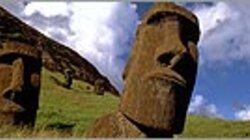
How did the ancient Easter Islanders move and erect giant stone statues? Our team tests one theory.
The discovery of a 9,000-year-old skeleton embroils scientists in a debate over North America's first inhabitants.
NOVA sets out to create a working Roman bath, complete with hot tubs and underfloor heating.
An anthropologist looks for the lost city of Africa's Lemba tribe, and investigates their claim to an ancient Jewish heritage.
Two teams working from opposite sides of a turbulent river attempt to build a 12th-century Chinese bridge.
FRONTLINE and NOVA take on a complex and critical phenomenon—global warming.
NOVA examines the International Space Station, the largest construction project ever undertaken in orbit.
Recent discoveries paint a complex portrait of the Vikings and their boat journeys to places as far-flung as Istanbul.
The Navy undertakes a risky project to salvage the USS Monitor, an innovative armored combat vessel from the Civil War.
A trial in London's High Court examines evidence from Auschwitz to successfully challenge the claims of Holocaust "deniers".

A fisherman's net snags a missing World War II German U-boat off the coast of New Jersey.
Astronomers grapple with some very big questions: what is the size and shape of the universe, and how will it end?
The giant tortoise and an ant-sized frog are just two of the dazzling array of life-forms native to the Seychelles Islands.

Life-threatening eating disorders such as anorexia and bulimia are on the rise among America's youth.
For at least 2,000 years, the wildlife and people living around Japan's Lake Biwa have lived in a harmonious balance.

Archeologists salvage more than 12,000 pieces of Chinese porcelain from an ancient shipwreck.
The mysterious 1947 disappearance of an airplane high in the Andes en route from Argentina to Chile is finally resolved.
From 1940 to 1945, Allied prisoners of war engineered spectacular escapes from Colditz Castle, the Nazis' most impregnable prison.
Using ancient hieroglyphs and new excavations, archeologists investigate the rise and fall of the majestic city of Copan.

Judah Folkman and other researchers pioneer a novel approach to cancer treatment.
NOVA follows seven Harvard Medical School students for 13 years to see what it takes to become a fully qualified doctor. (Part 1 of 3)
NOVA follows seven Harvard Medical School students for 13 years to see what it takes to become a fully qualified doctor. (Part 2 of 3)
NOVA follows seven Harvard Medical School students for 13 years to see what it takes to become a fully qualified doctor. (Part 3 of 3)
Follow the race to decode the human genome and see how this newfound knowledge is already changing medicine.
Genetically modified foods—a wondrous advance or a new threat? Explore the growing controversy.

The tobacco industry's quest for a "safer" cigarette is filled with promise and pitfalls.
Investigate the brave new world of assisted reproduction.

Neuroscientist V.S. Ramachandran's intimate encounters with his patients reveal a novel picture of the brain.
What makes a person male or female? Can you be both? Explore the complex world of gender identity.
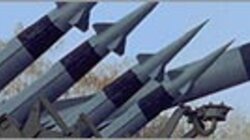
Go inside Russia's largest missile base, where soldiers still stand at the ready, awaiting orders to push the nuclear button
Explore germ warfare's chilling past, present, and future.
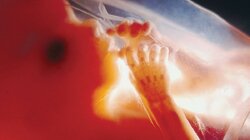
A sequel to one of the most popular NOVAs of all time, "Miracle of Life," this Emmy Award-winning program tracks human development from embryo to newborn using the extraordinary microimagery of Swedish photographer Lennart Nilsson.
NOVA examines the fascinating life cycle of the world's oldest living thing, a 4,600-year-old bristlecone pine in California's White Mountains.
The male bowerbird of Australia exhibits extraordinary courting antics.

Astronomers investigate gamma-ray bursts, the most powerful celestial explosions since the big bang.
Are Neanderthals our ancestors or an evolutionary dead end?

Pyrotechnists use hi-tech firing systems and ancient alchemy to create dazzling fireworks displays.
NOVA looks back to the 1940s, when American spies passed their country's deepest scientific secrets to the Soviets.
Paleontologists studying the Devonian Period (408-360 million years ago) discover a tiny fossil of colossal importance.
Beginning in 1915, Sir Ernest Shackleton and 27 men survive a year and a half lost in the Antarctic.
Can lessons learned from the Twin Towers' collapse make new buildings safer? Forensic engineers investigate the collapse of the World Trade Center.
Wildland firefighters battle one of the most destructive fire seasons in U.S. history.
Doctors combat the deadliest form of meningitis, which strikes young people out of the blue.
Toxic caverns teeming with strange life-forms spark a radical theory of how caves take shape.
Experts rescue priceless mosaics from an ancient city about to vanish beneath a reservoir.
Galileo struggles to persuade church authorities of the truth behind his astonishing discoveries about the cosmos.
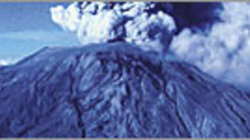
A man obsessed with understanding volcanoes comes up with a radical new way to predict eruptions.
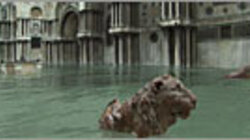
Experts struggle to save the City of Canals before it vanishes beneath the waves

NOVA investigates an all-consuming passion for orchids, nature's most highly evolved plant.
Nova recounts the history of the development of military unmanned aerial vehicles along with the opportunities and challenges they present.
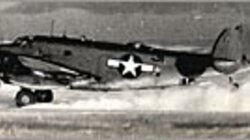
Forensic scientists set out to discover what happened to seven American airmen whose plane crashed in Kamchatka during World War II.
Meet the coelacanth, a bizarre fish and "living fossil" that has changed little in its 400 million years on Earth.
Two aviation giants, Lockheed Martin and Boeing, compete to build the next-generation fighter jet.
Jon Krakauer and fellow mountaineers pioneer a new route on a scientific expedition up Antarctica's highest peak.

A crack restoration team tries to prevent priceless medieval Buddhist murals from crumbling into dust.
Radiation experts play out a frightening terrorist scenario—exploding a bomb laden with radioactive materials.
A toxic aquarium plant is accidentally released into the Mediterranean, overwhelming marine life and threatening to spread worldwide.
Meet Rosalind Franklin, the unsung heroine behind the discovery of DNA's double helix

A battered manuscript turns up after 1,000 years, revealing the mind of the Greek genius Archimedes.
Forensic experts investigate the most famous aviation mystery of World War I.

Eleven dimensions, parallel universes, and a world made out of strings. It's not science fiction, it's string theory. Part 1 of 3.

Eleven dimensions, parallel universes, and a world made out of strings. It's not science fiction, it's string theory. Part 2 of 3.

Eleven dimensions, parallel universes, and a world made out of strings. It's not science fiction, it's string theory. Part 3 of 3.
Relive the engineering challenges that two obscure bicycle makers overcame to become first in flight.

Is the magnetic field protecting Earth from deadly radiation about to reverse direction or even disappear?
Join a scientific expedition to the glacier-capped summit of Kilimanjaro, Africa's tallest mountain.
NASA gambles on two rovers sent to determine if the red planet ever had conditions suitable for life.
Rare lemurs and crocodiles with bizarre cave-dwelling behavior draw scientists to a remote corner of Madagascar.

How and why did man's best friend evolve from wolves, and why are dogs so remarkably diverse today?
A team of "glacionauts" ventures into a labyrinth of unexplored and hazardous glacier caves on France's Mt. Blanc.
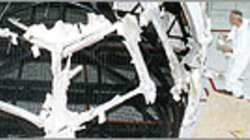
One of the most exhaustive investigations in aviation history reveals telling clues to the cause of a disaster off Nova Scotia.
An American combat hospital mobilized in Iraq faces a daily drama of wartime treatment.
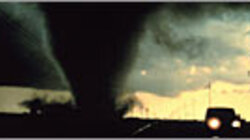
Tornado-chasing scientists with an eye to better forecasting risk their lives to plumb the secrets of nature's most terrifying killer.
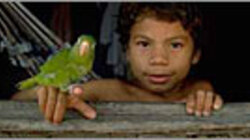
NOVA investigates forces that are radically changing populations in both rich and poor nations, and explores how to create a world that can sustain the human race. (Part 1 of 2)

NOVA investigates forces that are radically changing populations in both rich and poor nations, and explores how to create a world that can sustain the human race. (Part 2 of 2)
Can the U.S. military's high-tech weaponry prevail against insurgents?
In this four part series, NOVA journeys back to the beginning of everything: the universe, Earth, and life itself. (Part 1 of 4)
In this four part series, NOVA journeys back to the beginning of everything: the universe, Earth, and life itself. (Part 2 of 4)
In this four part series, NOVA journeys back to the beginning of everything: the universe, Earth, and life itself. (Part 3 of 4)
In this four part series, NOVA journeys back to the beginning of everything: the universe, Earth, and life itself. (Part 4 of 4)
Examine the complex case of Typhoid Mary, a cook who was quarantined for life against her will in the early 1900s.
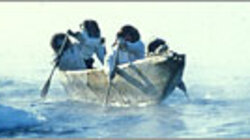
Who were the first Americans, and where did they come from?
Experts dig into World War II's most daring and technically ingenious prison break.
Israel's remote Cave of Letters holds clues to a Jewish uprising against the Romans.
Two rovers roaming the surface of Mars find proof that it was once awash in water.
Who perpetrated Piltdown Man, the greatest scientific fraud of the 20th century?
Engineers, pilots, and others who knew Concorde tell its remarkable story.
Is the Vinland Map a priceless depiction of the New World made before Columbus's voyage or a 20th-century fake

Restorers take on the preservation of the original Declaration of Independence, Constitution, and Bill of Rights.
In 1909, Louis Blériot undertakes a heroic first-ever flight across the English Channel.
Experts reconstruct the 2004 Indian Ocean tsunami in an effort to prepare for the next big one.
What unleashed a catastrophic flood that scarred thousands of square miles in the American Northwest?
The tragic WWII story of the Yamato, the largest battleship ever built.

The story behind the world's most famous equation, E = mc2
Is the Vinland Map a priceless depiction of the New World made before Columbus's voyage or a 20th-century fake
Sir Isaac Newton, the eccentric genius who helped define modern science, was also an obsessive alchemist.
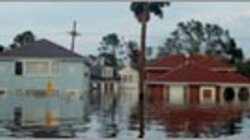
Experts and eyewitnesses reconstruct the devastating floods that Hurricane Katrina unleashed on New Orleans.
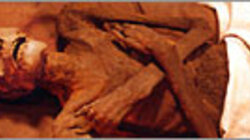
Could a mummy exhibited for 140 years at an obscure museum in Niagara Falls be the remains of a long-lost Egyptian pharaoh?
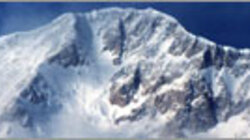
Can medical science forecast why some people get sick climbing at high altitude while others don't? A team of doctors and climbers on Denali test the body's response to extreme cold.
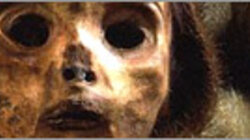
Forensic investigators tease secrets from the well-preserved bodies of people buried long ago in peat bogs.
David Attenborough probes the mysteries of ancient life-forms perfectly preserved in amber.
A 40-year hunt for solar neutrinos leads to a new understanding of matter itself.
Relive two legendary expeditions—one tragic, one triumphant—to pioneer a route through the Northwest Passage.
Driverless vehicles compete in a 130-mile race across the Mojave Desert.
NASA and the European Space Agency dispatch a two-part mission to study Saturn and its enigmatic satellite, Titan.
New evidence that air pollution has masked the full impact of global warming suggests the world may soon face a heightened climate crisis.
Can lessons learned from the Twin Towers' collapse make new buildings safer?
Researchers from Indonesia to Greenland unearth clues to the greatest volcanic eruption of the last 100,000 years.
NOVA investigates the worst aviation accident of all time.
Does a supermassive black hole lurk at the center of our galaxy?
The flamboyant rise and tragic death of pioneering aviator Alberto Santos-Dumont.
Experts explore the mysterious story of five siblings living in a remote Turkish village.

Follow one man's quest to engineer a submarine with panoramic views.
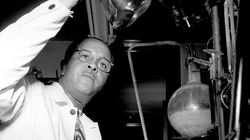
The grandson of Alabama slaves, Percy Julian met with every possible barrier in a deeply segregated America. He was a man of genius, devotion, and determination. As a black man, he was also an outsider, fighting to make a place for himself in a profession and country divided by bigotry—a man who would eventually find freedom in the laboratory. By the time of his death, Julian had risen to the highest levels of scientific and personal achievement, overcoming countless obstacles to become a world-class scientist, industrialist, a self-made millionaire, humanitarian, and a civil-rights pioneer.
An expedition into the Congo examines one of our closest living relatives, the peace-loving bonobo.
Meet the cuttlefish, one of the brainiest, most bizarre animals in the ocean.

In remote mountains of China, experts find clues to the origins of Earth's most stunning plants.
Is it time to take solar energy seriously?
Archeologists uncover the reality behind a great American myth.
Deep in an Australian cave, paleontologists discover fossils of extinct giant animals.
Mass graves and forensic evidence reveal a complex truth about how the Inca Empire fell.
Examine the thousand-year-old art and science behind the making of a Japanese warrior's key weapon.
Experts investigate how a mysterious "second genome" helps determine our biological fates.
Explore what it takes—physically and mentally—for novice runners to make it through a classic test of endurance.

Top-secret documents rewrite the history of the famous satellite and the early space race.

Science is 'Exhibit A' in a landmark trial on the teaching of evolution.
The Mofu people of Cameroon rely on an unlikely ally—a driver ant—to protect their homes and crops.
What happened to American pilots shot down over Korea half a century ago?
The story of the harnessing of cold and the race to reach the lowest temperature possible. (Part 1 of 2)
The story of the harnessing of cold and the race to reach the lowest temperature possible. (Part 2 of 2)

How did the ancient Athenians build this near-flawless icon of Greece's golden age?
An elite corps of secret U.S. astronauts is trained to gather intelligence on the Soviets during the Cold War.
Experts zero in on what separates humans from our closest living relatives.

Surprising fossils from northeastern China spur a debate over how birds evolved.
The story behind the centuries-long decipherment of ancient Maya hieroglyphs
Join the 'Car Talk' guys as they hit the road in search of a new breed of clean, fuel-efficient vehicles.
A powerful story of healing and hope for women in Ethiopia devastated by childbirth injuries
Naturalist E.O. Wilson's fascination with little creatures has led him to some very big ideas.
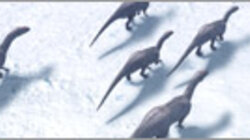
Experts in Alaska investigate how dinosaurs managed to thrive in polar regions.

An investigation uncovers the human failures and design flaws behind the 2003 Columbia tragedy.
Join Mark Everett on his quixotic quest to understand his father Hugh, creator of a radical theory of quantum physics.
Mysteriously beautiful fractals are shaking up the world of mathematics and deepening our understanding of nature.
Do the remains of a tiny hobbit-like creature found on the island of Flores belong to a new human species?
An archeological detective story traces the origins of the Hebrew Bible
Wildlife veterinarians struggle to save injured seals and sea lions on the California coast.
The decades-long search for life on the Red Planet heats up with the discovery of frozen water.

Can California's ambitious plan to cut greenhouse gases actually succeed?

Follow the extraordinary 2,000-mile migration of monarch butterflies to a sanctuary in the highlands of Mexico.

Examine the high-tech eavesdropping carried out by the National Security Agency and the pitfalls of surveillance in an age of terrorism.
Why do huge swarms of rats overrun a bamboo forest in India once every half-century?
An acclaimed photographer teams up with scientists to document the runaway melting of arctic glaciers.
Scientists propose a radical new idea of what killed off mammoths and other large animals at the end of the Ice Age.

Seven doctors, 21 years... Saving lives is only part of the story. Part 1 of 2.

Seven doctors, 21 years... Saving lives is only part of the story. Part 2 of 2.

Oliver Sacks explores how the power of music can make the brain come alive.
A two-hour drama on the crisis that forced Darwin to publish his theory of evolution.
The unlikely story of how the world's most beloved telescope was saved.
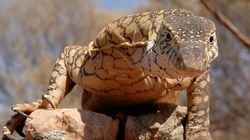
They look like dragons and inspire visions of fire-spitting monsters. But these creatures with their long claws, razor-sharp teeth, and muscular, whip-like tails are actually monitors, the largest lizards now walking the planet. With their acute intelligence, monitors—including the largest of all, the Komodo dragon—are a very different kind of reptile, blurring the line between reptiles and mammals. Thriving on Earth essentially unchanged since the time of the dinosaurs, they are a very successful species, versatile at adapting to all kinds of settings. This program looks at what makes these long-tongued reptiles so similar to mammals and what has allowed them to become such unique survivors.
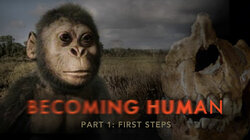
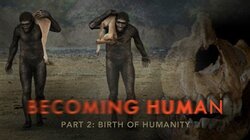
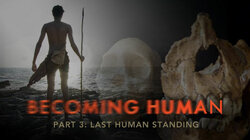

Psychologists and brain scientists have new answers to an age-old question.
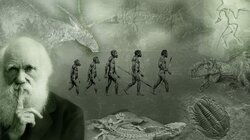
Beneath the waves, discover an untold story of a day that lives in infamy.
Can the legendary ship of an Egyptian queen sail again?
A marvel of ancient engineering is vanishing. Can it be saved?
Why did the Incas abandon their city in the clouds?
A team of intrepid scientists journey into one of Earth's most dangerous and beautiful underwater frontiers.

Take a cross-country journey with Neil deGrasse Tyson to explore the rise and fall of America's favorite planet.

In the aftermath of the worst financial crisis since the Great Depression, NOVA presents "Mind Over Money"—an entertaining and penetrating exploration of why mainstream economists failed to predict the crash of 2008 and why we so often make irrational financial decisions. The program reveals how our emotions interfere with our decision-making and explores controversial new arguments about the world of finance. In the face of the recent crash, can a new science that aims to incorporate human psychology into finance—behavioral economics—help us make better financial decisions?
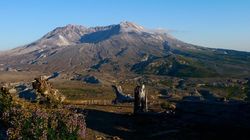
One of the most violent natural disasters of our time, the colossal eruption of Mt. St. Helens in 1980 blasted away an entire mountainside. Over 200 square miles of pristine forest were buried under millions of tons of lava, ash, mud, and avalanche debris. How could life ever return to this barren moonscape? A lone ecologist, Charlie Crisafulli, spent months in the blast zone and was astonished and puzzled by how quickly plants and animals colonized the wasteland. In this program, stunning cinematography and time-lapse photography trace the dramatic story of how Crisafulli witnessed life's return and figured out the puzzle. Now another question arises: How soon could another catastrophic eruption occur?
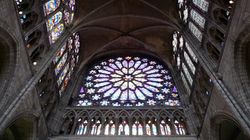
Take a dazzling architectural journey inside those majestic marvels of Gothic architecture, the great cathedrals of Chartres, Beauvais and other European cities. Carved from 100 million pounds of stone, some cathedrals now teeter on the brink of catastrophic collapse. To save them, a team of engineers, architects, art historians, and computer scientists searches the naves, bays, and bell-towers for clues. NOVA investigates the architectural secrets that the cathedral builders used to erect their towering, glass-filled walls and reveals the hidden formulas drawn from the Bible that drove medieval builders ever upward.
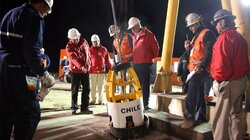
This film chronicles the fate of the 33 miners trapped in a collapsed Chilean gold and copper mine in August 2010 and investigates the many challenges faced by both the miners and those working around the clock to bring them safely to the surface. NOVA was on-site at the San José mine in Chile by early September. Conferred special access, NOVA's film crew interviewed engineers, NASA experts, medical personnel, and key figures from the companies that provided drills and crucial rescue equipment to give a more detailed scientific account of the unfolding events. The resulting film, using footage from the scene as well as advanced animation, showcases the extraordinary feats of engineering as well as the biological and geological factors inherent in the rescue. "Emergency Mine Rescue" also examines the psychological and physiological impact of this kind of prolonged ordeal on the miners and those involved in the rescue efforts.
Elevators have transformed our cities and our lives, but how safe are they?

"Dogs Decoded" reveals the science behind the remarkable bond between humans and their dogs and investigates new discoveries in genetics that are illuminating the origin of dogs—with surprising implications for the evolution of human culture. Other research is proving what dog lovers have suspected all along: Dogs have an uncanny ability to read and respond to human emotions. Humans, in turn, respond to dogs with the same hormone responsible for bonding mothers to their babies. How did this incredible relationship between humans and dogs come to be? And how can dogs, so closely related to fearsome wild wolves, behave so differently?
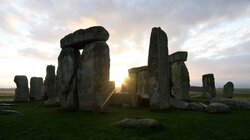
Dated to the late Stone Age, Stonehenge may be the best-known and most mysterious relic of prehistory. Every year, a million visitors are drawn to England to gaze upon the famous circle of stones, but the monument's meaning has continued to elude us. Now investigations inside and around Stonehenge have kicked off a dramatic new era of discovery and debate over who built Stonehenge and for what purpose. How did prehistoric people quarry, transport, sculpt, and erect these giant stones? Granted exclusive access to the dig site at Bluestonehenge, a prehistoric stone-circle monument recently discovered about a mile from Stonehenge, NOVA cameras join a new generation of researchers finding important clues to this enduring mystery.
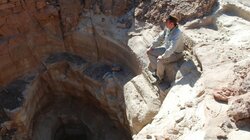
Countless treasure-seekers have set off in search of King Solomon's mines, trekking through burning deserts and scaling the forbidding mountains of Africa and the Levant, inspired by the Bible's account of splendid temples and palaces adorned in glittering gold and copper. Yet to date, the evidence that has claimed to support the existence of Solomon and other early kings in the Bible has been highly controversial. In fact, so little physical evidence of the kings who ruled Israel and Edom has been found that many contend that they are no more real than King Arthur. In the summer of 2010, NOVA and National Geographic embarked on two cutting-edge field investigations that illuminate the legend of Solomon and reveal the source of the great wealth that powered the first mighty biblical kingdoms. These groundbreaking expeditions expose important new clues buried in the pockmarked desert of Jordan, including ancient remnants of an industrial-scale copper mine and a 3,000-year-old message with the words "slave", "king", 0and "judge".
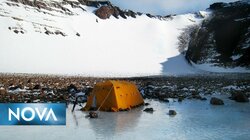
Almost three miles of ice buries most of Antarctica, cloaking a continent half again as large as the United States. But when an Antarctic ice shelf the size of Manhattan collapsed in less than a month in 2002, it shocked scientists and raised the alarming possibility that Antarctica may be headed for a meltdown. Even a ten percent loss of Antarctica's ice would cause catastrophic flooding of coastal cities unlike any seen before in human history. What are the chances of a widespread melt? "Secrets Beneath the Ice" explores whether Antarctica's climate past can offer clues to what may happen. NOVA follows a state-of-the-art expedition that is drilling three-quarters of a mile into the Antarctic seafloor. The drill is recovering rock cores that reveal intimate details of climate and fauna from a time in the distant past when the Earth was just a few degrees warmer than it is today. As researchers grapple with the harshest conditions on the planet, they discover astonishing new clues about Antarctica's past—clues that carry ominous implications for coastal cities around the globe.
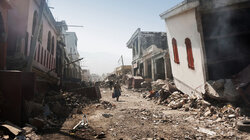
In 2010, several epic earthquakes delivered one of the worst annual death tolls ever recorded. The deadliest strike, in Haiti, killed more than 200,000 people and reduced homes, hospitals, schools, and the presidential palace to rubble. In exclusive coverage, a NOVA camera crew follows a team of U.S. geologists as they enter Haiti in the immediate aftermath of the tragedy. The team hunts for crucial evidence that will help them determine exactly what happened deep underground and what the risks are of a new killer quake. Barely a month after the Haiti quake, Chile was struck by a quake 100 times more powerful, unleashing a tsunami that put the entire Pacific coast on high alert. In a coastal town devastated by the rushing wave, NOVA follows a team of geologists as they battle aftershocks to measure the displacement caused by the earthquake. Could their work, and the work of geologists at earthquake hot spots around the U.S., one day lead to a breakthrough in predicting quakes before they happen? NOVA investigates compelling new leads in this profound scientific conundrum.
What is the strongest material in the world? Is it steel, Kevlar, carbon nanotubes, or something entirely new? NOVA kicks off the four-part series "Making Stuff" with a quest for the world's strongest substances. Host David Pogue takes a look at what defines strength, examining everything from steel cables to mollusk shells to a toucan's beak. Pogue travels from the deck of a U.S. naval aircraft carrier to a demolition derby to the country's top research labs to check in with experts who are re-engineering what nature has given us to create the next generation of strong stuff.
How small can we go? Could we one day have robots taking "fantastic voyages" in our bodies to kill rogue cells? The triumphs of tiny are seen all around us in the Information Age: transistors, microchips, laptops, cell phones. Now, David Pogue takes NOVA viewers to an even smaller world in "Making Stuff: Smaller," examining the latest in high-powered nano-circuits and micro-robots that may one day hold the key to saving lives.
Can innovations in materials science help clean up our world? In "Making Stuff: Cleaner," David Pogue explores the rapidly developing science and business of clean energy and examines alternative ways to generate it, store it, and distribute it. Is hydrogen the way to go? What about lithium batteries? Does this solve an energy problem or create a new dependency? Pogue investigates the latest developments in bio-based fuels and in harnessing solar energy for our cars, homes, and industry in a program full of the stuff of a sustainable future.
"Making Stuff: Smarter" looks at materials that respond to their environments and even learn, such as an airplane wing that changes shape as it flies. Scientists are turning to nature in developing such "smart" stuff. Sharkskin, for instance, has inspired a substance that, when sprayed in hospitals, could eliminate antibiotic-resistant bacteria. David Pogue visits a scientist who has even created a material that can render objects invisible. "Smarter" concludes with a vision of the ultimate in "life-like" stuff: programmable matter that could create a duplicate of a human being.

Jeopardy! challenges even the best human minds. Can a computer win the game? "Watson", an IBM computing system, is gearing up for a first-of-its-kind challenge—taking on human contestants on the game show Jeopardy! With a brain the size of 2,400 home computers and a database of about 10 million documents, will Watson be able to compute its way to victory? Win or lose, the difficulty of mimicking the human thought process with software is showing artificial-intelligence researchers that there's more than one way to be "intelligent".
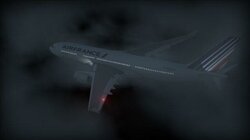
On June 1, 2009, Flight AF447, an Air France Airbus A330 flying from Rio de Janeiro to Paris, disappeared over the Atlantic Ocean with the loss of all 228 lives. How could a state-of-the-art airliner with elaborate electronic safety and navigation features and a faultless safety record simply fall out of the sky? NOVA assembles a team of seasoned pilots, engineers, and safety experts to examine the evidence that emerged in the weeks following this horrific disaster. What led Flight 447's crew to fly straight into a towering thunderstorm? With expert testimony, satellite weather images, and messages transmitted by the doomed plane's computer system, NOVA pieces together the fatal chain of events.
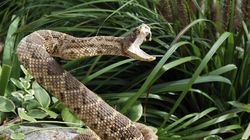
Over the millennia, thousands of creatures have developed that most sophisticated of biological and chemical weapons: venom. These complex chemicals can scramble your brain signals, paralyze your muscles, puncture your blood cells, even begin digesting you from within. But nature's most potent toxins might also contain the keys to a new generation of advanced drugs. Such drugs might help doctors treat heart attacks, cancer, diabetes, and other serious illnesses. Follow NOVA crews as they join scientists on a dangerous quest to track down and capture the world's most venomous animals and find out how they can kill us and how they can save us.
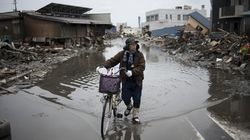
The March 11 earthquake, the worst to ever strike Japan, spawned a tsunami with 30-foot-high waves that destroyed entire towns in minutes. In its worst crisis since World War II, Japan faces disaster on an epic scale: a death toll likely in the tens of thousands, massive destruction of homes and businesses, shortages of water and power, and the specter of a nuclear meltdown. With exclusive footage, NOVA captures the unfolding human drama and offers a clear-headed investigation of what triggered the earthquake, tsunami, and subsequent nuclear crisis. Can science and technology ever prevent devastation in the face of overwhelmingly powerful forces of nature?
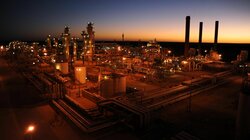
Can emerging technology defeat global warming? The United States has invested tens of billions of dollars in clean energy projects as our leaders try to save our crumbling economy and our poisoned planet in one bold, green stroke. Are we finally on the brink of a green-energy "power surge," or is it all a case of too little, too late? From solar panel factories in China to a carbon capture-and-storage facility in the Sahara desert to massive wind and solar installations in the United States, NOVA travels the globe to reveal the surprising technologies that just might turn back the clock on climate change. NOVA will focus on the latest and greatest innovations, including everything from artificial trees to green reboots of familiar technologies like coal and nuclear energy. Can our technology, which helped create this problem, now solve it?

NOVA presents an epic story of engineering, innovation, and the perseverance of the human spirit. With extraordinary access granted by The Port Authority of New York and New Jersey, "Engineering Ground Zero" follows the five-year construction of One World Trade Center (1 WTC) and the National September 11 Memorial & Museum.
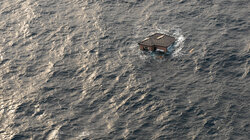
The earthquake that hit the northern coast of Japan on March 11, 2011, was recorded at magnitude 9.0 the worst ever recorded in Japan. It generated an unprecedented tsunami, obliterating coastal villages and towns in a matter of minutes. In some areas, the tsunami climbed above 100 feet in height and traveled miles inland. Amazingly, amateur and professional photographers captured it all on video, including remarkable tales of human survival, as ordinary citizens became heroes in a drama they never could have imagined. As the waves rush in, a daughter struggles to help her elderly mother ascend their rooftop to safety; a man climbs onto an overpass just as the wave overtakes his car. These never-before-seen stories are captured in video and retold after the fact by the survivors who reveal what they were thinking as they made their life-saving decisions. Their stories provide lessons for how we should all act in the face of life-threatening disasters.
Take a spectacular trip to distant realms of our solar system to discover where secret forms of life may lie hidden. Combining the latest telescope images with dazzling animation, this program immerses audiences in the sights and sounds of alien worlds, while top astrobiologists explain how these places are changing how we think about the potential for life in our solar system. We used to think our neighboring planets and moons were fairly boring, mostly cold, dead rocks where life could never take hold. Today, however, the solar system looks wilder than we ever imagined.
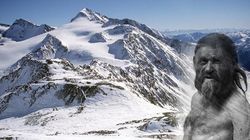
He's been dead for more than 5,000 years and poked, prodded, and probed by scientists for the last 20. Yet Otzi the Iceman, the famous mummified corpse pulled from a glacier in the Italian Alps, continues to keep many secrets. Now, through an autopsy like none other, scientists will attempt to unravel mysteries about this ancient mummy, revealing not only the details of Otzi's death but also an entire way of life. How did people live during Otzi's time, the Copper Age? What did they eat? What diseases did they cope with? Join NOVA as we defrost the ultimate time capsule—the 5,000-year-old man.
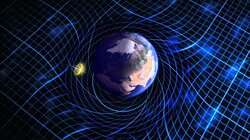
In this four part series, Brian Greene reveals space as a dynamic fabric that can stretch, twist, warp, and ripple under the influence of gravity. Stranger still is the newly discovered dark energy, an ingredient of space that makes up 70 percent of the universe.but scientists have no idea what it is.

Ask physicists what time actually is, and the answer might shock you: they have no idea. The deep sense we have of time passing from present to past may be an illusion. How can our understanding of something so familiar be so wrong? In search of answers, Brian Greene takes us on the ultimate time-traveling adventure.
Brian Greene explores the weirdness of quantum physics, which governs the universe on the tiniest of scales. While counterintuitive, it's one of the most successful theories in the history of science.
Our universe may be just one of an infinite number of worlds that make up the multiverse. In this show, Brian Greene explains why scientists believe this is true and shows what some of these alternate realities might be like.
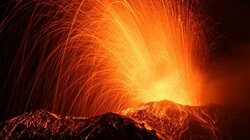
Travel with scientists who are attempting to discover how likely volcanoes are to erupt, when eruptions might happen and how deadly they could prove to be.
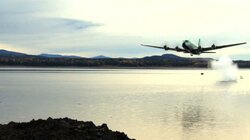
Learn about the revolutionary bouncing bomb and the bombers who destroyed two gigantic dams in Germany's industrial heartland during WWII.

Discover the previously untold story of air photo intelligence that played a vital role in defeating Hitler.
NOVA meets a new breed of experts who are approaching "cold case" art mysteries as if they were crime scenes, determined to discover "who committed the art," and follows art sleuths as they deploy new techniques to combat the multi-billion dollar criminal market in stolen and fraudulent art.
In the Rocky Mountains, archeologists uncover a unique fossil site packed with astonishingly well-preserved bones of mammoths, mastodons, and other giant extinct beasts. The discovery opens a highly focused window on the vanished world of the Ice Age in North America.
Witness the extraordinary surgery that will allow twin girls, born joined at the head, to live separate lives.
Discover why the new era of personalized, gene-based medicine is both ominous and promising - and relevant to everyone.
Take a spin with David Pogue through the world of weird, extreme chemistry to unlock the secrets of the elements.
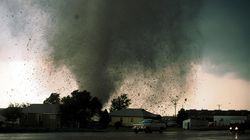
In the wake of April 2011's tornado outbreak, learn how we can protect ourselves and our communities in the future. In 2011, the worst tornado season in decades left a trail of destruction across the U.S., killing more than 550 people. Why was there such an extreme outbreak? How do such outbreaks form? With modern warning systems, why did so many die? Is our weather getting more extreme - and if so, how bad will it get? In this NOVA special, we meet scientists striving to understand the forces at work behind last year's outbreak. Could their work improve tornado prediction in the future? We also meet people whose lives have been upended by these extreme weather events and learn how we all can protect ourselves and our communities for the future.
Find out if modern cruise ships are really safe - or if we're on the brink of a 21st-century Titanic. Twenty million passengers embark on cruises each year, vacationing in deluxe "floating cities" that offer everything from swimming pools to shopping malls to ice skating rinks. And the ships just keep getting bigger: The average cruise ship has doubled in size in just the last ten years. Some engineers fear that these towering behemoths are dangerously unstable, and the recent tragedy of the Costa Concordia has raised new questions about their safety. Now, NOVA brings together marine engineering and safety experts to reconstruct the events that led up to famous cruise disasters, including the ill-fated Concordia, the Sea Diamond, and the Oceanos.
It contains 99.9 percent of all the matter in our solar system and sheds hot plasma at nearly a million miles an hour. The temperature at its core is a staggering 27 million degrees Fahrenheit. It convulses, it blazes, it sings. You know it as the sun. Scientists know it as one of the most amazing physics laboratories in the universe. Now, with the help of new spacecraft and Earth-based telescopes, scientists are seeing the sun as they never have before and even recreating what happens at its very center in labs here on Earth. Their work will help us understand aspects of the sun that have puzzled scientists for decades. But more critically, it may help us predict and track solar storms that have the power to zap our power grid, shut down telecommunications, and ground global air travel for days, weeks, or even longer. Such storms have happened before—but never in the modern era of satellite communication. "Secrets of the Sun" reveals a bright new dawn in our understanding of our nearest star — one that might help keep our planet from going dark.
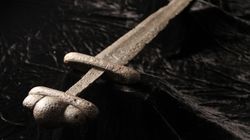
The Vikings were among the fiercest warriors of all time. Yet only a select few carried the ultimate weapon of their era: the feared Ulfberht sword. Fashioned using a process that would remain unknown to the Vikings' rivals for centuries, the Ulfberht was a revolutionary high-tech tool as well as a work of art. Considered one of the greatest swords ever made, it remains a fearsome weapon more than a millennium after it last saw battle. But how did Viking sword makers design and build the Ulfberht, and what was its role in history? Now, NOVA uses cutting edge science and old-fashioned detective work to reconstruct the Ulfberht and finally unravel the "Secrets of the Viking Sword."
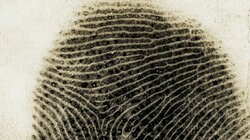
Learn how modern forensics can send innocent men and women to prison - and sometimes even to death row.
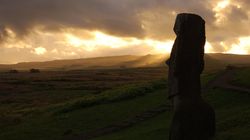
A remote, bleak speck of rock in the middle of the Pacific, Easter Island, or Rapa Nui, has mystified the world ever since the first Europeans arrived in 1722. How and why did the ancient islanders build and move nearly 900 giant statues or moai, weighing up to 86 tons? And how did they transform a presumed paradise into a treeless wasteland, bringing ruin upon their island and themselves? NOVA explores controversial recent claims that challenge decades of previous thinking about the Islanders, who have been accused of everything from ecocide to cannibalism. Among the radical new theories is that the islanders used ropes to "walk" the statues upright, like moving a fridge. With the help of an accurate 15-ton replica statue, a NOVA team sets out to test this high-risk, seemingly unlikely theory—serving up plenty of action and surprises in this fresh investigation of one of the ancient world's most intriguing enigmas.
Witness the exhilarating moments of Curiosity's Mars landing - and the spectacular discoveries afterward.
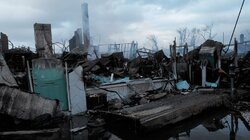
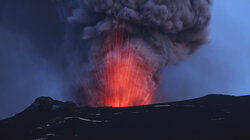
Find out what can we do to prepare for the inevitable disaster following a volcanic eruption in Iceland.
Find out what happened when the first modern humans encountered Neanderthals 60,000 years ago.

Discover the technologies that make drones so powerful, propelling us toward a new chapter in aviation history.

Follow investigators' efforts to determine what really happened to Lindbergh's baby - and why.
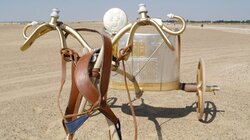
Follow a team of experts who build and test two accurate replicas of Egyptian royal chariots.
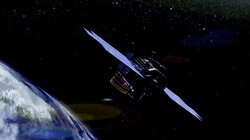
Witness a groundbreaking special that reveals a spectacular new space-based vision of Earth.
Learn how much science can tell us about a brain at risk for violence.
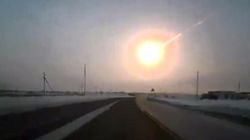
A blinding flash of light streaked across the Russian sky, followed by a shuddering blast strong enough to damage buildings and send more than 1,000 people to the hospital. On the morning of February 15, 2013, a 7,000-ton asteroid crashed into the Earth's atmosphere. According to NASA, the Siberian meteor exploded with the power of 30 Hiroshima bombs and was the largest object to burst in the atmosphere since the Tunguska event of 1908, which was also in Siberia and left few eyewitnesses or clues. This time, the event was captured by digital dashboard cameras, now common in Russian autos and trucks. Within days, NOVA crews joined impact scientists in Russia as they hunted for clues about the meteor's origin and makeup. From their findings, it's clear we came close to a far worse disaster, which NOVA sets in perspective by looking at greater explosions from the past, including Tunguska and the asteroid that wiped out the dinosaurs 65 million years ago. "Meteor Strike" asks: Is our solar system a deadly celestial shooting gallery with Earth in the crosshairs? And what are the chances that another, more massive asteroid is heading straight for us?

In 1900, a storm blew a boatload of sponge divers off course and forced them to take shelter by the tiny Mediterranean island of Antikythera. Diving the next day, they discovered a 2,000 year-old Greek shipwreck. Among the ship's cargo they hauled up was an unimpressive green lump of corroded bronze. Rusted remnants of gear wheels could be seen on its surface, suggesting some kind of intricate mechanism. The first X-ray studies confirmed that idea, but how it worked and what it was for puzzled scientists for decades. Recently, hi-tech imaging has revealed the extraordinary truth: this unique clockwork machine was the world's first computer. An array of 30 intricate bronze gear wheels, originally housed in a shoebox-size wooden case, was designed to predict the dates of lunar and solar eclipses, track the Moon's subtle motions through the sky, and calculate the dates of significant events such as the Olympic Games. No device of comparable technological sophistication is known from anywhere in the world for at least another 1,000 years. So who was the genius inventor behind it? And what happened to the advanced astronomical and engineering knowledge of its makers? NOVA follows the ingenious sleuthing that finally decoded the truth behind the amazing ancient Greek computer.
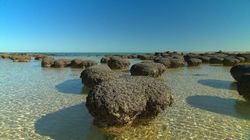
What can Australia reveal about how Earth was born and how life took hold? Join NOVA and host Dr. Richard Smith as they journey back to the very beginning of the Australian story in "Awakening." The first stop is Western Australia, around four and a half billion years ago, where we encounter an Earth shortly after its fiery birth. Hidden in the red hills of Australia are clues to the mysteries of when the Earth was born, how life first arose, and how it transformed the planet. Experts unveil how the earliest forms of life—an odd assortment of bacterial slime—flooded the atmosphere with oxygen, sparking the biological revolution that made animal life possible. It is the beginning of the great drama of life on Earth.
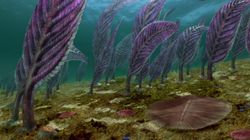
How did life storm the beaches and dominate planet Earth? Ancient Australian fossils offer clues in "Life Explodes." Half a billion years ago, Australia was still part of the super-continent Gondwana. The oceans were teeming with weird and wonderful animals, but the world above the waves remained an almost lifeless wasteland. All that was about to change, though. Host Richard Smith introduces Earth's forgotten pioneers: the scuttling arthropod armies that invaded the shores and the waves of green revolutionaries whose battle for the light pushed plant life across the face of a barren continent. Evolution continued underwater as well, with armor-plated fish experimenting with teeth, jaws, sex, and lungs. NOVA's prehistoric adventure continues with four-legged animals walking onto dry land—and the planet poised for disaster.
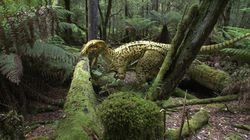
"Monsters" begins Down Under at the dawn of the Age of Dinosaurs. Host Richard Smith comes face-to-face with the previously unknown reptilian rulers of prehistoric Australia. NOVA resurrects the giants that stalked the Great Southern Land and discovers that some of these animals were among the largest ever to have walked the Earth. Others were some of the most dangerous. In the dry desert heart, scientists unearth an ancient inland ocean full of sea monsters. Opal fossils of some of these beasts paint a colorful picture of the exotic seascape, where long-necked plesiosaurs snacked on shelled creatures that grew as large as truck tires. The most fearsome was Kronosaurus, with a skull twice as long as T. rex. But reptiles didn't have the world all to themselves. Mammals like the enigmatic platypus lived alongside them, ready for their moment in the sun.
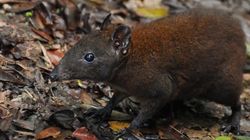
In the wake of the catastrophic asteroid impact believed to have wiped out the dinosaurs, Australia was set adrift on a lonely voyage across southern seas. With host Richard Smith, NOVA travels the walkabout continent to uncover how it became the strange land it is today. In this final episode, "Strange Creatures," NOVA traces the last 65 million years, revealing the events that shaped the Australia we know today. Prehistoric jungles retreated, replaced by eucalypt forests, grasslands, and deserts. When humans first arrived, giant marsupials dominated the land, and the Great Barrier Reef was yet to form. This is a tale of calamity and conquest; how a conspiracy of climate, biology, and geology shaped the Earth we now call home.

Technology to capture the 2 terroists in Boston.

Return to Ground Zero to witness the final chapter in an epic story of engineering and innovation.
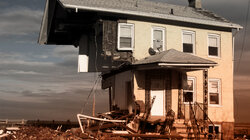
See a fresh investigation of the critical questions raised by the historic storm, Hurricane Sandy.
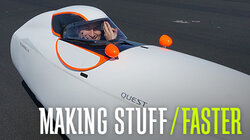
Find out how much we can tweak physiology and engineering to move humans and machines faster.
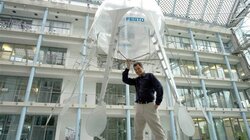
Explore bold innovations inspired by the Earth's greatest inventor, life itself.
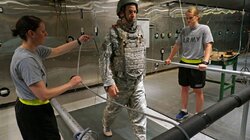
See if cold holds the key to a new generation of science and technology that will improve our lives.
Explore the extent to which science and technology can protect us from natural and man-made dangers.
See what science can tell us about the Kennedy assassination - and the investigations that followed.
A high-flying weather observation plane skirts the earth-space boundary zone in a search for sprites, which are fleeting flashes that flicker upwards from thunderstorms for a split-second.
The asteroid that exploded over Siberia—injuring more than 1,000 and damaging buildings in six cities—was a shocking reminder that Earth is a target in a cosmic shooting range. From the width of a football field to the size of a small city, these space rocks have the potential to be killers. In a collision with Earth, they could set off deadly blast waves, raging fires and colossal tidal waves. But some audacious entrepreneurs look up at asteroids and see payday, not doomsday. Some asteroids are loaded with billions of dollars' worth of elements like iron, nickel, and platinum. NASA is planning an ambitious mission to return samples from a potentially hazardous asteroid, and would-be asteroid miners are dreaming up their own program to scout for potentially profitable asteroids. Will asteroids turn out to be our economic salvation—or instruments of extinction?

Join a mind-bending exploration of strange worlds and the creatures that might exist there.
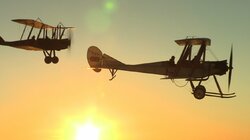
Discover how the British created weaponry for aircraft that could take down enormous German Zeppelins that drop bombs on London during WWI.
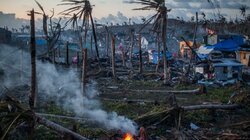
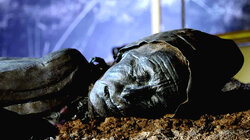
In the rolling hills of Ireland's County Tipperary, a laborer harvesting peat from a dried-up bog spots the remnants of a corpse and stops his machine just in time, revealing a headless torso almost perfectly preserved and stained dark brown by the bog. Archeologists recognize the corpse as one of Europe's rare bog bodies. They hunt for clues to the identity and violent death circumstances of victims unearthed in Ireland's bogs and reveal the strange beliefs of the long-vanished peoples of Europe - the Celts.
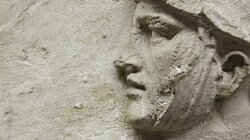
Beneath the streets of Rome lies a city of the dead known as the Catacombs—a labyrinth of tunnels, hundreds of miles long, lined with the neatly laid out tombs of the citizens of ancient Rome. Here, in 2002, maintenance workers fixing a broken water main stumbled upon a previously unknown burial chamber like none other in the complex. It was a mass grave of hundreds of bodies spread across six roughly carved caverns, locked away for nearly 2000 years. Who were these people? And can we discover, after all these centuries, what killed them? Could they be Christian martyrs massacred by the Emperor? Or were they felled by a deadly plague? In "Roman Catacomb Mystery," NOVA's forensic investigation follows a trail of ancient clues to uncover new secrets of life, death, and disease in the heyday of a mighty empire.
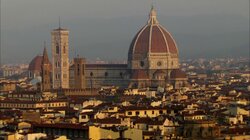
Watch a team of bricklayers build an experimental "mini-Duomo" using period tools and techniques.
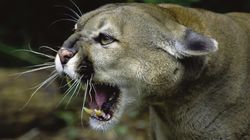
Over the last few centuries we have shot, trapped, and skinned the predators that formerly thrived at the top of the food chain in the wild. Wild bears, wolves, and big cats are all in retreat, and a growing number of scientists are discovering that by eliminating predators, we have changed the environment. Removing predators from the wild has thrown ecosystems off-kilter, triggering domino effects that scientists are just beginning to understand. In "Wild Predator Invasion," NOVA follows scientists who are trying a simple but controversial solution: returning apex predators—like wolves, bears, and panthers—to their natural environments. Can these newly reintroduced predators restore the natural balance of their ecosystems without threatening the humans who live among them?
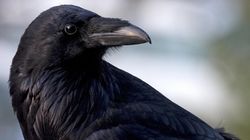
What would it be like to go inside the mind of an animal? Now, the revolutionary science of animal cognition is revealing hard evidence about how animals understand the world around them, uncovering their remarkable problem-solving abilities, and exploring the complexity of their powers of communication and even their emotions. In the three-hour special "Inside Animal Minds," NOVA explores these breakthroughs through three iconic creatures: dogs, birds, and dolphins. We'll travel into the spectacularly nuanced noses of dogs and wolves and ask whether their reliance on different senses has shaped their evolution. We'll see through the eyes of a starling in flight and test the tool-using skills of one of the smartest birds, the crow. We'll listen in as scientists track dolphins in the Caribbean and elephants on the African savannah, trying to unlock the secrets of animal communication. As we discover how researchers are pushing the animal mind to its limits, we'll uncover surprising similarities to—and differences from—the human mind.When it comes to intelligence, we humans are clearly the most gifted animals around. But what makes us so special? Is it our ability to make and use tools? To solve complex problems? Or plan for the future? It might seem that way, but today, researchers are discovering other creatures with impressive brains that have mastered all those skills. Surprisingly, many are bird brains. Crows bend and shape sticks to create custom-made spears for hunting grubs, and they are just one among a growing list of bird species whose impressive problem-solving abilities are shocking scientists and revolutionizing our understanding of animal intelligence. At the head of the class, we meet animals like Muppet, a cockatoo with a talent for picking locks; 007, a wild crow on a mission to solve an eight-step puzzle for the first time ever; and Bran, a tame raven who can solve a puzzle box so quickly that his performance has to be captured with high-speed photography. But are these skills really evidence of high intelligence, or just parlor tricks, the result of training and instinct? To find out, NOVA tests the limits of some of the planet's brainiest animals, searching for the secrets of a problem-solving mind.
What would it be like to go inside the mind of an animal? Now, the revolutionary science of animal cognition is revealing hard evidence about how animals understand the world around them, uncovering their remarkable problem-solving abilities, and exploring the complexity of their powers of communication and even their emotions. In the three-hour special "Inside Animal Minds," NOVA explores these breakthroughs through three iconic creatures: dogs, birds, and dolphins. We'll travel into the spectacularly nuanced noses of dogs and wolves and ask whether their reliance on different senses has shaped their evolution. We'll see through the eyes of a starling in flight and test the tool-using skills of one of the smartest birds, the crow. We'll listen in as scientists track dolphins in the Caribbean and elephants on the African savannah, trying to unlock the secrets of animal communication. As we discover how researchers are pushing the animal mind to its limits, we'll uncover surprising similarities to—and differences from—the human mind.What is it like to be a dog, a shark, or a bird? Long the subject of human daydreams, this question is now getting serious attention from scientists who study animal senses. The senses define our experience of the world—they shape our minds and help make us what we are. Humans rely on smell, sight, taste, touch, and sound, but other animals have super-powered versions of these senses, and a few, like electrically-sensitive sharks, even have extra senses we don't have at all. From a dog who seems to use smell to tell time to a dolphin who can "see" with his ears, we will discover how animals use their senses in ways we humans can barely imagine. But it's not just the senses that are remarkable—it's the brains that process them. How does a swallow's tiny, one-gram brain take in the flood of visual information that enables the bird to whiz within inches of buildings while flying at 40 miles per hour? How does a dog's mind turn the sight of a hand signal into the happy anticipation of a treat? How has the evolution of the dog—from its wolf ancestors–reshaped its brain? NOVA goes into the minds of animals to "see" the world in an entirely new way.
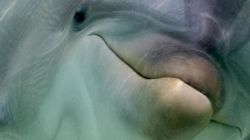
What would it be like to go inside the mind of an animal? Now, the revolutionary science of animal cognition is revealing hard evidence about how animals understand the world around them, uncovering their remarkable problem-solving abilities, and exploring the complexity of their powers of communication and even their emotions. In the three-hour special "Inside Animal Minds," NOVA explores these breakthroughs through three iconic creatures: dogs, birds, and dolphins. We'll travel into the spectacularly nuanced noses of dogs and wolves and ask whether their reliance on different senses has shaped their evolution. We'll see through the eyes of a starling in flight and test the tool-using skills of one of the smartest birds, the crow. We'll listen in as scientists track dolphins in the Caribbean and elephants on the African savannah, trying to unlock the secrets of animal communication. As we discover how researchers are pushing the animal mind to its limits, we'll uncover surprising similarities to—and differences from—the human mind.What makes an animal smart? What forces of evolution drive brains to become more complex? Many scientists believe the secret lies in our relationships. Throughout the animal kingdom, some of the cleverest creatures—including humans—seem to live in complex social groups, like dolphins, elephants, and apes. Could the skills required to keep track of friend and foe make animals smarter? To find out, NOVA goes inside the social lives of some of the smartest animals on the planet. Off the coast of Florida, we see dolphins team up to catch fish by whipping up a wall of muddy water that drives the meal right into their companions' waiting mouths. It seems that the dolphins are working together to plan their hunt. But are they really? Biologists go on a quest to decipher the secrets of animal societies, from the seas of the Caribbean to the plains of Africa. Do dolphins and elephants have "language?" Do chimps have a sense of fairness? And are any animals besides ourselves capable of feeling empathy?
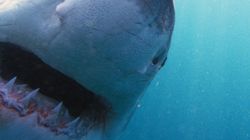
In recent years, an unusual spate of deadly shark attacks has gripped Australia, resulting in five deaths in ten months. At the same time, great white sharks have begun appearing in growing numbers off the beaches of Cape Cod, Massachusetts, not far from the waters where Steven Spielberg filmed the ultimate shark fright film, Jaws. What's behind the mysterious arrival of this apex predator in an area where they've rarely been seen for hundreds of years? Are deadly encounters with tourists inevitable? To separate fact from fear, NOVA teams up with leading shark experts in Australia and the United States to discover the science behind the great white's hunting instincts. Do sharks ever target humans, or is each attack a tragic case of mistaken identity? And can a deeper understanding of shark senses lead scientists to design effective deterrents and help prevent future attacks?
Examine an ingenious plan to escape from Colditz Castle, a prisoner of war camp in Nazi Germany.
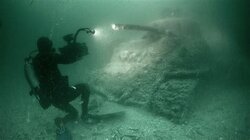
Examine one of the largest underwater archaeological sites, the seabed bordering the D-Day beaches.

Examine the science behind vaccinations, the return of preventable diseases and the risks of opting out.
Meet the new global geek squad racing to stay one step ahead of the hackers.
Get the inside story of the search for Flight MH370 and meet those who looked for the lost plane.
In December, 2013, in a small village in West Africa, a young boy died from the dreaded disease, Ebola. Over the next nine months the virulent killer would claim more victims than all previous Ebola epidemics put together. And for the first time, the disease escaped the isolated, rural villages where it had first appeared and traveled in infected patients by air to densely populated cities in several African countries. As the epidemic threatens to spiral out of control, NOVA reports from the hot zone, where courageous medical teams struggle to cope with a flood of victims, and in labs where scientists are racing to test vaccines and find a cure. "Surviving Ebola" includes chilling first-hand interviews of what it's like to catch—and—survive this terrible affliction.
Watch the re-creation of an 18th-century hot air balloon, using period tools and materials.

Uncover secrets of some colorful and deadly early flying machines and explore their role in WWI.
Almost a century ago, paleontologists found the first tantalizing hints of a monster even bigger than Tyrannosaurusrex, perhaps the largest predator ever to roam the Earth: spectacular fossil bones from a dinosaur dubbed Spinosaurus. But the fossils were completely destroyed during a World War II Allied bombing raid, leaving only drawings, questions, and a mystery: What was Spinosaurus? Now, the discovery of new bones in a Moroccan cliff face is reopening the investigation into this epic beast. What did it feed on, and how? Why did it grow so big? We follow the paleontologists who are reconstructing this terrifying carnivore, revealing a 53-foot-long behemoth with a huge dorsal sail, enormous, scimitar-like claws, and massive jaws tapered toward the front like a crocodile. Bringing together experts in paleontology, geology, climatology, and paleobotany, this NOVA/National Geographic special brings to life the lost world over which Spinosaurus reigned more than 65 million years ago.
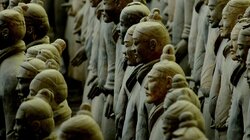
In central China, a vast underground mausoleum conceals a life-size terracotta army of cavalry, infantry, horses, chariots, weapons, administrators, acrobats, and musicians, all built to serve China's first emperor, Qin Shi Huang Di, in the afterlife. Lost and forgotten for over 2,200 years, this clay army, 8,000-strong, stands poised to help the First Emperor rule again beyond the grave. Now, a new archaeological campaign is probing the thousands of figures entombed in the mausoleum. With exclusive access to pioneering research, "Emperor's Ghost Army" explores how the Emperor directed the manufacture of the tens of thousands of bronze weapons carried by the clay soldiers. NOVA tests the power of these weapons with high-action experiments and reports on revolutionary 3D computer modeling techniques that are providing new insights into how the clay figures were made, revealing in the process the secrets of one of archaeology's greatest discoveries.
Scientists investigate the specific local geological and climatic factors behind the 2014 collapse of a hillside in Oso, Washington. Learn what triggered the deadliest U.S. landslide in decades.
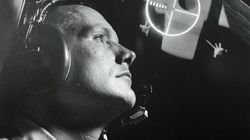
A profile of Neil Armstrong (1930-2012), the first person to set food on the moon, featuring remarks from his family and friends.
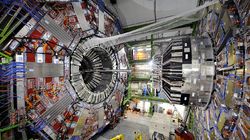
On July 4, 2012, scientists at the giant atom-smashing facility at CERN announced the discovery of a subatomic particle that seems like a tantalizingly close match to the elusive Higgs Boson, thought to be responsible for giving all the stuff in the universe its mass. Since it was first proposed nearly fifty years ago, the Higgs has been the holy grail of particle physicists: in finding it they validate the "standard model" that underlies all of modern physics and open the door to new discoveries when CERN's Large Hadron Collider switches on at higher power in 2015.
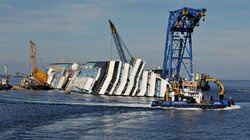
Follow the epic operation to secure, raise, and salvage the Costa Concordia cruise ship, which ran aground and tragically capsized off the coast of Italy on January 13, 2012, killing 32 people. The massive wreck—with a 160-foot-long hole in its hull—stretches the length of three football fields, weighs 45,000 tons, and was half submerged on the site of a protected reef. Moving it from its precarious perch on the edge of an underwater cliff turned into a technical and logistical challenge of staggering proportions. Join NOVA as we follow a team of more than 500 divers and engineers working around the clock as they attempt the biggest ship recovery project in history.
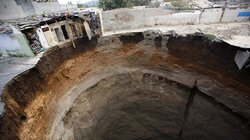
Investigate what it's like to have your world vanish beneath your feet. http://pressroom.pbs.org/Programs/n/NOVA.aspx.
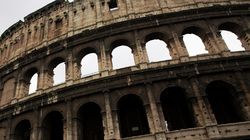
One of the ancient world's most iconic buildings, the Colosseum is a monument to Roman imperial power and cruelty. Its graceful lines and harmonious proportions concealed a highly efficient design and advanced construction methods that made hundreds of arches out of 100,000 tons of stone. In its elliptical arena, tens of thousands of gladiators, slaves, prisoners, and wild animals met their deaths. Ancient texts report lions and elephants emerging from beneath the floor as if by magic to ravage gladiators and people condemned to death. Then, just as quickly, the Colosseum could be flooded with so much water that ships could engage in sea battles to the delight of the crowd. Now, archaeologists and engineers are teaming up to recreate a 25-foot lifting machine and trap door system capable of releasing a wolf into the Colosseum's arena for the first time in 1,500 years. Do they have what it takes to replicate the innovation and ingenuity of the Romans?
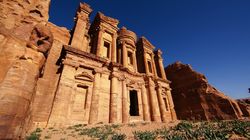
More than 2,000 years ago, the thriving city of Petra rose up in the bone-dry desert of what is now Jordan. An oasis of culture and abundance, the city was built by wealthy merchants whose camel caravans transported incense and spices from the Arabian Gulf. They carved spectacular temple-tombs into its soaring cliffs, raised a monumental Great Temple at its heart, and devised an ingenious system that channeled water to vineyards, bathhouses, fountains, and pools. But following a catastrophic earthquake and a slump in its desert trade routes, Petra's unique culture faded and was lost to most of the world for nearly a thousand years. Now, in a daring experiment, an archaeologist and sculptors team up to carve an iconic temple-tomb to find out how the ancient people of Petra built their city of stone. Meanwhile, scientists using remote sensors and hydraulic flumes uncover the vast city and its sophisticated water system. The race is on to discover how these nomads created this oasis of culture in one of the harshest climates on Earth.
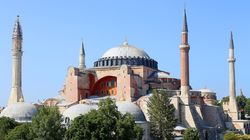
Whether serving as a Christian church, Islamic mosque, or secular museum, Hagia Sophia and its soaring dome have inspired reverence and awe. For 800 years, it was the largest enclosed building in the world—the Statue of Liberty can fit beneath its dome with room to spare. How has it survived its location on one of the world's most active seismic faults, which has inflicted a dozen devastating earthquakes since it was built in 537? As Istanbul braces for the next big quake, a team of architects and engineers is urgently investigating Hagia Sophia's seismic secrets. Follow engineers as they build a massive 8-ton model of the building's core structure, place it on a motorized shake table, and hit it with a series of simulated quakes, pushing it to collapse—a fate that the team is determined to avoid with the real building.
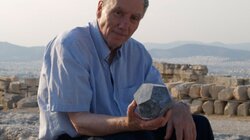
Join NOVA on a mathematical mystery tour—a provocative exploration of math's astonishing power across the centuries. We discover math's signature in the swirl of a nautilus shell, the whirlpool of a galaxy, and the spiral in the center of a sunflower. Math was essential to everything from the first wireless radio transmissions to the prediction and discovery of the Higgs boson and the successful landing of rovers on Mars. Astrophysicist and writer Mario Livio, along with a colorful cast of mathematicians, physicists, and engineers, follow math from Pythagoras to Einstein and beyond. It all leads to the ultimate riddle: Is math a human invention or the discovery of the language of the universe?
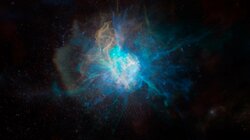
The Hubble Space Telescope's discoveries over past 25 years.
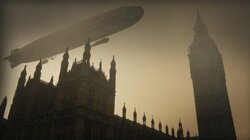
Learn about a little-known attack from the ocean depths that claimed 5,000 American lives.
A deadly recipe is brewing that threatens the survival of countless creatures throughout Earth's oceans. For years, we've known that the oceans absorb about a quarter of the carbon dioxide in our atmosphere. But with high carbon emissions worldwide, this silent killer is entering our seas at a staggering rate, raising the ocean's acidity. It's eating away at the skeletons and shells of marine creatures that are the foundation of the web of life. NOVA follows the scientists making breakthrough discoveries and seeking solutions. Visit a unique coral garden in Papua New Guinea that offers a glimpse of what the seas could be like a half-century from now. Can our experts crack the code of a rapidly changing ocean before it's too late?
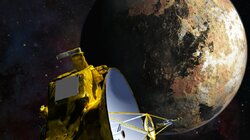
View New Horizon's historic capture of the first-ever detailed images of Pluto's icy world.
Follow the minute-by-minute story of the Fukushima nuclear crisis and its aftermath.
NOVA and National Geographic present exclusive access to a unique discovery of ancient remains. Located in an almost inaccessible chamber deep in a South African cave, the site required recruiting a special team of experts slender enough to wriggle down a vertical, pitch-dark, seven-inch-wide passage. Most fossil discoveries of human relatives consist of just a handful of bones. But down in this hidden chamber, the team uncovered an unprecedented trove—so far, over 1,500 bones—with the potential to rewrite the story of our origins. They may help fill in a crucial gap in the fossil record and tell us how Homo, the first member of the human family, emerged from ape-like ancestors like the famous Lucy. But how did hundreds of bones end up in the remote chamber? The experts are considering every mind-boggling possibility. Join NOVA on the treacherous descent into this cave of spectacular and enigmatic finds, and discover their startling implications for the saga of what made us human.
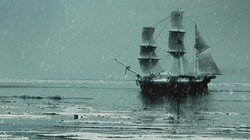
NOVA presents "Arctic Ghost Ship" an exclusive breakthrough in the greatest unsolved mystery in Arctic exploration. In 1845, British explorer Sir John Franklin set off to chart the elusive Northwest Passage, commanding 128 men in two robust and well-stocked Royal Navy ships, the Erebus and Terror. They were never heard from again. Eventually, searchers found tantalising clues to their fate: a hastily written note left on an island, exhumed bodies suggesting lead poisoning, discarded human bones with marks of cannibalism and Inuit legends of ghost ships. But no trace of the ships was ever found. Then, in 2014, after seven years of searching, an official Parks Canada expedition finally located the Erebus, intact and upright on the sea floor. With exclusive access, NOVA tells the inside story of the risky Canadian expedition, which involved constant battles with crushing sea ice, bad weather, and disappointing dead ends. Culminating in the historic discovery of the Erebus, NOVA tells the gripping story of the ill-fated expedition and reveals exclusive new clues from the sea floor that may finally unravel what happened to Franklin's men more than 160 years ago.
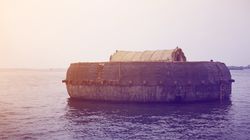
In 1948, a British pilot serving in Iraq acquired a clay tablet with an intriguing, 3,700-year-old inscription. The ancient writing tells the story of how the god Enki warns a Sumerian king named Atra-Hasis of a future flood that will destroy mankind; Enki gives him instructions for building a boat to save his family and livestock. If that sounds like a familiar tale, it's because this was one of several ancient flood traditions that, centuries later, would inspire the biblical story of Noah. But the tablet's inscription describes a boat very different from the traditional image of the Ark—it's said to be circular and made of reeds. Is this nothing more than a fanciful myth? Or could such a reed boat have carried Atra-Hasis' family of more than one hundred and his many animals? Join NOVA as a team of historians and expert boat builders investigates this fascinating flood legend and sets out to rebuild a tantalizing, ancient forerunner of the Ark.

Through startling, previously unreported detail, delve into the chilling new reality of cyberwar, in which cyber weapons can inflict physical damage on our factories, power plants and pipelines ... leaving us vulnerable to crippling attacks.
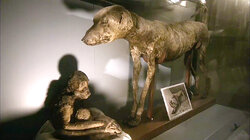
PBS' premier science series helps viewers of all ages explore the science behind the headlines. Along the way, NOVA programs demystify science and technology and highlight the people involved in scientific pursuits.
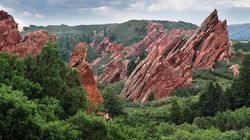
See the epic 3-billion-year story of how our continent came to be. From palm trees that once flourished in Alaska to huge eruptions that nearly tore the Midwest in two, discover how forces of almost unimaginable power gave birth to North America.
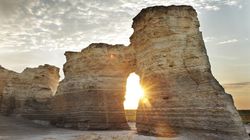
How did life emerge on our primeval continent? Why was North America home to so many iconic dinosaurs like T. rex? And how did a huge sea filled with giant marine reptiles end up covering Kansas, splitting the continent in two? We tell the surprising intertwined story of life and the landscape in North America.
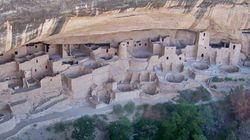
Explore the intimate connections between the landscape, the colonizing of the continent, and the emergence of our industrial world. Beginning with Native American ancestors who crafted hunting weapons from stone traded across hundreds of miles, the program shows how pre-Columbian civilizations developed an expert knowledge of the landscape and its resources. With the arrival of Europeans, North America's hidden riches became to key to prosperity, from the gold rush to today's oil and gas boom. As a result, human activity has transformed the continent on a scale that rivals the geological forces that gave birth to it billions of years before. Yet, scientists warn of sleeping giants like the Cascadia fault, and the earthquake/tsunami one-two punch it could unleash on the Pacific Northwest. Even as we re-mold the continent to suit our needs, geologic processes inexorably continue, and they raise potential risks of catastrophe to our human civilization.

On November 25th, 1915, Einstein published his greatest work: general relativity. The theory transformed our understanding of nature's laws and the entire history of the cosmos, reaching back to the origin of time itself. Now, in celebration of the 100th anniversary of Einstein's achievement, NOVA tells the inside story of Einstein's masterpiece. The story begins with the intuitive thought experiments that set Einstein off on his quest and traces the revolution in cosmology that is still playing out in today's labs and observatories. Discover the simple but powerful ideas at the heart of relativity, illuminating the theory—and Einstein's brilliance - as never before. From the first spark of an idea to the discovery of the expanding universe, the Big Bang, black holes, and dark energy, NOVA uncovers the inspired insights and brilliant breakthroughs of "the perfect theory." "Inside Einstein's Mind" was nominated for an Emmy Award.
Join archaeologists who reveal traces of WWI's most devastating, ultra-secret tunneling operation.
Four and a half billion years ago, the young Earth was a hellish place—a seething chaos of meteorite impacts, volcanoes belching noxious gases, and lightning flashing through a thin, torrid atmosphere. Then, in a process that has puzzled scientists for decades, life emerged. But how? NOVA joins mineralogist Robert Hazen as he journeys around the globe. From an ancient Moroccan market to the Australian Outback, he advances a startling and counterintuitive idea—that the rocks beneath our feet were not only essential to jump-starting life, but that microbial life helped give birth to hundreds of minerals we know and depend on today. It's a theory of the co-evolution of Earth and life that is reshaping the grand-narrative of our planet's story.
Tiny, transparent, and threatened, krill are crucial to the Antarctic ecosystem. But the population of krill is crashing for reasons that continue to baffle the experts. A leading theory says that krill's life cycle is driven by an internal body clock that responds to the waxing and waning of the Antarctic ice pack, and as climate change alters the timing of the ice pack, their life cycle is disrupted. To test it, NOVA travels on the Polarstern, a state-of-the-art research vessel, to the frigid ice pack in the dead of winter. From camps established on the ice, scientists dive beneath the surface in search of the ice caves that shelter juvenile krill during the winter. There, they hope to discover what's causing the krill to vanish and, ultimately, how the shifting seasons caused by climate change could disrupt ecosystems around the world.
Investigate the devastating quake that rocked Nepal, from Mt. Everest to the streets of Kathmandu. This includes the science and anatomy of the April 2015 earthquake in Nepal, as well as stories from survivors who were on Mount Everest and from residents who live near the epicenter.
On a summer's night, there's nothing more magic than watching the soft glow of fireflies switching on and off. Few other life forms on land can light up the night, but in the dark depths of the oceans, it's a different story: nearly 90% of all species shine from within. Whether it's to scare off predators, fish for prey, or lure a mate, the language of light is everywhere in the ocean depths, and scientists are finally starting to decode it. NOVA and National Geographic take a dazzling dive to this hidden undersea world where most creatures flash, sparkle, shimmer, or simply glow. Join deep sea scientists who investigate these stunning displays and discover surprising ways to harness nature's light—from tracking cancer cells to detecting pollution, lighting up cities, and even illuminating the inner workings of our brains.

Memory is the glue that binds our mental lives. Without it, we'd be prisoners of the present, unable to use the lessons of the past to change our future. From our first kiss to where we put our keys, memory represents who we are and how we learn and navigate the world. But how does it work? Neuroscientists using cutting-edge techniques are exploring the precise molecular mechanisms of memory. By studying a range of individuals ranging—from an 11-year-old whiz-kid who remembers every detail of his life to a woman who had memories implanted—scientists have uncovered a provocative idea. For much of human history, memory has been seen as a tape recorder that faithfully registers information and replays intact. But now, researchers are discovering that memory is far more malleable, always being written and rewritten, not just by us but by others. We are discovering the precise mechanisms that can explain and even control our memories. The question is—are we ready?
He was stalked, attacked and left to die alone. Murdered more than 5,000 years ago, Otzi the Iceman is Europe's oldest known natural mummy. Miraculously preserved in glacial ice, his remarkably intact remains continue to provide scientists, historians, and archeologists with groundbreaking discoveries about a crucial time in human history. But in order to protect him from contamination, this extraordinary body has been locked away, out of reach, in a frozen crypt—until now. NOVA joins renowned artist and paleo-sculptor Gary Staab as he has been granted rare access into the Iceman's frozen lair. Gary has been charged with creating an exact replica of the mummy, which scientists and the public alike can then study up close and in person. As we see the Iceman reborn from 3D printing, resin, clay and paint, new revelations about Otzi's life and legacy come to light, including surprising secrets hidden in his genetic code.
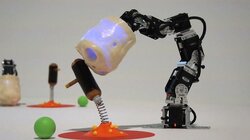
Machines are everywhere. They run our factory assembly lines and make our coffee. But humanoid robots—machines with human-like capabilities—have long been the stuff of science fiction. Until now. Fueled by an ambitious DARPA challenge, the race is on to design a robot that can replace humans in disaster relief situations. Follow the robots and the engineers that program them as they strive to make their way out of the lab and into the real world. But how capable are they, really? How close are we to a future where humanoid robots are part of our everyday lives? And what will the future look like with robots that can do a human's job? NOVA investigates the cutting-edge technologies that are advancing robotics—and the enormous challenges that robots still face.
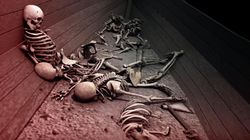
Search for the truth behind the legends of the Vikings and their epic journey to the Americas. Bloody raids. Merciless pillaging. Loathsome invasions. The Vikings are infamous for their fearsome conquests—but they were also expert seafarers, skilled traders, and courageous explorers. They traveled far and wide, crisscrossing the known world from Scandinavia to Europe and into Asia, leaving a trail of evidence that suggests they were far from just vicious warriors. Through stunning CGI recreations and careful investigation of archeological evidence, "Vikings Unearthed" unravels the secrets of these intrepid adventurers. And now, new evidence is coming to light that these pioneering people may have ventured even farther than we had suspected. Renowned space archeologist Sarah Parcak takes up the case and is on the trail of the Vikings. What she discovers might rewrite history.
Join investigators as they untangle the cause of Alzheimer's and race to develop a cure.
Explore how newly established wildlife corridors offer hope to our planet's endangered species.
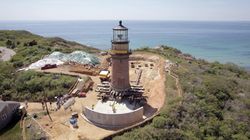
On the picturesque bluffs at the very tip of the island of Martha's Vineyard, disaster looms. The historic Gay Head Lighthouse is soon to become the next victim of the persistent erosion of the island's cliffs. Built in 1856, the more than 400-ton structure soars 175 feet above the sea. But over the years, storms and the raging ocean have eroded the headland away. With fierce storms and hurricanes only intensifying as the global climate warms, this historic landmark is precipitously close to toppling into the ocean. Now, an epic rescue is underway as a team of engineers attempts to move the iconic red brick structure 134 feet inland to safety. As they race to save this national treasure, discover the geology they encounter, the archeology they discover, and technology they employ in this Lighthouse Rescue.
Growing desperate in 1943, Hitler hatches a diabolical weapon: a bank of "superguns" housed in a massive underground complex in Nazi-occupied northern France. Together the guns would be able to pump 600 high explosive shells 100 miles into downtown London every hour. This weapon could spell doom for the allies. But how can such a massive gun possibly work? Join NOVA as engineers, archaeologists and WWII historians investigate this fearsome weapon. And discover the two audacious missions designed to destroy the seemingly impregnable supergun complex, one of which is led by Joseph Kennedy, Jr.
Discover what happens in the mind of a terrorist and how we may intercede to stop the next attack.
In a new age of information, rapid innovation and globalization, how can we prepare our children to compete? Discover how the new science of learning can help us reimagine the future of education for all children.
Our ancient human ancestors once lived only in Africa in tiny bands of a few thousand hunter-gatherers. Then we moved out of our African cradle, spreading rapidly to every corner of the planet. How did we acquire the skills, technology, and talent to thrive in every environment on earth? How did our prehistoric forebears cross the Sahara, survive frigid ice ages, and sail to remote Pacific islands? "Great Human Odyssey" is a spectacular global journey following their footsteps out of Africa along a trail of fresh scientific clues. With unique glimpses of today's Kalahari hunters, Siberian reindeer herders, and Polynesian navigators, we discover amazing skills that hint at how our ancestors survived and prospered long ago. Walk in the footsteps of our ancient ancestors as Canadian anthropologist Niobe Thompson and other scientists trace the paths that led us out of Africa and around the world. From snowy Siberia to remote Pacific islands, discover how humans survived and thrived in every corner of the planet.
Underneath the streets of London, a team of more than ten thousand construction workers race to build a brand new metro line—Crossrail. Costing almost $23 billion, it's the biggest engineering project in Europe and must link into the existing metro system. As they burrow the 26 miles of tunnels, engineers battle to make sure historic buildings don't crack, London Underground trains keep running, and an ambitious station roof made up of 2500 pieces comes together on time. Crucially, they must drive one of their gigantic 1000-ton tunnel boring machines through the earth, passing within inches of escalators and an active subway tunnel, without the passengers on the tube platforms below ever knowing they are there. Join NOVA to plunge into the tunnels of the London Underground and follow this high stakes, action packed engineering endeavor, and discover just how engineers are performing this delicate surgery through the heart of the historic city.
Explore how precious gems, metals and energy resources are forged under extraordinary circumstances deep within the Earth, and discover how their unique properties have helped lift humanity from the Stone Age to the stars. Their beauty has captivated us for millennia. Their cost can be extraordinary–some are even considered priceless. Precious gems like diamonds, rubies, emeralds, opal, and jade are the ultimate treasures of the Earth, and each one is made from a specific–and often torturous–recipe of chemistry, pressure, and heat. The secrets to their sparkle, color, and even strength lie deep inside the gems themselves, but could they also hold clues to one of the most enduring mysteries in the field of geology? From Tiffany's workshop in New York to the sapphire mines of Sri Lanka, from North Carolina's emerald fields to the jade-laden Forbidden City of China, join NOVA in the first episode of a 3-part series, "Treasures of the Earth," as we explore the fascinating science of gems.
Explore how precious gems, metals and energy resources are forged under extraordinary circumstances deep within the Earth, and discover how their unique properties have helped lift humanity from the Stone Age to the stars. Explore how precious gems, metals, and energy resources are forged under extraordinary circumstances deep within the Earth, and discover how their unique properties have helped lift humanity from the Stone Age to the stars. The enduring luster of gold, the conductivity of copper, the strength of steel—the unique properties of metals have reshaped societies and defined eras; they have such an essential role in human history that entire ages have been named after them. But what gives metals their astounding characteristics? From the perfect ring of a bronze bell to the awe-striking steel construction of Beijing's "Bird's Nest" stadium, how have humans perfected metalworking? And how have metals enabled our modern hi-tech world? Explore the science of metals with chemists and engineers as they literally test the mettle of metals and investigate how these remarkable materials have ushered humanity from the Stone Age to the stars.
Explore how precious gems, metals and energy resources are forged under extraordinary circumstances deep within the Earth, and discover how their unique properties have helped lift humanity from the Stone Age to the stars. Drill down to discover the treasures beneath our feet that power our world. Fossil fuels–coal, oil, and natural gas–powered the industrial revolution and allowed us to build a way of life that many cherish today. Personal cars, planes, lights, hot showers–all of these are gifts from our fossil fuels… but they have a dirty dark side in that they are polluting the planet. What is it about these natural resources that has allowed them to fuel our civilization? What secrets are locked in their molecules? Where did that energy come from, and can we find alternative energy resources that come in a cleaner form? The hunt is on for new treasures that might allow us to power our modern way of life without damaging the environment. Join NOVA as we explore the resources that both power and pollute, from modern-day oil prospecting in California, to a mega-city utility company struggling to keep the lights on during hot summer days, to China where an engineer strives to solve one of the greatest obstacles to the success of solar power. Travel the globe to see how our energy treasures are changing—and if they can keep the lights on.
The towering Himalayas were among the last places on Earth that humanity settled. Scaling sheer cliff sides, a team of daring scientists hunts for clues to how ancient people found their way into this forbidding landscape and adapted to survive the high altitude. They discover rock-cut tombs filled with human bones and enigmatic artifacts, including gold masks and Chinese silk dating back thousands of years, and piece together evidence of strange rituals and beliefs designed to ward off the restless spirits of the dead.
Five years after the earthquake and tsunami that triggered the unprecedented trio of meltdowns at the Fukushima Daiichi nuclear power plant, scientists and engineers are struggling to control an ongoing crisis. What's next for Fukushima? What's next for Japan? And what's next for a world that seems determined to jettison one of our most important carbon-free sources of energy? Despite the catastrophe—and the ongoing risks associated with nuclear—a new generation of nuclear power seems poised to emerge the ashes of Fukushima. NOVA investigates how the realities of climate change, the inherent limitations of renewable energy sources, and the optimism and enthusiasm of a new generation of nuclear engineers is looking for ways to reinvent nuclear technology, all while the most recent disaster is still being managed. What are the lessons learned from Fukushima? And with all of nuclear's inherent dangers, how might it be possible to build a safe nuclear future?
We live in an age when technological innovation seems to be limitlessly soaring. But for all the satisfying speed with which our gadgets have improved, many of them share a frustrating weakness: the batteries. Though they have improved in last century, batteries remain finicky, bulky, expensive, toxic, and maddeningly short-lived. The quest is on for a "super battery," and the stakes in this hunt are much higher than the phone in your pocket. With climate change looming, electric cars and renewable energy sources like wind and solar power could hold keys to a greener future...if we can engineer the perfect battery. Join host David Pogue as he explores the hidden world of energy storage, from the power—and danger—of the lithium-ion batteries we use today, to the bold innovations that could one day charge our world.
Weighing 54,000 gross tons and stretching over two football fields, the Seven Seas Explorer is no ordinary boat. Join pioneering shipbuilders in Italy as they endeavor to build the ultimate and most luxurious cruise ship. It will be decked with the finest gold, marble, and crystal and designed to offer guests the roomiest accommodations of any commercial cruise ship. However, engineering opulence is no easy feat. NOVA follows a pioneering team of shipbuilders as they embark on what is advertised to be a milestone in maritime engineering.
The centuries-old tradition of folding two-dimensional paper into three-dimensional shapes is inspiring a scientific revolution. The rules of folding are at the heart of many natural phenomena, from how leaves blossom to how beetles fly. But now, engineers and designers are applying its principles to reshape the world around us—and even within us, designing new drugs, micro-robots, and future space missions. With this burgeoning field of origami-inspired-design, the question is: can the mathematics of origami be boiled down to one elegant algorithm—a fail-proof guidebook to make any object out of a flat surface, just by folding? And if so, what would that mean for the future of design? Explore the high-tech future of this age-old art as NOVA unfolds "The Origami Revolution."
From derailments to head-on collisions to drivers killed at road crossings, deadly train accidents claim dozens of lives each year. But just how unsafe are the railroads? NOVA investigates recent rail tragedies and advances in train tech that could help prevent them, taking a special look at Japan's superefficient bullet trains, which have a perfect safety record. What would it take to usher in a new golden age of safer, faster, more modern and reliable train travel?
For centuries, the Lithuanian city of Vilna was one of the most important Jewish centers in the world, earning the title "Jerusalem of the North" until World War II, when the Nazis murdered about 95% of its Jewish population and reduced its synagogues and cultural institutions to ruins. The Soviets finished the job, paving over the remnants of Vilna's famous Great Synagogue so thoroughly that few today know it ever existed. Now, an international team of archaeologists is trying to rediscover this forgotten world, excavating the remains of its Great Synagogue and searching for proof of one of Vilna's greatest secrets: a lost escape tunnel dug by Jewish prisoners inside a horrific Nazi execution site. Archaeologists discover the tunnel near Vilnius, Lithuania, which served as an escape route for Jews fleeing the Nazis during World War II.
In 1986, in the heart of Ukraine, the Chernobyl nuclear reactor exploded, releasing 400 times more radiation than the Hiroshima Bomb. It was the world's worst nuclear disaster. Thirty workers died, 50,000 people fled the nearest city, and radioactive fallout made an area larger than Long Island a no-go zone. Hastily, a so-called "sarcophagus" was built to contain the radioactive materials that lingered at the site after the explosion. But 30 years later, the sarcophagus is crumbling, and another disaster at Chernobyl looms. Now, an international team of engineers is racing the clock to assemble one of the most ambitious superstructures ever built—an extraordinary 40,000 ton, $1.5 billion dome to encase the crumbling remains of the Chernobyl nuclear reactor. Battling arctic winter weather—and lethal radiation—this is the inside story of the epic race to build Chernobyl's MegaTomb.
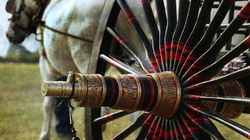
For over a thousand years, chariots thundered across China's battlefields, dominating warfare far longer than anywhere else on Earth. Now a series of amazing archaeological discoveries, including whole chariots buried with their horses, enable a team of experts to probe the genius of China's first super-weapon. By recreating a battle chariot, they investigate the design secrets which made them such a long-lived war machine, all while discovering how they were used, what set them apart from the rest of the world, and their role in the unification of China.
Water. Turn on the faucet and it's always there. Without it we perish. But how safe is our tap water? In this special report narrated by Joe Morton, NOVA investigates what happened in Flint, Michigan, when local officials changed the city's water source to save money, but overlooked a critical treatment process. As the water pipes corroded, lead leached into the system, exposing the community—including thousands of children—to dangerous levels of poison. NOVA uncovers the science behind this manmade disaster— from the intricacies of water chemistry to the biology of lead poisoning to the misuse of science itself. NOVA follows ordinary citizens and independent scientists who exposed the danger lurking in Flint's water and confronted those who turned a blind eye. And discover the disturbing truth that reaches far beyond Flint—water systems across the country are similarly vulnerable. How can we protect ourselves from poisoned water?
On August 21, 2017, millions of Americans witnessed the first total solar eclipse to cross the continental United States in 99 years. As in all total solar eclipses, the moon blocked the sun and revealed its ethereal outer atmosphere—its corona—in a wondrous celestial spectacle. While hordes of citizens flocked to the eclipse's path of totality, scientists, too, staked out spots for a very different reason: to investigate the secrets of the sun's elusive atmosphere. During the eclipse's precious seconds of darkness, they gathered new clues on how our sun works, how it can produce deadly solar storms, and why its atmosphere is so hot. NOVA investigates the storied history of solar eclipse science and joins both seasoned and citizen-scientists alike as they don their eclipse glasses, tune their telescopes, and revel in the eclipse that spanned the continent.
Almost everything we know today about the beautiful giant ringed planet comes from Cassini, the NASA mission that launched in 1997 and arrived at Saturn in 2004. Since then, the spacecraft has been beaming home miraculous images and scientific data, revealing countless wonders about the planet, its rings, and 62 moons—including some that could harbor life. As the mission approaches its final days in 2017, it attempts one last set of daring maneuvers—diving between the innermost ring and the top of Saturn's atmosphere. Aiming to skim less than 2,000 miles above the cloud tops, no spacecraft has ever gone so close to Saturn and hopes are high for incredible observations that could solve major mysteries about the planet's core. But such a daring maneuver comes with many risks. Join NASA engineers for the tense and triumphant moments as they find out if their gambit has paid off, and discover the wonders that Cassini has revealed over the years. Watch Cassini's final hours as it dives into Saturn's atmosphere ending its mission.
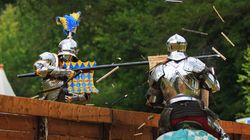
A knight in shining armor may sound like a character out of a storybook, but once upon a time, knighthood was serious business, and for countless medieval fighters, their armor was what stood between life and death. But what was it really like to live beneath the metal? How was that shining armor crafted and how strong was it? Could it withstand impacts from the most lethal weapons of the day, including crossbows, muskets, and primitive hand guns? NOVA challenged blacksmith Ric Furrer and master armorer Jeff Wasson to recreate parts of an elite Greenwich armor originally manufactured in the Royal Workshop founded by King Henry VIII. We trace their successes and setbacks from start to finish as they rediscover centuries-old metalworking secrets, then put their new armor to the ultimate test against a period musket!
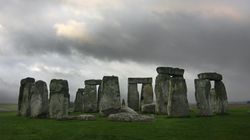
Stonehenge is the grandest and most enigmatic of Europe's prehistoric monuments, and it has inspired countless theories to explain who built it and why. Was it an ancient cathedral or burial place or even a Stone Age observatory or computer? Over the last decade, fresh answers have come from an ambitious program of research, including the first scientific study of human remains—thousands of fragments of cremated men, women, and children—buried at the site 5,000 years ago. In this Stone Age detective story, archaeologists analyze the bones and piece together tantalizing details of the elite families who presided over Stonehenge. Remnants of huge feasts that fed the laborers at the site have come to light, including evidence that they traveled from the far corners of the British Isles to raise the stones and celebrate the winter solstice. Yet Stonehenge's place as a centerpiece of ancient culture was not to last. Join NOVA as we reveal intimate details of the Stonehenge people and why their power began to fade soon after they raised the mighty stones.
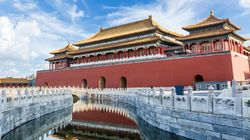
Discover the ingenious engineering of Beijing's Forbidden City, the power center of imperial China for nearly 500 years. Discover how the architectural design of this vast complex of palaces and temples enabled it to survive centuries of earthquake shocks. The Forbidden City is the world's biggest and most extravagant palace complex ever built. For five centuries, it was the power center of imperial China and survived wars, revolution, fires, and earthquakes. How did the Ming Emperor's workforce construct its sprawling array of nearly 1,000 buildings and dozens of temples in a little over a decade? How were stupendous 250-ton marble blocks moved across many miles to reach the site? And how did fantastically intricate woodwork, all fastened without nails or glue, enable the palaces to survive hundreds of earthquakes, including recent ones that obliterated nearby modern structures? To find answers, NOVA joins a team of master craftsmen who build a scale model of a typical palace in a seismic lab, then subject it to simulated earthquakes to shake out the secrets of how the Forbidden City has withstood centuries of violent tremors. The Forbidden City is the world's biggest and most extravagant palace complex ever built. For five centuries, it was the power center of imperial China and survived wars, revolution, fires, and earthquakes. How did the Ming Emperor's workforce construct its sprawling array of nearly 1,000 buildings and dozens of temples in a little over a decade? How were stupendous 250-ton marble blocks moved across many miles to reach the site? And how did fantastically intricate woodwork, all fastened without nails or glue, enable the palaces to survive hundreds of earthquakes, including recent ones that obliterated nearby modern structures? To find answers, NOVA joins a team of master craftsmen who build a scale model of a typical palace in a seismic lab, then subject it to simulated earthquakes to shake out the secrets of how the Forbidden City has withstood centuries of violent tremors.
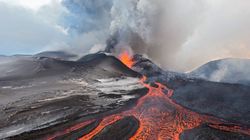
Follow a team of volcano sleuths as they embark on a worldwide hunt for an elusive volcanic mega-eruption that plunged medieval Earth into a deep freeze. The mystery begins when archaeologists find a hastily dug mass grave of 4,000 men, women, and children in London. At first, they assume it's a plague pit from the Black Death, but when they date the bones, they turn out to be too old by a century. So what killed off these families? The chronicles of that time describe a run of wild weather that devastated crops and spread famine across Europe. NOVA's expert team looks for the signature of a volcanic eruption big enough to have blasted a huge cloud of ash and sulfuric acid into the atmosphere, which chilled the entire planet. From Greenland to Antarctica, the team finds telltale "fingerprints" in ice and soil layers until, finally, they narrow down the culprit to a smoldering crater on a remote Indonesian island. Nearly 750 years ago, this volcano's colossal explosion shot a million tons of rock and ash every second into the atmosphere. Across the globe, it turned summer into winter. What would happen if another such cataclysm struck again today?
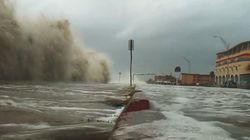
The Great Hurricane of 1780 took nine days to blast its way across the Caribbean, killing at least 20,000--the highest known death toll of any single weather event in history. What made this superstorm so deadly? To reconstruct its epic scale and investigate what made it so devastating, NOVA joins historians and storm sleuths as they track down clues in eyewitness chronicles, old ruins, and computer simulations. Their evidence points to a truly terrifying, 300-mile-wide storm--with wind speeds probably exceeding 230 miles an hour and 25-feet storm surges that demolished everything in their path. But just how unusual was the Great Hurricane? Diving into sinkholes off Barbados and squirming into caves in the Yucatan, NOVA's experts recover traces of tempests stretching back over more than 1,000 years. The picture they paint is disturbing: mega-hurricanes were not only more frequent in the past but are likely to strike again in our near future, as climate change warms the oceans and fuels more intense hurricanes. Were the deaths and damage inflicted by storms like Hurricane Sandy a prelude to far more devastating disasters?
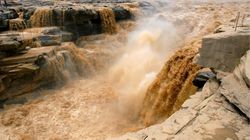
All over the world, scientists are discovering traces of ancient floods on a scale that dwarfs even the most severe flood disasters of recent times. What triggered these cataclysmic floods, and could they strike again? Over a vast expanse of Washington State called the Channeled Scablands, the level prairie gives way to bizarre, gargantuan rock formations: house-sized boulders seemingly dropped from the sky; a cliff carved by a waterfall twice the height of Niagara; and potholes resembling ones scoured out by rivers today, but ten times bigger. Like forensic detectives at a crime scene, geologists study these strange features and reconstruct catastrophic Ice Age floods more powerful than all the world's top ten rivers combined. NOVA follows their efforts to uncover the geologic fingerprints of other colossal megafloods in Iceland and—improbably—on the seabed of the English Channel, where hundreds of thousands of years ago, another deluge smashed through a land bridge connecting Britain and France and turned Britain into an island for the first time. These great disasters ripped through terrain and transformed continents in a matter of hours—and similar forces reawakened by climate change are posing an active threat to mountain communities throughout the world today.
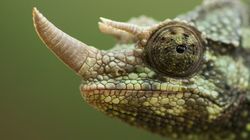
From lobster claws and dog teeth to bee stings and snake fangs, every creature depends on a weapon. But some are armed to extremes that make no practical sense—whether it's bull elks with giant 40-pound antler racks or tiny rhinoceros beetles with horns bigger than their body. What explains giant tusks, horns, and claws that can slow an animal down and even impair health and nutrition? NOVA investigates the riddle of outsize weaponry and uncovers a bold new theory about what triggers an animal arms race. In creatures as varied as dung beetles and saber-toothed tigers or shrimp and elephants, the same hidden factors trigger the race and, once started, these arms races unfold in exactly the same pattern. Join scientists as they crack the secret biological code that underlies nature's battleground.
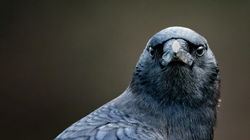
Join NOVA to witness the brainpower of birds. Long mocked as empty-headed, our feathered friends hide surprisingly acute intelligence. But how smart are they? Watch as scientists test avian aptitude and challenge our basic notions of intelligence.Call somebody a "bird brain," and you're not delivering them a compliment. But as NOVA shows, birds turn out to have advanced problem-solving skills that we usually assume are unique to humans. Watch astonishing tests of avian aptitude: parrots that can plan for the future, jackdaws that can "read" human faces, and crows that can solve multi-step puzzles with tools like pebbles, sticks, and hooks. Could these just be clever tricks based on instinct or triggered by subtle cues from their human handlers? To rule out any doubts, NOVA puts feathered Einsteins through their paces and reveals skills that even three- or four-year-old children have a hard time mastering—such as putting off one reward now to get a bigger one later. From this revolution in thinking about our feathered friends, the conclusion seems irresistible that bird brains see the world in ways that aren't so different from our own.
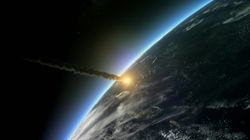
A seven-mile-wide asteroid collided with Earth 66 million years ago, triggering a chain of events that coincide with the end of the dinosaurs. But experts have long debated exactly what happened when the asteroid struck and how the giant beasts met their end. Now, scientists have uncovered compelling new clues about the catastrophe—from New Jersey to the wilds of Patagonia—and an international expedition of scientists has drilled into the impact crater off the coast of Mexico, recovering crucial direct evidence of the searing energy and giant tsunami unleashed by the asteroid. Join NOVA as scientists piece together a chillingly precise unfolding of the Earth's biggest cataclysm, moment by moment, and discover how our early mammalian ancestors managed to survive and repopulate the Earth.

Black holes are the most enigmatic and exotic objects in the universe. They're also the most powerful, with gravity so strong it can trap light. And they're destructive, swallowing entire planets, even giant stars. Anything that falls into them vanishes…gone forever. Now, astrophysicists are realizing that black holes may be essential to how our universe evolved—their influence possibly leading to life on Earth and, ultimately, us. In this two-hour special, astrophysicist and author Janna Levin takes viewers on a journey to the frontiers of black hole science. Along the way, we meet leading astronomers and physicists on the verge of finding new answers to provocative questions about these shadowy monsters: Where do they come from? What's inside? What happens if you fall into one? And what can they tell us about the nature of space, time, and gravity?
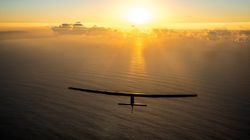
On March 9, 2015, Solar Impulse II took off from Abu Dhabi on one of the greatest aviation adventures of our time: the first solar-powered flight around the world. Together with a team of brilliant engineers, two visionary pilots—Bertrand Piccard and André Borschberg—designed and built Solar Impulse from scratch, even though top airplane manufacturers told them it would be "impossible to control." To pull it off, they had to re-invent everything, from innovative solar cells and batteries to massive carbon-fiber wings. Despite all their efforts, the performance of the plane was balanced on a knife-edge, demanding near-perfect weather conditions and hour after hour of vigilant, skillful piloting. The longest nonstop leg, from Japan to Hawaii, lasted five days and set a new world solo flight record. NOVA captures an insider's view of the Solar Impulse pilots and ground team as they experience moments of hair-raising crisis, remarkable endurance, and ingenious problem-solving.
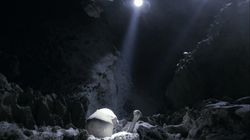
Take a risky dive into an underwater cave in Mexico to discover the 13,000 year-old skeleton of a prehistoric teenager. Follow forensic clues that reveal intimate details of her life and death, and how her people first ventured into North America. One unlucky day 13,000 years ago, a slight, malnourished teenager missed her footing and tumbled to the bottom of a 100-foot pit deep inside a cave in Mexico's Yucatán. Rising seas flooded the cave and cut it off from the outside world—until a team of divers chanced upon her nearly complete skeleton in 2007. Intricate detective work reveals that the young woman's bones are among the earliest known human remains in the Americas. What drove her to venture nearly a mile underground inside a vast cave? Where did her people come from, and why does she look so distinct from today's Native Americans? From a stunning Mexico cave to the wilderness of the Yukon, from the genetics lab to the forefront of forensics, NOVA pursues tantalizing new clues that are rewriting the story of the forgotten first people who ventured into our continent.
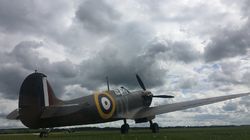
As France fell to the German armies in May 1940, 400,000 Allied troops were trapped on the beaches of Dunkirk. Their annihilation seemed certain—a disaster that could have led to Britain's surrender. But then, in a last-minute rescue, Royal Navy ships and a flotilla of tiny civilian boats evacuated hundreds of thousands of soldiers to safety across the Channel—the legendary "miracle of Dunkirk." Now, NOVA follows a team of archaeologists and historians as they recover fresh evidence of the courage, technical ingenuity, and brilliant planning that led to the operation's success. With access to previously classified files recently released by the British government, they uncover the truth behind the myths of Dunkirk—notably, a claim that the Royal Air Force failed to protect the stranded men from the Luftwaffe's constant bombing of the beaches. Featuring an exclusive excavation of a newly-found Spitfire wreck, NOVA debunks the myth and highlights the essential role of RAF planes and pilots in reversing the desperate stakes that played out in the air above the beleaguered men.

Predictions underlie nearly every aspect of our lives, from sports, politics, and medical decisions to the morning commute. With the explosion of digital technology, the internet, and "big data," the science of forecasting is flourishing. But why do some predictions succeed spectacularly while others fail abysmally? And how can we find meaningful patterns amidst chaos and uncertainty? From the glitz of casinos and TV game shows to the life-and-death stakes of storm forecasts and the flaws of opinion polls that can swing an election, "Prediction by the Numbers" explores stories of statistics in action. Yet advances in machine learning and big data models that increasingly rule our lives are also posing big, disturbing questions. How much should we trust predictions made by algorithms when we don't understand how they arrive at them? And how far ahead can we really forecast? Discover how predictions underpin nearly every aspect of our lives and why some succeed spectacularly while others fail. Explore entertaining real-world challenges and join experts as they tackle that age-old question: Can we forecast the future?
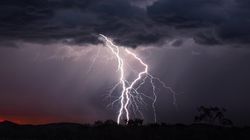
Disastrous hurricanes. Widespread droughts and wildfires. Withering heat. Extreme rainfall. It is hard not to conclude that something's up with the weather, and many scientists agree. It's the result of the weather machine itself—our climate—changing, becoming hotter and more erratic. In this two-hour documentary, NOVA will cut through the confusion around climate change. Why do scientists overwhelmingly agree that our climate is changing and that human activity is causing it? How and when will it affect us through the weather we experience? And what will it take to bend the trajectory of planetary warming toward more benign outcomes? Join scientists around the world on a quest to better understand the workings of the weather and climate machine we call Earth, and discover how we can be resilient—even thrive—in the face of enormous change.
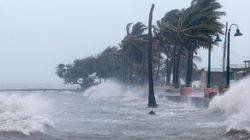
In just one devastating month, Houston, Florida, and the Caribbean were changed forever. In summer 2017, three monster hurricanes swept in from the Atlantic one after another, shattering storm records and killing hundreds of people. First, Harvey brought catastrophic rain and flooding to Houston, causing $125 billion in damage. Less than two weeks later, Irma lashed the Caribbean with 180 mile per hour winds—and left the island of Barbuda uninhabitable. Hot on Irma's heels, Maria intensified from a Category 1 to a Category 5 hurricane in just 30 hours, then ravaged Puerto Rico and left millions of people without power. As the planet warms, are these superstorms the new normal? How well can we predict them? And as the U.S. faces the next hurricane season, does it need to prepare for the reality of climate refugees? NOVA takes you inside the 2017 superstorms and the cutting-edge research that will determine how well equipped we are to deal with hurricanes in the future.

NOVA takes you inside the operating room to witness organ transplant teams transferring organs from donors to recipients. Meet families navigating both sides of a transplant, and researchers working to end the organ shortage. Their efforts to understand organ rejection, discover ways to keep organs alive outside the body, and even grow artificial organs with stem cells, could save countless lives.
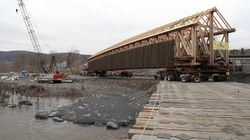
Follow the race to rebuild the Old Blenheim Bridge in New York State, an icon of 19th-century American engineering, destroyed by Hurricane Irene in 2011. Watch a team of elite craftsmen faithfully reproduce the massive, intricate wooden structure under grueling time pressure as flooding threatens their worksite. In China, witness craftsmen restoring thousand-year-old covered bridges based on ingenious frameworks of woven timber beams. Discover how Chinese artisans are keeping traditional skills alive to ensure the survival of these stunning ancient structures.
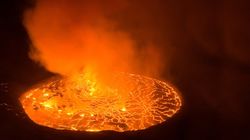
Climb with volcano experts to the summit of Nyiragongo, a highly active volcano in the Democratic Republic of the Congo and one of the world's least studied. Twice in recent memory it has erupted, devastating Goma, a neighboring city of 1 million people. To investigate when it might erupt next, volcanologists descend into its crater toward its bubbling and seething lava lake to deploy sensors and monitor the volcano's activity.
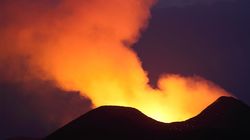
Join a team of volcanologists as they explore one of the world's most active and mysterious volcanoes in central Africa: the sleeping giant Nyamuragira. Decades of civil strife have prevented scientists from investigating the volcano, but a brief pause allows an international team of experts to fly by helicopter to the summit to investigate. Discover the region's other hidden, life-threatening volcanic dangers and probe whether magma pressure is building up to threaten another one of its frequent eruptions.
Delve into America's opioid crisis - in a world in which many other diseases can be traced to addictive behavior, how do addictions work, and what can the science of addiction tell us about how we can resolve this dire social issue?Hear firsthand from individuals struggling with addiction and follow the cutting-edge work of doctors and scientists as they investigate why addiction is not a moral failing, but a chronic, treatable medical condition. Easy access to drugs like heroin, fentanyl, and even prescription medications like OxyContin has fueled an epidemic of addiction—the deadliest in U.S. history.
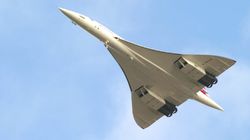
A history of the legendary Concorde, the passenger plane that flew from the late 70s till 2003 at twice the speed of sound. Designed and built by French and British engineers, the Concorde was the ultimate in speed and luxury for a select group of global jet-setters, and the birthplace of many breakthroughs in aviation science. But ultimately it was not sustainable because of enormous fuel consumption and high ticket prices. NOVA takes you inside the historic international race to develop the first supersonic airliner. Hear stories from those inside the choreographed effort to design and build Concorde in two countries at once—and the crew members who flew her. Today, scientists at NASA and start-up companies like Boom Technology in Denver are trying to figure out ways to build a new generation of supersonic passenger planes that will be quieter, greener, and cheaper.
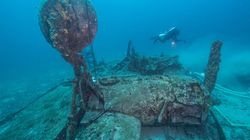
Dive to the bottom of the Adriatic Sea in search of theTulsamerican, a B-24 bomber that crashed off the coast of Croatia during World War II. In 2010, divers located the plane. Now the Department of Defense, aided by the Croatian Navy and some of the world's leading underwater archaeologists, sets to work investigating the wreckage. Join the team of archaeologists and forensics experts as they search for the crew and identify their remains.
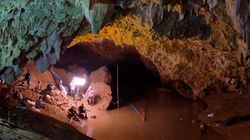
In July 2018, the world held its breath as an international team of cave divers endeavored to rescue 12 boys and their soccer coach stranded deep in a flooded cave in Thailand. Follow the harrowing operation and discover the scientific ingenuity that made the rescue possible. Hear how rescuers explored every option—from pumping water, to drilling a new exit, to ultimately cave diving with the children through the treacherous, flooded passages.
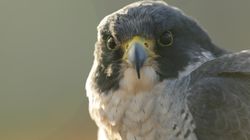
See the world through the eyes of nature's fastest animal: the peregrine falcon. Though once perilously endangered in the U.S., this spectacular predator is now thriving again in American cities and on every continent but Antarctica. What is the secret to its predatory prowess? To find out, follow a young family of peregrines in urban Chicago as the chicks hatch and learn from their parents to fly and hunt. And join expert falconer Lloyd Buck as he trains a captive peregrine named Moses to go faster and puts its hunting skills to the test. What's the secret behind the peregrine falcon's blistering speed, able to reach nearly 200 mph?
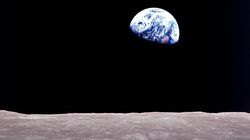
Apollo astronauts and engineers tell the inside story of Apollo 8, the first manned mission to the moon. The U.S. space program suffered a bitter setback when Apollo 1 ended in a deadly fire during a pre-launch run-through. In disarray, and threatened by the prospect of a Soviet Union victory in the space race, NASA decided upon a radical and risky change of plan: turn Apollo 8 from an Earth-orbit mission into a daring sprint to the moon while relying on untested new technologies. Fifty years after the historic mission, the Apollo 8 astronauts and engineers recount the feats of engineering that paved the way to the moon.

The New Horizons spacecraft attempts to fly by a mysterious object known as Ultima Thule, believed to be a primordial building block of the solar system. Three years after taking the first spectacular photos of Pluto in 2015, New Horizons is four billion miles from Earth, trying to achieve the most distant flyby in NASA's history. If successful, it will shed light on one of the least understood regions of our solar system: the Kuiper Belt. NOVA is embedded with the New Horizons mission team, following the action in real time as they uncover the secrets of what lies beyond Pluto.

Einstein called it "spooky action at a distance," but today quantum entanglement is poised to revolutionize technology from computers to cryptography. Physicists have gradually become convinced that the phenomenon—two subatomic particles that mirror changes in each other instantaneously over any distance—is real. But a few doubts remain. NOVA follows a ground-breaking experiment in the Canary Islands to use quasars at opposite ends of the universe to once and for all settle remaining questions.
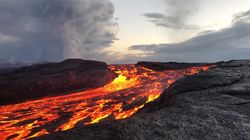
In May 2018, Kīlauea volcano erupted, obliterating neighborhoods with devastating force and uprooting thousands of local residents. It is Hawaiʻi's most destructive volcanic eruption in generations. How can one of the most beautiful places on Earth suddenly transform into a roaring inferno, sputtering molten lava and bombs of volcanic rock the size of refrigerators? On the ground in the early days of the eruption, NOVA joins scientists and residents alike on a breathtaking journey to investigate Kīlauea's recent spike in activity. Along the way, some of Hawaiʻi's biggest secrets are revealed: Why did these geologically distinctive volcanoes form in the middle of the Pacific? How did life establish itself on the remote islands? What does this tell us about the future of Hawaiʻi? And what dangers yet lurk for the inhabitants of the island paradise?
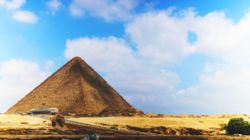
The 6 million-ton Great Pyramid of Giza is the last surviving wonder of the ancient world. How did the Egyptians engineer the mighty pharaoh Khufu's tomb so precisely, with none of today's surveying and power tools? And who were the thousands of laborers who raised the stones? Were they slaves or volunteers, and how were they housed, fed, and organized? "Decoding the Great Pyramid" presents the latest evidence from groundbreaking archaeological research that has transformed our understanding of the ancient world's most ambitious engineering project, revealing a "lost city" and intimate details of the lives of the laborers and officials who toiled on the vast construction. Amazingly, French archaeologists recently found the logbook of a labor team that delivered limestone blocks to build the Great Pyramid, yielding crucial insights into the planning and logistics behind the operation. Beyond these construction secrets, "Decoding the Great Pyramid" traces how mobilizing the colossal labor and resources invested in the monument transformed ancient Egypt, uniting a nation behind the common goal of ensuring eternity for the pharaoh and continuing prosperity for everyone in this life and the next.
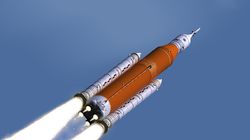
Rockets are becoming cheaper and more powerful than ever before thanks to stunning new technologies. As companies like SpaceX and Virgin Galactic make space more accessible, and NASA returns to crewed spaceflight, a new era of space exploration seems to be on the horizon. But will this seeming rocket Renaissance become more than just hype? NOVA explores the latest rocket technologies and the growing role private citizens may have in space.
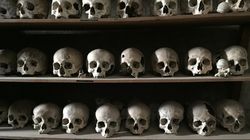
In the shadow of Italy's Vesuvius, a lesser-known volcano rumbles: Campi Flegrei. An eruption could endanger the millions of residents of the city of Naples. Scientists gain new insights into what happened in nearby Pompeii, and dig into the unique geology of Campi Flegrei. How will they know if the ever-shifting ground is reaching a breaking point? And can an innovative eruption warning system prevent Naples becoming the next Pompeii?
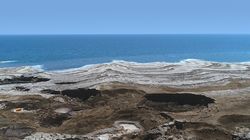
The Dead Sea is dying: Since 1976, its level has dropped more than 100 feet, leaving its coastline pockmarked with thousands of sinkholes. But after more than a decade of research and debate, scientists, engineers, and political leaders have come up with a daring plan: connect the Red Sea to the Dead Sea by way of a massive desalination plant. If it's successful, the project could not only revive the sea, but also help ease political tensions and water shortages in the region. NOVA follows this unprecedented endeavor—perhaps the world's largest water chemistry experiment—as scientists race to save the Dead Sea and bring water to one of the driest regions on Earth.
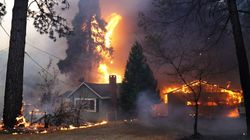
From the front line of the Camp Fire, the deadliest wildfire in California history, NOVA tells the stories of residents who had to flee for their lives during the 2018 fire season. Scientists racing to understand what's behind the rise of record-breaking megafires across the American West take to the forest, and even a fire lab, in search of answers. They investigate how forestry practices, climate change, and the physics of fire itself play a role in the dramatic increase in wildfires in recent decades.
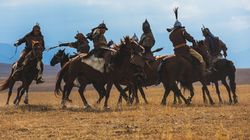
The advent of horse riding was a momentous step in human history. But when and how did our ancestors first learn to master these animals? In a spectacular adventure, NOVA unlocks the mystery on the vast, grassy plains of Kazakhstan, where wild horses still roam free, and nomadic herders follow their traditional way of life. Investigating clues from archaeology and genetics, researchers reveal vivid evidence of the very first horsemen. They also discover warriors who swept across Europe and turn out to be the ancestors of millions today.
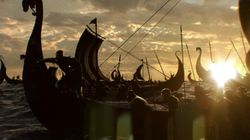
Forty years ago, hundreds of skeletons were unearthed in a mass grave in an English village. Bioarchaeologist Cat Jarman believes these bones are the last remains of the "Great Heathen Army," a legendary Viking fighting force that invaded England in the ninth century and has long been lost to history. Armed with the latest scientific methods, Cat's team uncovers extraordinary human stories from the front line, including evidence of women fighters and a lost warrior reunited with his son in death.
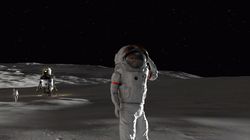
On the 50th anniversary of the historic Apollo 11 Moon landing, NOVA looks ahead to the hoped-for dawn of a new age in lunar exploration. This time, governments and private industry are working together to reach our nearest celestial neighbor. But why go back? The Moon can serve as a platform for basic astronomical research; as an abundant source of rare metals and hydrogen fuel; and ultimately as a stepping stone for human missions to Mars and beyond. Join the next generation of engineers that aim to take us to the Moon, and discover how our legacy of lunar exploration won't be confined to the history books for long.
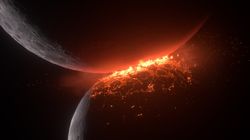
The four planets closest to the sun, called the rocky planets, were born from the same material in the same era. But they couldn't be more different: Tiny Mercury is the runt of the litter, almost like a moon. Venus is devilishly hot, and Mars is a frozen desert world. Only on Earth do we find the unique conditions for life as we know it. But why only here? Were Earth's neighbors always so extreme? And is there somewhere else in the solar system life might flourish?

The Red Planet was once a vibrant blue water-world, home to raging rivers, active volcanoes, and even an ocean. But as the young planet's core cooled, its magnetic field and protective atmosphere faded, eventually exposing it to the wrath of the sun. With its volcanoes extinguished and its water lost to space, Mars became the frozen desert planet we know today. But if it once had many of the ingredients necessary to form life, how far along might that process have gotten?
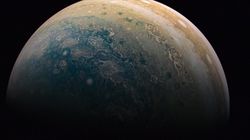
Jupiter is not just the oldest planet orbiting the sun—it's also the largest. So when the young gas giant went on a rampage through the early inner solar system, it shaped the fate of everything in its path. Speeding towards the Sun, Jupiter's massive gravitational force hurled debris into interstellar space, stunting the growth of would-be planets. Earth might have been doomed had Saturn not pulled Jupiter back. But it also shaped life on Earth, delivering comets laden with water - and perhaps even the fateful asteroid that wiped out the dinosaurs. Today, Jupiter resides in the outer solar system, where its gravity bends the paths of asteroids and stokes volcanic activity on its moon Io. But it could one day wreak havoc again.

Over the past 40 years, a handful of space probes has given us glimpses of Saturn. But NASA's Cassini, which explored the gas giant's realm for 13 years looping through its icy rings and flying by its moons, delivered the most breathtaking new insights. The probe captured stunning ring-moon interactions. NOVA takes you inside Cassini's epic journey as it makes astonishing discoveries: Saturn's rings are younger than the dinosaurs and may be remnants of an ice moon. And geysers erupting ice and gas on the moon Enceladus show that it could have all the ingredients for life. But to protect it, the Cassini mission team makes a bittersweet decision.
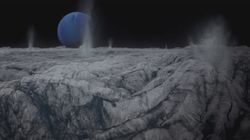
Over a billion miles from the sun, beyond the rocky inner planets and the gas giants, lie the ice words—Uranus and Neptune. NOVA takes you inside the missions that rewrote the story of the outer solar system: NASA's Voyager 1 & 2 capture Neptune's supersonic winds, rings around a tipped-over Uranus, and dozens of moons. And when New Horizons flew by Pluto in 2015, it reveals jagged ice mountains and an underground ocean before venturing deep into the Kuiper Belt.
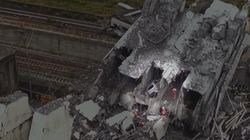
In 2018, Italy's Morandi Bridge collapsed, tragically killing 43 people. For 50 years, the iconic bridge had withstood the elements—and stress from ever-increasing traffic. What went wrong that fateful day? And how can new engineering technology protect bridge infrastructure to prevent such tragic failures in the future? Through eyewitness testimony, expert interviews, and dramatic archival footage, NOVA investigates the Morandi disaster and other deadly bridge collapses across the United States.

After years of anticipation, tech giants and car manufacturers alike are now testing autonomous vehicles on public roads around the world. As ambitious innovators race to develop what they see as the next high-tech pot of gold, some experts warn there are still daunting challenges ahead, including how to train artificial intelligence to be better and safer than humans at making life-and-death decisions. How do self-driving cars work? What must computers be capable of to truly take the wheel?
Sixty-six million years ago, an asteroid wiped out the dinosaurs in a fiery global catastrophe. But we know little about how their successors, the mammals, recovered and took over the world. Now, hidden inside ordinary-looking rocks, an astonishing trove of fossils reveals a dramatic new picture of how rat-sized creatures ballooned in size and began to evolve into the vast array of species—from cheetahs to bats to whales to humans—that rule our planet today.
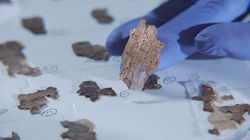
Since the Dead Sea Scrolls were discovered in 1947, these fragile parchment relics have intrigued scholars, religious leaders, and profiteers alike. The 2,000-year-old scrolls include the oldest-known versions of the Hebrew Bible and hold vital clues about the birth of Christianity. While certain scrolls have survived intact, others have been ravaged by time—burnt, decayed, or torn to pieces—and remain an enigma. Now, scientists are using new technologies to read the unreadable, solve mysteries that have endured for millennia, and even discover million-dollar fakes.
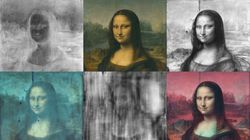
Leonardo da Vinci was a Renaissance genius. Not only did he paint masterpieces of art, but he was an obsessive scientist and inventor, dreaming up complex machines centuries ahead of his time, including parachutes, armored tanks, hang gliders, and robots. On the 500th anniversary of Leonardo's death, with the help of biographer Walter Isaacson, NOVA investigates the secrets of Leonardo's success. How did his scientific curiosity, from dissections of cadavers to studies of optics, shape his genius and help him create perhaps the most famous painting of all time, the "Mona Lisa"?Journey to Florence to discover how Leonardo da Vinci used science, from human dissections to innovative painting techniques, to create his legendary artwork. Learn why Mona Lisa's smile is so captivating - and what it took to create it.
Despite the constant news of violence, from mass shootings to wars, psychologist Steven Pinker believes we may be living in one of the most peaceful periods in human existence. Could it be true that physical violence has been in decline for centuries? And can it be prevented—or is it simply part of human nature? NOVA takes you on a journey through history and the human mind to explore what triggers violence and how it may have decreased over time. Taking clues from a Kenyan archaeology site, modern laboratory experiments, and even literature, researchers trace the social and neurobiological roots of human violence. They look at how forces like income equality and personal contact may curb violence in modern societies. And in places like Baltimore, where violence "interrupters" treat violence like a contagious disease, NOVA examines evidence-based approaches to making the world more peaceful.
How do you study giant armadillos when hardly anyone has ever seen one? Or figure out if a whale is losing weight—without getting too close? Camera trap and drone technologies are allowing scientists to watch animals more closely than ever before, without disturbing them. Scientists in India are using thousands of camera trap photos to track tigers' movements. In Canada, caribou outfitted with collar cams show conservationists which habitats they rely on throughout the winter. Capturing everything from the unexpected to the comical, these technologies are giving wildlife managers insights that could ultimately help them fight extinction and habitat loss.
In this two-hour special, renowned paleontologist Kirk Johnson takes us on an epic adventure through time at the polar extremes of our planet. Following a trail of strange fossils found in all the wrong places—beech trees in Antarctica, hippo-like mammals in the Arctic—Johnson uncovers the bizarre history of the poles, from miles-high ice sheets to warm polar forests teeming with life. What caused such dramatic changes at the ends of the Earth? And what can the past reveal about our planet's climate today—and in the future?

Dogs have long been dependable companions by our sides. But it wasn't always that way, and a look at their closest living relative, the wolf, makes it clear why. Research into dog domestication and intelligence offers clues into what the human-dog relationship is all about. And analyzing dogs' brain activity and genes may even help answer the question of whether dogs are in it for the food—or if they really love us.
Worshipped as a goddess, condemned as satanic, and spun into a stunning array of breeds, cats have long fascinated humans. But did we ever really domesticate them? And what can science tell us about our most mysterious companions?

From fruit flies to whales, virtually every animal sleeps. But why? Why do we need to spend nearly a third of our lives in such a defenseless state? Scientists are peering more deeply into the sleeping brain than ever before, discovering just how powerful sleep can be, playing a role in everything from memory retention and emotional regulation to removing waste from our brains. So why are we getting so little of it?
When the U.S. trade embargo left Cuba isolated from medical resources, Cuban scientists were forced to get creative. Now they've developed lung cancer vaccines that show so much promise, some Americans are defying the embargo and traveling to Cuba for treatment. In an unprecedented move, Cuban researchers are working with U.S. partners to make the medicines more widely available.
Do we control our fat, or does it control us? For generations, overweight individuals have been stigmatized and cast as lazy. But scientists are coming to understand fat as a fascinating and dynamic organ—one whose size has more to do with biological processes than personal choices. Through real-life stories of hunter-gatherers, sumo wrestlers, and supermodels, NOVA explores the complex functions of fat and the role it plays in controlling hunger, hormones, and even reproduction.
The coronavirus SARS-CoV-2 has upended life as we know it in a matter of mere months. But at the same time, an unprecedented global effort to understand and contain the virus—and find a treatment for the disease it causes—is underway. Join the doctors on the front lines of the fight against COVID-19 as they strategize to stop the spread, and meet the researchers racing to develop treatments and vaccines. Along the way, discover how this devastating disease emerged, what it does to the human body, and why it exploded into a pandemic.
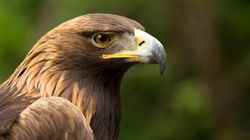
Eagles dominate the skies. But what makes these predators so special? Researchers study one special bird—and stunning up-close footage reveals her exceptional strength, eyesight, and flying skills. With intimate access to a new bald eagle family, NOVA takes you into the nest to witness the drama of chicks struggling to survive.
Human Nature: Our DNA can determine attributes from eye color to medical predispositions. With an extraordinary new technology called CRISPR, we can now edit DNA—including human DNA. But how far should we go? Gene editing promises to eliminate certain genetic disorders like sickle cell disease. But the applications quickly raise ethical questions. Is it wrong to engineer soldiers to feel no pain or to resurrect an extinct species? And is there harm in allowing parents to choose their child's features, like eye color or height? The scientists who pioneered human genome studies and CRISPR grapple with these questions. CRISPR Gene-Editing Reality Check: The revolutionary gene-editing tool known as CRISPR can alter, add, and remove genes from the human genome. The implications are immense: It could help eliminate illnesses like sickle cell disease and muscular dystrophy and could even allow us to alter the genes of future generations of humans, leading to so-called designer babies. But will this ever really happen? Medical journalist and pediatrician Alok Patel investigates the current state of CRISPR—starting with a bull calf named Cosmo. Patel discovers how scientists edited Cosmo's genome so he would produce more male offspring and what that means for humans. In conversation with scientists, artists, and ethicists, Patel explores what kind of gene editing is actually possible right now—and what we should be thinking about when we consider manipulating human traits and, ultimately, the human experience.
Who says you need brains to be smart? Extremely primitive life-forms called slime molds can navigate mazes, choose between foods, and create efficient networks—no brain required. New research on these organisms, which are neither plant nor animal, could help reveal the fundamental rules underlying all decision making.
Where would we be without the world's alphabets? Writing has played a vital role in the expansion and domination of cultures throughout history. But researchers are only now uncovering the origin story to our own alphabet, which may have gotten its beginnings in a turquoise mine 4,000 years ago. From the shape of the letter A to the role of writing in trade and storytelling, discover how the written word shaped civilization itself.
Just as writing changed the course of human history, the evolution of paper and printing revolutionized the spread of information. The printing press kicked off the Industrial Revolution that fast-tracked us to the current digital age. But as the 4,000-year-old tradition of penmanship falls out of favor, should we consider what might be lost in this pursuit of ever more efficient communication?
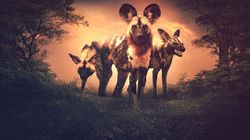
For animals in Mozambique's Gorongosa National Park, the normal balance of competition and predation was upended when a war wiped out the top predators. The remaining animals didn't simply grow in numbers—they began behaving in unusual ways, veering outside their typical territories and feeding patterns. Could it be that it's not just predators' kills that keep other populations in check, but also the fear they inspire? NOVA joins a team of scientists as they reintroduce wild dogs to Gorongosa to find out if restoring the park's "landscape of fear" can restore balance to an entire ecosystem.
In October 2020, a NASA spacecraft called OSIRIS-REx attempts to reach out and grab a piece of an asteroid named Bennu to bring it back to Earth. The OSIRIS-REx team has just three chances to extend its spacecraft's specialized arm, touch down for five seconds, and collect material from the surface of Bennu. But if they can pull it off, scientists could gain great insight into Earth's own origins—and even learn to defend against rogue asteroids that may one day threaten our planet.
As global temperatures continue to rise, scientists are wondering if we need solutions beyond reducing emissions. Enter geoengineering. From sucking carbon straight out of the air to physically blocking out sunlight, the options may seem far-fetched. But as time runs out on conventional solutions to climate change, scientists are asking the hard questions: Can geoengineering really work? How much would it cost? And what are the risks of engineering Earth's climate?
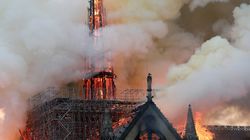
When the roof of Notre Dame Cathedral erupted in flames in April of 2019, firefighters battled for nine grueling hours to save the historic landmark. Still, Paris came alarmingly close to losing more than 800 years of history. Now engineers are in a different race against time: to rebuild the roof and secure the medieval structure of Notre Dame. Underneath the charred scaffolding and vaulted ceilings of the cathedral, scientists study the components of Notre Dame's iconic design to puzzle out how best to repair it.
Some 30 million people have sent their DNA to be analyzed by companies like 23andMe and AncestryDNA. But what happens once the sample is in the hands of testing companies, and how accurate are their results? NOVA explores the power of genetic data to reveal family connections, ancestry, and health risks—and even solve criminal cold cases. But alongside the benefits of these rapidly growing genetic databases are serious unintended consequences.

Just about every solid, liquid, or gas in the world as we know it begins with reactions between individual atoms and molecules. Host David Pogue dives into the transformative world of chemical reactions, from the complex formula that produces cement to the single reaction that's allowed farmers to feed a global population by the billions—a reaction that when reversed, unleashes the powerful chemistry of high explosives.
Glass so strong you can jump on it, a rubber-like coating tough enough to absorb a bomb blast and protect a clay pot dropped from 50 feet, endless varieties of plastic. Scientists and engineers have created virtually indestructible versions of common materials by manipulating the chains of interlocking atoms that give them strength—but have they made them too tough? Host David Pogue explores the fantastic chemistry behind the everyday materials we depend on and how the quest for durability can be balanced with products' environmental impact.
Without the chemistry of photosynthesis, ozone, and a molecule called Rubisco, none of us would be here. So how did we get so lucky? To find out, host David Pogue investigates the surprising molecules that allowed life on Earth to begin, and ultimately thrive. Along the way, he finds out what we're all made of—literally.

Follow along as NASA launches the Mars 2020 Mission, perhaps the most ambitious hunt yet for signs of ancient life on Mars. In February 2021, the spacecraft will blaze into the Martian atmosphere at some 12,000 miles per hour and attempt to lower the Perseverance Rover into the rocky Jezero Crater, home to a dried-up river delta scientists think could have harbored life. Perseverance will comb the area for signs of life and collect samples for a possible return to Earth. Traveling onboard is a four-pound helicopter that will conduct a series of test flights—the first on another planet. During its journey, Perseverance will also test technology designed to produce oxygen from the Martian atmosphere in hopes that the gas could be used for fuel—or for humans to breathe—on future missions.
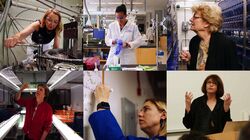
Picture a Scientist: Women make up less than a quarter of STEM professionals in the United States, and numbers are even lower for women of color. But there is a growing group of researchers who are writing a new chapter for women scientists, exposing longstanding discrimination, and leading the way in making science more inclusive. A biologist, a chemist, and a geologist lead viewers on a journey through their own experiences in the sciences, ranging from outright harassment to years of subtle slights. Along the way, from cramped laboratories to spectacular field stations, scientific visionaries, including social scientists, neuroscientists, and psychologists, provide new perspectives on how to make science itself more diverse, equitable, and open to all.Search Engine Breakdown: Why does a widely used internet search engine deliver results that can be blatantly racist and sexist? Two leading information researchers, Safiya Noble, PH.D. and Latanya Sweeney, PH.D., investigate their discoveries of hidden biases in the search technology we rely on every day, involving pornographic images and ads implying criminal behavior triggered by simple search queries. Both researchers share common concerns about how everyday online searches can reinforce damaging stereotypes and explore how technology can be made more equitable.
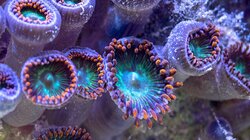
Coral reefs are not just beautiful; they are also home to over a quarter of all marine life and are crucial to human societies around the globe. But as the climate changes and oceanic heatwaves become commonplace, corals are bleaching, and reefs are dying off. Now, marine biologists worldwide are teaming up to counteract this catastrophe with a technique called assisted evolution. Follow scientists as they attempt to crossbreed heat-resistant corals and even transplant corals' algae in a race to save the coral reefs from extinction.
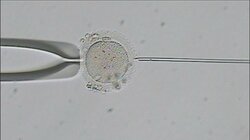
In the United States, some 10% of people who wish to have children struggle with infertility. It's prevalent in the African American community, and fertility preservation can also be difficult for transgender individuals. But why is this? And what can be done about it? NOVA explores barriers to fertility, from the social to the biological, and the state of assisted reproductive technologies. Follow the journeys of people navigating challenges from structural inequalities and racism to falling sperm counts, egg freezing, and IVF.
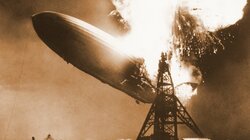
The cause of the infamous Hindenburg crash has baffled experts for over 80 years, with theories about the airship's fire ranging from deliberate sabotage to a spark generated by the stormy conditions in which it landed. But new, never-before-seen amateur footage of the crash has surfaced, showing the airship's final seconds from a fresh angle and in unrivaled clarity. Taking clues from the footage and other sources, NOVA leads a fresh investigation at a leading scientific lab with eye-opening experiments that point to a final solution of the mystery.
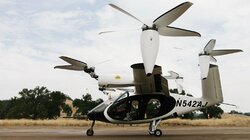
Can new emission-free electric planes replace our polluting airliners and revolutionize personal transportation in our cities? NOVA takes you for a ride in some impressive prototypes that are already in the air, from speedy single-seat planes that can take off like a helicopter but are half as noisy to "self-flying" air taxis that already taking passengers on test flights in Chinese cities. But if electric airplanes are ever to advance beyond small, short-haul craft, significant hurdles of battery weight, energy storage and cooling remain to be overcome. How long will it be before the dream of super-quiet, super-efficient airliners becomes a reality?
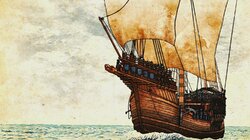
Five centuries ago, the Age of Exploration and Europe's imperial colonization of far-off lands was launched by a revolution in ship design that made long-distance ocean voyages practical. But exactly how this momentous innovation happened eludes historians. Now, the excavation of a rare intact wreck discovered off the coast of Sweden offers vital new clues to a maritime mystery. Along with other clues gleaned from the wreckage, the figurehead and gun carriages suggest that this could be the flagship of a Danish king named Hans. The monarch was famous for building a large naval fleet, led by a massive warship known as the Gribshunden, the Griffen Dog.
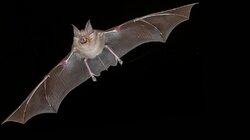
Bats have been implicated in deadly epidemics such as COVID-19 and Ebola, yet scientists are discovering evidence that they may hold the key to a longer and healthier life. From caves in Thailand and Texas to labs around the globe, NOVA meets the scientists decoding the superpowers of the bat.

NOVA investigates the story of cannabis from the criminalization that has disproportionately harmed communities of color to the latest medical understanding of the plant. What risks does cannabis pose to the developing brain? How much do we know about its potential medical benefits? As cannabis becomes socially accepted and state-legalized, scientists are exploring its long-term health consequences.
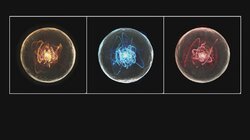
Outnumbering atoms a billion to one, neutrinos are the universe's most common yet most elusive and baffling particle. NOVA joins an international team of neutrino hunters as they try to capture an elusive fourth form of neutrino. Their results may force scientists to redraw their blueprint of the subatomic world, the Standard Model of physics, and change our understanding of how the universe works.
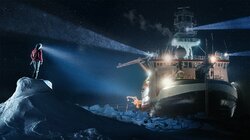
Join scientists on the most ambitious Arctic research expedition of all time. Experts from over twenty different nations join the voyage of the massive Polarstern icebreaker as it's gripped by the polar ice and drifts for nearly an entire year. From this unique research station, they can make long-term observations and perform experiments in unprecedented detail. Facing hungry polar bears, perilous sea ice cracks, and brutal cold, the team strives to understand the forces changing the region—and the world—forever.
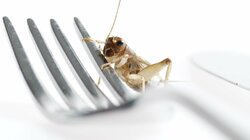
From crunchy cricket chips to nutty black soldier fly grubs, "Edible Insects" leaps across cultural and culinary boundaries to explore the insect food industry and how it could benefit our health and our warming planet. From Thailand to Texas, cricket farmers show how the tiny critters stack up as an environmentally friendly alternative to beef protein. In fact, as one of the show's many gastro-surprises reveals, insects make animal protein vastly more efficiently than cows and, pound for pound, deliver far better nutritional value than the finest steak. Unappealing as an insect milkshake might sound, it may promote the growth of healthy gut bacteria that could help prevent inflammation and cancer. But what about the "ick" factor? NOVA invites a panel of volunteers to sample an invitingly prepared tasting menu of roasted crickets, ants, mealworms, and chipotle-flavored grasshoppers prepared by a New York chef, and not surprisingly, some of the diners have trouble concealing their squeamishness. Yet all the evidence adds up to the idea that our aversion to insects is mostly a matter of attitude and cultural conditioning. So will your kitchen table soon host its very own savory insect feast?
The sun is our life-giving source of light, heat, and energy, and new discoveries are unraveling its epic history. Join NOVA on a spectacular voyage to discover the sun's place in a grand cycle of birth, death, and renewal that makes this the age of stars. Witness how stars of every size and color came to populate our universe; how stars stage a dramatic exit when they explode as supernovae, which can outshine an entire galaxy; and how, billions of years in the future, the age of stars will lead ultimately to an age of darkness.
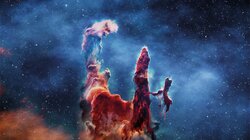
Straddling the night sky, the Milky Way reminds us of our place in the galaxy we call home. But what shaped this giant spiral of stars, and what will be its destiny? NOVA travels back in time to unlock the turbulent story of our cosmic neighborhood, from its birth in a whirling disk of clouds and dust to colossal collisions with other galaxies. Finally, peer into the future to watch the Milky Way's ultimate fate as it collides with the Andromeda galaxy, over 4 billion years from now.

It's an age-old question: are we alone? Or do other lifeforms and intelligences thrive on worlds far beyond our own? Ultra-sensitive telescopes and dogged detective work are transforming alien planet-hunting from science fiction into hard fact. Join NOVA on a visit to exotic worlds orbiting distant suns, from puffy planets with the density of Styrofoam to thousand-degree, broiling gas giants. Most tantalizing of all are the Super-Earths in the "Goldilocks zone," just the right distance from their sun to support life, and with one of them signaling life's essential ingredient, water, in its atmosphere. Are we on the brink of answering that haunting question?
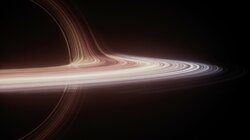
Take a seat on the ultimate thrill ride to explore nature's strangest and most powerful objects. Black holes can reshape entire galaxies, warp the fabric of space and time, and may even be the key to unlocking the ultimate nature of reality. A new generation of high-energy telescopes is bringing these invisible voids to light, showing that "supermassives" millions or billions of times larger than our sun lurk at the center of nearly every galaxy, including our own. But what happens if you stray too close to one? And what lies beyond the black hole's abyss? If nothing can ever escape it, is that the end of the story? Or could they be a portal to another dimension—or another universe, full of black holes?

The Big Bang is when many think the universe started and time itself began. But what clues can we discover about this ultimate genesis of everything? And can we ever know what existed before the Universe's birthday? With stunning animation based on space telescope images, NOVA explores infant galaxies filled with violent blue stars that formed just a few hundred million years after the Big Bang. Before that—before the coming of visible light itself—stretch the "cosmic Dark Ages." But scientists haven't stopped there; instead, they've come up with an incredible theory for what happened billionths of a billionth of a second from the universe's birth. If they're right, we're on the brink of understanding more than we could ever have hoped about our cosmic origins.

Skyscrapers are gleaming symbols of prestige and an ingenious way to save space in dense urban areas. But as buildings rise ever higher, what are the risks of these architectural behemoths? Do we truly know how they will hold up in earthquakes, fires, and other potential disasters? What have--or haven't—we learned from past tragedies?
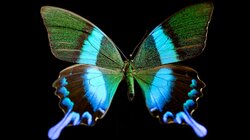
The hidden scientific secrets of butterflies reveal them to be more inventive and resilient than we ever imagined. Follow their extraordinary life cycle and migrations to tropical rainforests, windswept prairies, and even inside a chrysalis as it's being spun. Discover how butterfly science inspires groundbreaking technology, including more efficient solar power cells and bulletproof vests stronger than Kevlar.
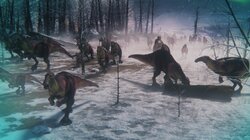
A team of intrepid paleontologists discovers that dinosaurs thrived in the unlikeliest of places—the cold and dark of winter in the Arctic Circle. How did they survive year-round and raise their young in frigid and dark winter conditions? A dinosaur expedition explores a remote, treacherous, and stormy terrain where the team knows that every bone they find there will likely be a first, adding up to a unique picture of a lost northern world.
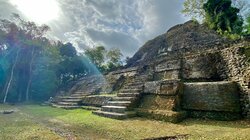
The ancient ancestors of today's Maya people thrived in large, sophisticated cities across Central America for centuries. Why, around 750 CE, did they begin to abandon many of their major cities? Archaeologists investigate dramatic new evidence of the catastrophic droughts and instability that pushed cities beyond their limits. The evidence also testifies to the survival and resilience of the Maya people, whose traditions and creativity continue to enrich the world today.
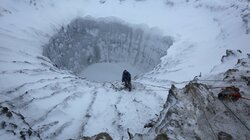
Colossal explosions shake a remote corner of the Siberian tundra, leaving behind massive craters. In Alaska, a huge lake erupts with bubbles of inflammable gas. Scientists are discovering that these mystifying phenomena add up to a ticking time bomb, as long-frozen permafrost melts and releases vast amounts of methane, a potent greenhouse gas. What are the implications of these dramatic developments in the Arctic? Scientists and local communities alike are struggling to grasp the scale of the methane threat and what it means for our climate future.
Scott Burnett is "Scatman"—an Australian ecologist on the trail of the secrets of poop. By identifying and analyzing animal scat for DNA and hormones, he discovers essential details of their behavior, how they fit in the ecosystem, and even how to protect them. From the mysterious cubic poop of wombats to the precious pink waste of whales, join scientists as they explore nature's smelliest secrets.
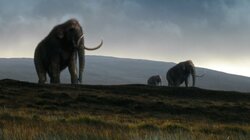
Sir David Attenborough investigates a unique site in southern England where amateur fossil hunters uncovered giant mammoth bones and evidence of Neanderthals. A team of paleontologists and archaeologists soon discover that the site preserves rare evidence of the extinct beasts and early human inhabitants of Britain dating to over 200,000 years ago. What skills did the early humans have to help them survive during the Ice Age? How did they hunt and protect themselves against formidable creatures such as mammoths? With hands-on experiments with replicas of Neanderthal-era spears and stone tools, the world of prehistoric Britain comes to life.
Follow the dramatic personal journey of Hugh Herr, a biophysicist working to create brain-controlled robotic limbs. At age 17, Herr's legs were amputated after a climbing accident. Frustrated by the crude prosthetic limbs he was given, Herr set out to remedy their design, leading him to a career as an inventor of innovative prosthetic devices. Now, Herr is teaming up with Jim Ewing, an injured climber and friend, and Dr. Matthew Carty, a surgeon at a leading Boston hospital, to test a new approach to surgical amputation that allows prosthetic limbs to move and feel like the real thing. Herr's journey is a powerful tale of innovation and the inspiring story of a personal tragedy transformed into a life-long quest to help others.

In 2005, filmmaker Jason DaSilva was diagnosed with primary progressive multiple sclerosis, a rare type of MS with no known cure that inflicts a host of progressively debilitating symptoms. In this moving personal film, DaSilva looks back on the challenges he's faced, delves into the science behind MS, and investigates the potential risk factors that may–or may not–have contributed to his rare diagnosis. Refusing to be labeled a "tragic" case, he continues to advocate for people with disabilities and pursue his career as an artist and filmmaker.

Three women at risk of developing Alzheimer's join a groundbreaking study to prevent the disease while sharing their ups and downs, anxiously watching for symptoms, and hoping they can make a difference. Barb, Sigrid, and Karen all had mothers with Alzheimer's and witnessed firsthand the devastation wrought by the disease, not only on the mind and body but on patients' families. Now, they are all participating in a major study that tracks the health and memory of thousands of people over many years, as researchers hunt for lifestyle changes and medicines that could improve all our chances and ultimately protect the brain and body from one of the world's deadliest diseases.
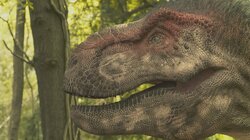
In the Badlands of North Dakota, scientists think they might have found the fossilized remains of animals killed on the day an asteroid struck Earth 66 million years ago. The evidence points to a catastrophic event, with a jumble of rare fossils, including a pterosaur embryo still in its shell and a well-preserved patch of triceratops skin mixed in with tiny spheres of clay and glass that could be the fallout from the massive asteroid impact. Sir David Attenborough guides us on a search for clues that could give an unprecedented snapshot of what happened in the dinosaurs' final moments on Earth.
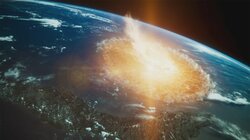
In the second episode of this two-part series, the search continues for signs of what happened on the day the dinosaurs died. Scientists uncover extremely rare fossils and more evidence that could link the dig site in North Dakota to the asteroid that wiped out the dinosaurs 66 million years ago. Among the fossils are tiny spheres of glass locked in amber. Inside one of the spheres is a speck of rock that appears to be a chemical match to the killer asteroid itself. And scientists uncover one of the most spectacular finds of all: an almost perfectly preserved dinosaur leg. Sir David Attenborough guides us on a search for clues that could provide an unprecedented snapshot of what happened in the dinosaurs' final moments on Earth.
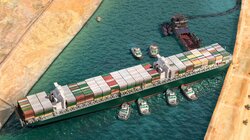
When the bow of the colossal Ever Given container ship plowed into the bank of the Suez Canal on March 23, 2021, international supply chains ground to a halt. What went wrong? Follow the dramatic efforts to free the ship and the investigation into one of the most expensive shipping disasters ever. Maritime experts analyze other recent accidents and try to figure out how such devastating crashes could be prevented.
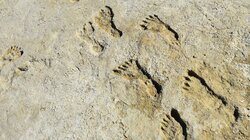
Thousands of ancient footprints stretch for miles across New Mexico's White Sands National Park, capturing moments when Ice Age humans encountered now-extinct beasts, including mammoths and enormous ground sloths. These footprints tell an intimate story about what life was like during the Ice Age and reveal surprising new evidence about when humans arrived in North America.
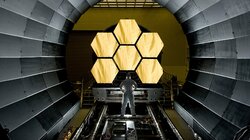
How did NASA engineers build and launch the most ambitious telescope of all time? Follow the dramatic story of the James Webb Space Telescope—the most complex machine ever launched into space. If it works, scientists believe that this new eye on the universe will peer deeper back in time and space than ever before to the birth of galaxies, and may even be able to "sniff" the atmospheres of exoplanets as we search for signs of life beyond Earth. But getting it to work is no easy task. The telescope is far bigger than its predecessor, the famous Hubble Space Telescope, and it needs to make its observations a million miles away from Earth—so there will be no chance to go out and fix it. That means there's no room for error; the most ambitious telescope ever built needs to work perfectly. Meet the engineers making it happen and join them on their high stakes journey to uncover new secrets of the universe.
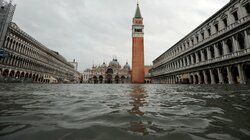
Rising sea levels and sinking land threaten to destroy Venice. Leading scientists and engineers are racing against the clock and battling the forces of nature to try to save this historic city for future generations. Discover the innovative projects and feats of engineering currently underway, including a hi-tech flood barrier, eco-projects to conserve the lagoon, and new efforts to investigate erosion beneath the city. This is Venice as never seen before, at a critical moment in its rich history.
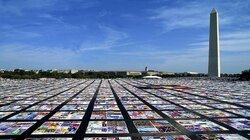
Almost 40 years after the discovery of HIV, could we be on the verge of ending the AIDS epidemic in America? As of 2019, in the US, there were only 34,000 new cases of the disease––a feat that once seemed near-impossible to achieve. How did scientists and the public health community tackle one of the most elusive deadly viruses to ever infect humans? Can innovative drugs and therapies bring new infections to zero? This is the story of an incredible scientific achievement and the public health work that still needs to be done to end HIV in America.

In police departments and courts across the country, artificial intelligence is being used to help decide who is policed, who gets bail, how offenders should be sentenced, and who gets parole. But is it actually making our law enforcement and court systems fairer and more just? This timely investigation digs into the hidden biases, privacy risks, and design flaws of this controversial technology.
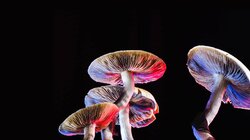
Hallucinogenic drugs—popularly called psychedelics—have been used by human societies for thousands of years. Today, scientists are taking a second look at many of these mind-altering substances–both natural and synthetic–and discovering that they can have profoundly positive clinical impacts, helping patients struggling with a range of afflictions from addiction to depression and PTSD.
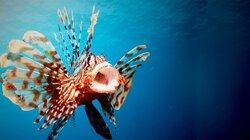
Lionfish – long prized in home aquariums – have invaded the Atlantic and are now one of the ocean's most successful invasive species, wreaking havoc in waters across the globe. Join ocean explorer Danni Washington on a journey to discover how they took over, why they're doing so much damage, and what can be done about it. These fascinating creatures are a window into the impacts of invasive species in a globalized world where human activity is an increasingly powerful evolutionary force.
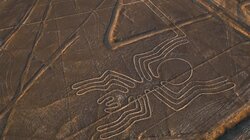
One of the world's greatest ancient enigmas, the Nazca lines are a dense network of crisscrossing lines, geometric shapes, and animal figures etched across 200 square miles of Peruvian desert. Who created them and why? Ever since they were rediscovered in the 1920s, scholars and enthusiasts have raised countless theories about their purpose. Now, archaeologists have discovered hundreds of long-hidden lines and figures as well as evidence of ancient rituals, offering new clues to the origins and motivations behind the giant desert symbols.

From Bitcoin to NFTs, crypto is making headlines. But what exactly is it, and how does it work? Experts go beyond the hype and skepticism to unravel crypto's social and technological underpinnings – exploring how it came to be and why this new technology may change more than just money.
Zero and infinity. These seemingly opposite, obvious, and indispensable concepts are relatively recent human inventions. Discover the surprising story of how these key concepts that revolutionized mathematics came to be – not just once, but over and over again as different cultures invented and re-invented them across thousands of years.
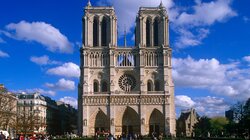
Following the April 2019 fire that almost destroyed Paris's iconic Notre Dame Cathedral, a team of engineers, masons, and timber workers set out on the daunting challenge of restoring France's historic landmark. The program traces the dramatic human and technical challenges of the project's first three years, going behind the scenes with carpenters shaping lumber for the new roof and spire, stone masons repairing gaping holes in the vault, and artisans who use traditional techniques to restore stained glass windows. A symbol of the nation's identity and resilience, Notre Dame gradually rises from the ashes, thanks to a restoration project like no other.
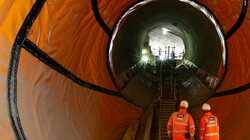
For over a decade, more than 10,000 engineers, technicians, and construction workers race to build a brand-new subterranean railroad under London— the Elizabeth Line—London's new Underground and known as Crossrail until February 2016. One of Europe's biggest engineering projects, the construction teams confront immense challenges, from building platforms and concourses the size of aircraft carriers hidden under London's busiest shopping venue, Oxford Street, to designing, outfitting, and testing a fleet of 70 new high-speed trains from scratch in just two years. Facing delays and cost overruns worsened by the pandemic, the engineers and technicians race to create ten new stations, learn to operate the new trains, and test out new 13-mile twin tunnels under London. Drawing on more than 1,500 hours of footage, NOVA provides intimate glimpses of the challenges, setbacks, and ingenious solutions that lead to ultimate success as the Queen finally opens the Elizabeth Line on May 24, 2022.
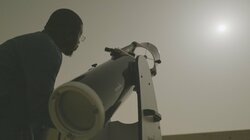
A NASA spacecraft named Lucy blasts off from Cape Canaveral on a mission to the Trojans, a group of asteroids over 400 million miles from Earth thought to hold important clues about the origins of our solar system. Just hours before, in Senegal, West Africa, a team of scientists sets out to capture extraordinarily precise observations vital to the success of the Lucy mission – crucial data needed to help NASA navigate Lucy to its asteroid targets across millions of miles of space. The team's visionary leader, Senegalese astronomer Maram Kaire, takes viewers on a journey to investigate his nation's rich and deep history of astronomy, reaching back thousands of years – and the promising future ahead.
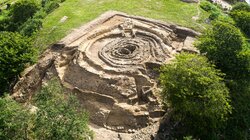
Recent stunning archaeological discoveries are exploding the myth of the Amazon as a primeval wilderness, revealing traces of ancient civilizations that flourished there for centuries. Dense settlements indicate populations in the millions, supported by sophisticated agricultural systems, while huge geometric earthworks and roadways bear witness to complex religious ideas and social networks. The evidence is now clear that, far from being an untouched wilderness, the Amazon has been shaped by human hands for millennia.
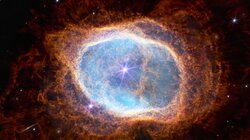
In July 2022, NASA's James Webb Space Telescope released its first images, looking further back in time than ever before to show our universe in stunningly beautiful detail. But that was just the beginning: With tons of new data and spectacular images flooding in, Webb is allowing scientists to peer deep in time to try to answer some of astronomy's biggest questions. When – and how – did the first stars and galaxies form? And can we see the fingerprints of life in the atmospheres of distant exoplanets – or even within our own solar system?
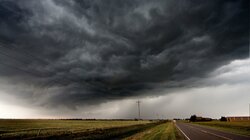
It's hard not to notice: our weather is changing. From longer, hotter heat waves, to more intense rainstorms, to megafires and multi-year droughts, the U.S. is experiencing the full range of impacts from a changing global climate. At the same time, many on the front lines are fighting back – innovating solutions, marshaling ancient wisdom, and developing visionary ideas. The lessons they're learning today can help all of us adapt in the years ahead, as the planet gets warmer and our weather gets more extreme.
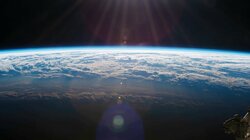
The U.S. recently set an ambitious climate change goal: zero carbon emissions by 2050. And to achieve that, slash emissions in half by 2030. Is it possible? And what kind of technology would it take? Meet scientists and engineers who are convinced we can achieve carbon zero in time to avoid the biggest impacts of climate change.
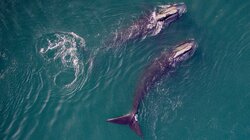
North Atlantic right whales are among the planet's most critically endangered large ocean mammals. With fewer than 350 remaining as of 2023, they could be extinct within 20 years. But teams of marine biologists and whale rescuers are determined to help save the species. Follow their efforts and get a glimpse into the lives of these giants of the sea and their prospects for survival.
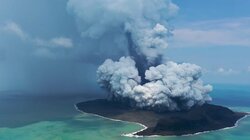
On January 15, 2022, the submarine volcano Hunga Tonga–Hunga Haʻapai exploded in one of the most powerful volcanic eruptions in recorded history. It rocked the southern Pacific islands of Tonga, sending shockwaves around the world. Through first-person accounts of the disaster and eyewitness footage, experience the terrifying power of the eruption and the devastating tsunami that struck the shores of Tonga. Why was this eruption so big, how did it cause the tsunami, and could another disaster loom?
Is what you see real? Join neuroscientist Heather Berlin on a quest to understand how your brain shapes your reality and why you can't always trust what you perceive. In the first hour of this two-part series, learn what the latest research shows about how your brain processes and shapes the world around you, and discover the surprising tricks and shortcuts your brain takes to help you survive.
Are you in control, or is your brain controlling you? Dive into the latest research on the subconscious with neuroscientist Heather Berlin. Sleepwalking, anesthesia, game theory, and more reveal surprising insights in this eye-opening journey to discover what's really driving the decisions you make.
Today, Earth is enveloped by a thin veil of gas, a narrow band of atmosphere that protects a world covered in lush green vegetation, deep blue oceans, and abundant life. But 4.5 billion years ago, Earth was a very different place: a hellscape of molten lava and barren rock, under relentless bombardment from meteors, and with no atmosphere whatsoever. So how did our familiar blue sky come to be? Breathtakingly realistic animations and a chorus of science experts reveal how the primordial inferno first gave rise to an orange-hued cauldron of toxic gasses that would be deadly to us today. Witness how the first drops of rain splashed down on the searing planet, setting the stage for the evolution of life. And discover how life itself helped create the air we all breathe today.
700 million years ago, Earth was a giant snowball cloaked in ice from pole to pole – a global deep freeze that held the planet in a stranglehold, threatening the survival of the earliest complex life. How did life manage to hold on in this forbidding world? Leading scientists investigate how this catastrophe may have become a catalyst for life to evolve in creative new ways as it bounced back from the brink – setting the stage for the astonishing complexity we see today.
For billions of years, life teemed in the oceans of planet Earth while the land was desolate and inhospitable. So, how did life make the leap to land? Scientists explore how some of the earliest life emerged and invaded a barren, rocky landscape, eventually transforming it into a verdant, green world. Gripping visual effects reveal an alien landscape dominated by towering fungi before the arrival of plants. Witness how the first plants made landfall and partnered with fungi to create soil that would sustain them. And discover how, once life emerged on land, it fundamentally altered the very ground it grew on.
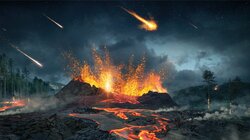
252 million years ago, the most devastating mass extinction of all time abruptly wiped out around 90% of all species on Earth. The culprits were the biggest volcanic eruptions the world has ever seen, emitting some 700 thousand cubic miles of magma and rock. Volcanic gasses permeated the atmosphere and acidified the oceans, while toxic gasses destroyed the ozone layer, bathing the planet in destructive UV radiation. The event – now called "The Great Dying" – came close to wiping out all life on the planet. Follow scientists as they piece together geologic evidence from the deep past and clues from today's ecosystems to discover how life made it through and evolved into the astonishing variety we see around us today.

The story of Earth can only be told because now, 4.5 billion years into its existence, a technological and self-aware animal species roams its surface, able to study the very planet that gave rise to it. But how exactly did Earth give rise to humans? Through stunningly realistic animation, witness the cataclysmic asteroid strike that wiped out the dinosaurs, the tumultuous changing climates that allowed early primates to spread across the planet, and the geologic events that created the conditions for the evolution of an animal that walks upright on two legs. Explore the power and paradox of humanity's profound impact on our planet and ponder the question of how we may shape its future.

In the span of just a few decades, China has transformed into a science and technology superpower. But how did it get here and where is it headed? Take an insider's tour of high-profile tech companies and labs that are driving China's meteoric rise to the forefront of global innovation. How does China innovate? What drives its bid for technological supremacy? And what does its rise mean for the future of the global economy?
Malaria is one of humanity's oldest and most devastating plagues. In many parts of the world, it remains an ever-present scourge that sickens or kills millions of people each year. What if it could finally be defeated? Now, scientists may be on the verge of a breakthrough with a promising vaccine in the final stages of testing and approval. Follow researchers on a quest to deliver humankind from one of the world's deadliest diseases.
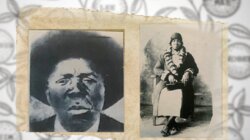
Many descendants of enslaved people have little record of their family's ancestry. Follow one family's quest to discover their lost history, and see how science and genealogy can help rebuild a family tree broken by slavery. Join filmmaker Byron Hurt at his extended family reunion as they celebrate the joy of family in the African diaspora and discover new details of their history that they thought were lost forever.
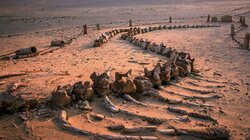
In Egypt's Sahara Desert, massive skeletons with strange skulls and gigantic teeth jut out from the sandy ground. This fossil graveyard, millions of years old, is known as the "Valley of the Whales." Now, paleontologists have unearthed a whole new species of ancient whale dating to 43 million years ago, and this predator wasn't just able to swim – it also had four legs and could walk. Follow scientists as they search for new clues to the winding evolutionary path of mammals that moved from the land into the sea to become the largest animals on Earth.
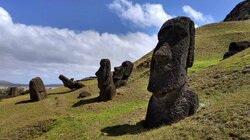
How were the giant stone heads of Rapa Nui–also known as Easter Island–carved and raised, and why? Since Europeans arrived on this remote Pacific island over 300 years ago, controversy has swirled around the iconic ancient statues and the history of the people who created them. Now, a new generation of researchers is overturning old theories, revealing the rich history, innovation, and resilience of the Rapanui people, and uncovering intriguing new evidence about where they–and their practice of monumental stone building–came from.
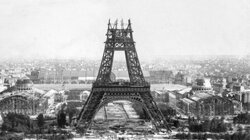
Explore the revolutionary engineering behind Paris's iconic landmark. Completed in just over two years for the 1889 World's Fair, the iron tower smashed the record for the tallest structure on Earth, ushering in a new age of global construction that reached for the skies. How did the engineers do it? Follow the innovations, successes, and failures that made one of the most famous buildings on the planet possible.
For decades, scientists have tried to unlock the secrets of ancient DNA. But life's genetic blueprint is incredibly fragile, and researchers have struggled to find DNA in fossils that could survive millions of years. Then, one maverick scientist had the controversial idea to look for DNA not in fossils or frozen ancient tissue – but in dirt. Join the hunt as scientists decipher the oldest DNA ever found, and reveal for the first time the genes of long-extinct creatures that once thrived in a warm, lush Arctic.

Can we harness the power of artificial intelligence to solve the world's most challenging problems without creating an uncontrollable force that ultimately destroys us? ChatGPT and other new A.I. tools can now answer complex questions, write essays, and generate realistic-looking images in a matter of seconds. They can even pass a lawyer's bar exam. Should we celebrate? Or worry? Or both? Correspondent Miles O'Brien investigates how researchers are trying to transform the world using A.I., hunting for big solutions in fields from medicine to climate change.

Explore the spectacular cosmic phenomenon of a total solar eclipse. In April 2024, the Moon's shadow is sweeping from Texas to Maine, as the U.S. witnesses its last total solar eclipse until 2044. This extraordinary astronomical event is plunging locations in the path of totality into darkness for more than four minutes – nearly twice as long as the last American eclipse in 2017. Learn how to watch an eclipse safely and follow scientists as they work to unlock secrets of our Sun – from why its atmosphere is hundreds of times hotter than its surface, to what causes solar storms and how we might one day predict them.

Whether on social media or surfing the web, you probably share more personal data than you realize. That can pose a risk to your privacy – even your safety. But at the same time, big datasets could lead to huge advances in fields like medicine. Host Alok Patel leads a quest to understand what happens to all the data we're shedding and explores the latest efforts to maximize benefits – without compromising personal privacy.
How big is the universe? If it began with the Big Bang, will it also have an end? Is there life beyond our planet? Questions like these inspired the launch of Voyager I in 1977 and have driven innovative space research and exploration ever since. Trace the ground-breaking discoveries that have transformed our picture of the universe, from an age when we knew of no planets beyond our solar system, to today, when we have evidence of thousands and estimate trillions more. And follow the teams trying to solve two of the biggest mysteries in cosmology today: What are dark matter and dark energy?
Across the solar system, wild storms are raging. From globe-spanning dust storms, to monsoons of liquid methane, to monstrous storms with lightning bolts ten times more energetic than anything on Earth – our solar system is full of weird and wonderful weather. Explore the forces that create the truly awesome and extreme conditions found on our neighboring planets and moons.

From a dwarf planet that looks like a deflated football to a tiny moon with cliffs taller than Mt. Everest to the spectacular rings of Saturn, discover how the effects of gravity produce the amazing variety of weird worlds in our solar system.
All around our solar system, volcanoes are powerful shapers of worlds. Next door on Mars is Olympus Mons, a giant volcanic mountain more than twice the size of Mt. Everest. And closer to the Sun, thousands of volcanoes produce the toxic atmosphere that keeps Venus boiling. Then there's Jupiter's moon Io, the most volcanically active world in the entire solar system, and Saturn's moon Enceladus, where clues in its watery eruptions hint at the possibility of life. Discover the explosive forces that molded each of these worlds – and what makes the volcanoes right here on Earth so special.
Ice might seem familiar to us on Earth, but out in the solar system, it can get quite exotic. From Uranus's ultra hot superionic ice, to glaciers of nitrogen ice on Pluto, to carbon dioxide snow on Mars, ice is a fundamental building block throughout our cosmic neighborhood. Visit some of the strange, frozen worlds of our solar system to discover why the ice here on Earth so special – and why we wouldn't be here without it.
The classic view of our solar system contains eight orderly planets, some with moons in neat orbits – but when we look closer, we discover a bunch of stuff missing from this simple, clockwork model. Wandering worlds that seem out of place, found in the gaps between and beyond the planets, offer clues that our cosmic neighborhood is far more dynamic than we once thought. From the meteorites that impact Earth, to a moon that orbits backwards, to an imposter lurking in the asteroid belt, these wandering worlds are rewriting what we know – and even how we think about – our solar system.

When we look at the world at the tiniest scales in the subatomic realm, things get weird – very weird. Welcome to the quantum universe, where particles can spin in two directions at once, observing something changes it, and something on one side of the galaxy can instantly affect something on the other, as if the space between them didn't exist. Buckle up for a wild ride through the discoveries that proved all of this to be true and paved the way for the digital technologies we enjoy today – and the powerful quantum sensors and computers of tomorrow.
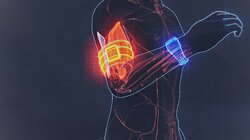
Around the world, engineers are finding ingenious ways to amplify our abilities and senses – allowing us to access and shape the world way beyond our natural gifts. From helping a blind man see without the use of his eyes to building a sling so powerful it can shoot rockets into space, see why engineering just might be the closest thing to a superpower we humans have.
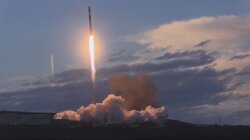
From the time our species first evolved, we've been on the move. Not content to stay in one place, we've imagined and invented and built our way from one place to the next. From deep sea subs to wind-resistant skyscrapers to next-gen space habitats, see how today's engineers are designing and building creative new ways for us to get all around – and even off – our planet.
Thousands of years of human innovation have allowed us to shape the environment to improve lives. The consequences of our activities are not always benign – but there are solutions. From electrifying aviation, to building robots to protect threatened coral reefs, a new generation of engineers is finding creative solutions to some of our most critical environmental challenges.
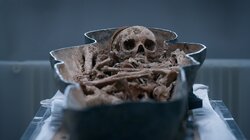
After the devastating 2019 fire at Notre Dame, two mysterious sarcophaguses were discovered under the cathedral's stone floor. Who is buried in them, and what secrets will these coffins reveal? Follow a team of archaeologists and historians as they attempt to solve centuries-old mysteries using the latest scientific investigation techniques. What can forensic analysis of the remains reveal about one of the world's most famous cathedrals and those who devoted their lives to it?
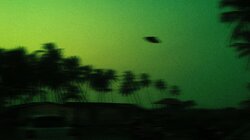
For decades UFOs have captivated the public, even as many scientists saw them as too taboo to investigate. Now, after highly publicized sightings of unidentified objects by Navy pilots, UFOs are moving out of the shadows and into the light, as NASA pledges to study them scientifically. So what does science have to say? Though some are identified as balloons or drones, weather phenomena, or optical illusions, others remain mysterious. Could they be the result of secret new technology developed by other governments – or our own? And what would it take for alien engineers to traverse vast distances to send probes or visit Earth from other solar systems? Explore the evidence, as astrophysicists and engineers use new technologies to investigate the strangest objects in our skies.

In New York City, a team of elite designers, engineers, and construction workers are on a mission to build the ultimate airport. The new LaGuardia is America's first new airport in more than 25 years and cost more than $8 billion to build. Over the course of eight years, 7,000 workers must rebuild the old airport to create a brand new, fully connected facility that can handle more than 34 million passengers every year. It takes 72,000 tons of steel and almost 600,000 tons of concrete to construct this engineering marvel, and the team has to battle extreme weather, complex geology, and massive machines. Follow their ups and downs in the extraordinary race to build a new, world-class airport on the site of one of America's busiest aviation hubs.
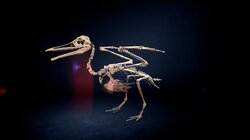
Contrary to popular belief, dinosaurs never went extinct. They're still alive among us – in the form of birds! Birds are the only dinosaurs that survived the cataclysmic mass extinction caused by an asteroid the size of Mt. Everest crashing into Earth about 66 million years ago. The big question is: How? How did birds manage to not only live through the apocalypse, but also go on to diversify and populate every corner of our planet? Now, rare fossil discoveries are revealing the secrets of bird evolution going back more than 100 million years, telling the story of how some resilient feathered dinos persevered and transformed into the vast array of colorful bird species that fill our skies today.
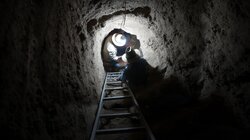
An archaeological detective story opens a door into an extraordinary moment in the history of Ancient Egypt, as the discovery of a long-lost cemetery not far from King Tut's tomb shines a light on an often-overlooked Egyptian kingdom. Treasures emerge revealing details of a unique period about 2,700 years ago, when kings from Nubia – present-day Sudan – conquered Egypt and shifted the status of Egyptian women, giving them remarkable power. Archaeologists and historians reveal how the ascent of The God's Wife of Amun lifted some women to the highest echelons of religious, political, and financial power in the ancient Egyptian empire.
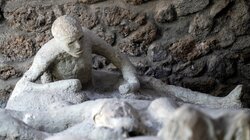
For over two centuries, archaeologists have hailed Pompeii as a sophisticated city at the heart of an advanced ancient civilization. But a series of new excavations is painting a much more complex picture of the city tragically buried by the eruption of Mount Vesuvius in 79 CE. New archaeological finds – including 2,000-year-old lines of graffiti, human remains, and artifacts from ancient homes and businesses – are revealing a city of both staggering wealth and extreme poverty, dependent on slavery, and riven by political conflicts, violence, and riots. Before Vesuvius rumbled, the jewel of the ancient Roman Empire hid a very dark side.
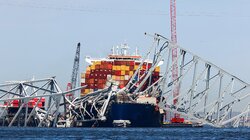
On March 26, 2024, the world collectively gasped as a massive container ship, the Dali, lost control and plowed into the landmark Francis Scott Key Bridge in Baltimore. The busy four-lane bridge suffered a catastrophic collapse and crashed into the Patapsco River. Six highway workers were killed, and the Port of Baltimore – a crucial link in the global shipping chain on the Eastern Seaboard of the United States – was blocked by thousands of tons of twisted steel and concrete. How did a modern ship lose all power and propulsion? And why did the bridge fail so catastrophically? Follow the high-stakes rescue and recovery, the efforts to reopen the port, and the investigations into what went wrong and how many other crucial bridges are at risk.
In 1775, a ragtag army of farmers and tradesmen went to war against the most powerful army in the world, ultimately winning American independence. What military technologies did the American colonies use in their fight for freedom, and how did they help propel them to one of history's most unlikely victories? Archaeologists and historians uncover the real stories of innovation, skill, and strategy that determined the outcome of important battles. From the Brown Bess musket to the world's first military submarine, get a closeup look at the powerful and sometimes ingenious weapons that helped the colonies win the war.
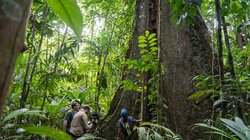
Can forests help cool the planet? Follow scientists working in spectacular forest landscapes in Costa Rica, Brazil, Australia, and beyond as they try to untangle complex networks of trees, fungi, and creatures large and small – all in a quest to tackle the twin threats of climate change and species extinction.

Black Americans are nearly twice as likely to have high blood pressure, diabetes, and heart disease than White Americans, and their life expectancy is about five years shorter. Why? In this special feature-length documentary, Oscar-nominated filmmaker Stanley Nelson investigates the dramatic health disparities in the U.S., even as scientists confirm that there are no meaningful genetic differences between races. From the deep history of pseudoscientific beliefs about race that still permeate modern medicine, to the latest research on how experiencing discrimination can directly damage the body's DNA and biology, "Critical Condition" reveals the factors behind the health crisis facing Black Americans.
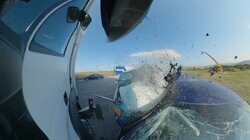
Surprisingly little is known about the behavior of cars and drivers in uncontrolled, real-world accidents, despite rigorous testing in laboratory-controlled crashes. Now, a first-of-its-kind experiment aims to discover what really happens in a multi-vehicle pileup and how cars and driving could be made safer.In the first episode of this two-part special, go behind the scenes as scientists make a series of high-stakes decisions to ensure the ambitious experiment goes off without a hitch. They only have one shot. The plan is for 8 drivers to drive 8 different cars by remote control at 70 mph down a hazardous straightaway. But how can they best represent real-world conditions to create a crash, especially when the drivers have no idea what's about to happen? How do they ensure that the remote drivers feel natural behind the wheel? And what is needed to fully capture every data-point possible? The intense preparation for the most ambitious crash test ever conducted culminates in the moment of truth as the cars barrel down an airport tarmac and collide in a massive, multi-vehicle pile-up.
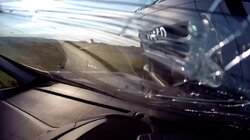
Surprisingly little is known about the behavior of cars and drivers in uncontrolled, real-world accidents, despite rigorous testing in laboratory-controlled crashes. Now, a first-of-its-kind experiment aims to discover what really happens in a multi-vehicle pileup and how cars and driving could be made safer.In the second episode of this two-part special, forensic analysis is put to the test. Real-life crash scene investigations have very little data to work with, so are they accurate? And what can we learn about car safety when there is actual data to show exactly what happened? Follow scientists, engineers, and accident investigators as they analyze a treasure trove of data – more than they've ever been able to work with before. Interviews with drivers offer valuable clues into what they saw and how they reacted, and a LIDAR scan of the scene is stitched together into a digital version of the entire event that can be analyzed millisecond by millisecond. In this unprecedented look at a major multi-vehicle accident, discover insights about driver behavior and vehicle design that could save lives.
Around 300,000 years ago, Homo sapiens emerged in Africa – one of at least seven human species alive at the time. Now, we are the only remaining human line, and our impact on the planet is undeniable.In this stunningly cinematic five-part series, paleoanthropologist Ella Al-Shamahi takes viewers back in time to trace the surprising story of human origins. Remarkable new fossil evidence, modern DNA sequencing, and other cutting-edge scientific tools are shedding new light on the lives and journeys of long-vanished human species, and how our encounters with them helped make us who we are today. This evidence also reveals how our ancestors survived as they encountered new landscapes, developing the physical and cultural tools to help them survive – and eventually, with the rise of cities and complex civilizations, thrive – as no species has ever done.
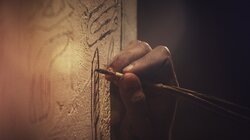
What caused humans to stop roaming and start building? How did we transform from a tiny, fragile population of Homo sapiens into the 8 billion strong, globally interconnected species we are today? Discover pivotal moments that set humanity on a new path – toward cities and modern civilizations. What role did the domestication of plants and animals play in this transformation? And how did the invention of writing begin to reshape how we shared knowledge and organized society? From ancient temples like Göbekli Tepe in Turkey to the Egyptian Empire that built the Pyramids along the banks of the Nile, witness the birth of cities, the dawn of communication, and the inherent human drive to build, connect, and thrive against all odds.
Across the Middle East lie thousands of enigmatic stone megastructures whose shape, when seen from the air, looks like giant kites. The oldest were built around 7,000 B.C., predating the earliest Egyptian pyramids and Stonehenge by several thousand years. Since their discovery in the 1920s, these "desert kites" have posed a stubborn mystery: Who designed them, and why were they built? How did prehistoric people, before the invention of writing, draw detailed scale models without compasses, hot air balloons, or drones? Using cutting-edge technologies, an international team of archaeologists is determined to find answers and shed new light on the poorly understood Stone Age period of human history.
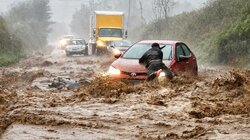
In September 2024, Hurricane Helene dumped more than 14 inches of rain on North Carolina, triggering flash floods and mudslides, causing over $50 billion of damage, and killing more than 100 people. A shocked nation wondered how the city that bore the brunt of the destruction – Asheville, at 2,000 feet above sea level and more than 250 miles inland – could have suffered such a fate. With eyewitness testimony, dramatic unseen videos, drone flyovers, and 3D animations, NOVA pieces together a moment-by-moment account of the Asheville disaster. And it looks to other recent flash floods – including the devastating Fourth of July 2025 floods in the Texas Hill Country, and catastrophic flooding in Valencia, Spain – for lessons that might help prevent the next disaster. Are these violent floods becoming more frequent and ferocious? And what can communities do to protect themselves in the future?
The size of a football field, the International Space Station hurtles around Earth at 17,000 mph, shielding its astronauts from the most hostile environment humans have ever endured. To mark the 25th anniversary of the continuous human presence in space, astronauts and Mission Control insiders reveal the most terrifying moments aboard this remarkable orbiting laboratory, where a single mistake could prove fatal. From ammonia leaks, meteor strikes, and docking disasters, to spacewalk horrors, potentially lethal showers of space junk, and the moment the entire ISS backflipped out of control, NOVA uncovers tales of life and death at 1.3 million feet above our planet – and the human ingenuity and teamwork that each time saved the day.
What if violent asteroid impacts actually jump-started life on Earth? Explore a dramatic theory.
New evidence sheds light on the remarkable life – and mysterious collapse – of the ancient jungle city.
Do speech buttons really allow dogs to talk to us? Scientists investigate.
Explore mammals' surprising origins, long before the age of dinosaurs.
Complete episode guide for NOVA with detailed information about every season and episode including air dates, summaries, ratings, and streaming availability in United States.
This episode guide is organized by seasons, making it easy to track your viewing progress or find specific episodes. Use the episode information to plan your binge-watching sessions or catch up on missed episodes.