
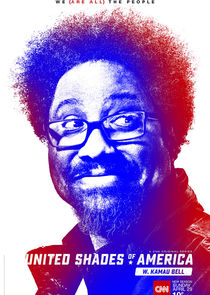
United Shades of America follows comedian and political gadfly W. Kamau Bell as he explores the far corners of our country and its various groups and subcultures.

Despite their dwindling numbers over the decades, the notorious white supremacist group, the Klu Klux Klan, seek to reignite the flames of white power with a new message; W. Kamau Bell heads to the South to speak to KKK members.
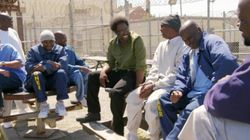
W. Kamau Bell speaks to prisoners of the infamous San Quentin prison to hear their individual, real stories about life inside the prison and what it has turned them into.
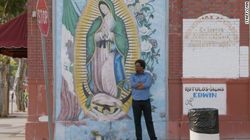
The population of East Los Angeles is over 90 percent Latino; they are predicted to be the majority population of Americans by 2044; W. Kamau Bell speaks to many Latinos who are fighting prejudice and spreading the message of tolerance.
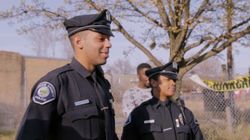
Camden, New Jersey, has a reputation as one of the country's most dangerous cities; W. Kamau Bell heads there to see if a newly implemented community policing program is helping the relationship between citizens and the police force.

W. Kamau Bell visits people in North Carolina and Tennessee who are living completely off the grid; inside the tiny house movement; legendary Summer of Love commune, The Farm; doomsday prepper who refuses to be identified.

W. Kamau Bell is off to speak to the people of Portland, Oregon where the result of a massive influx of hipsters appears to be gentrification; he inquires as to how this has affected the local neighborhoods.
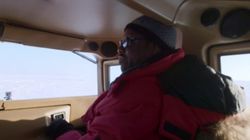
W. Kamau Bell visits the Inuit people of Barrow, Alaska, 320 miles north of the Arctic Circle, where this town, only accessible by plane, is fighting to hold on to its traditions as large companies seek to acquire their natural resources.

W. Kamau Bell talks to the retirees and college age spring breakers of Daytona, Florida to inquire what makes this part of the country so appealing to people from all walks of life.
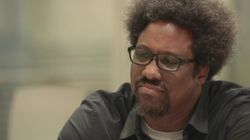
W. Kamau Bell enjoys an abundant cross-section of immigrants who come to this country from all over the world to make a better life.
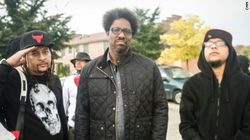
W. Kamau Bell goes to the heart of Chicago gang territory to explore the truth about violence in the city.
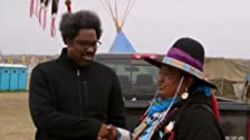
Kamau goes to the Dakotas to bring light onto the indigenous people mistakenly called Native Americans.

W. Kamau Bell meets Muslims in Michigan who are eager to explain that practitioners of Islam are not what people assume they are.

W. Kamau Bell, a critic of gun laws in America, buys a 357 Magnum.
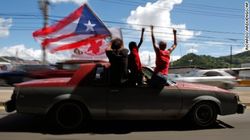
W. Kamau Bell unlocks some of the myths of Puerto Ricans; a journey from New York City to Puerto Rico itself.

The Appalachian region has a rich history and optimism, despite being one of the hardest-hit countries economically; W. Kamau Bell plans to mine.

W. Kamau Bell visits San Francisco's Chinatown; what it means to be American while culturally connected to another country.
W. Kamau Bell heads to the U.S.-Mexico border to find out what life is like for the people who live there and also show everyone that there's already a wall!

W. Kamau Bell unravels the stereotypes of one of the most misunderstood religions in America - Sikhism.
W. Kamau Bell visits the coast of South Carolina to meet the Gullah Geechee people, a truly original American culture steeped in West African traditions and good old-fashioned southern roots.

W. Kamau Bell looks into a minority group that everyone on the planet can be a part of - the physically disabled.
W. Kamau Bell head to Historically Black Colleges and Universities (HBCU's) to answer the question on why these schools are important.
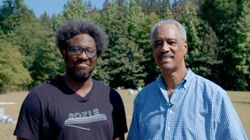
W. Kamau Bell heads down south to debunk some myths while also retracing his family roots with his father.

W. Kamau Bell takes a trip up north to Canada to see if everything is truly as great as everyone says or if our neighbor to the north just does a better job of hiding its flaws..
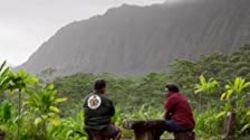
W. Kamau Bell visits the islands of Hawaii and finds from the native Hawaiians that everything isn't just surfing, hula dancing and luaus in paradise.
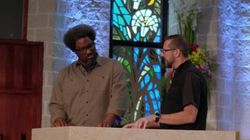
Kamau visits Dallas, the home of the Megachurch, to find out what is creating the new face of Christianity today, in a city where church and state are far from separate.

While in and around Seattle, Kamau takes a look at different forms of activism that white people are using to combat America's history of white supremacy and the rise of extreme right-wing groups across the country.

Kamau meets members of the Hmong community brought to America after the Laotian Civil War forced their expulsion, and learns the multigenerational stories of loss, perseverance, and hope that make up their American journey.

Kamau visits Jackson, Miss. to explore the divisive world of reproductive rights and reproductive justice, including abortion, sex education, and women's health.
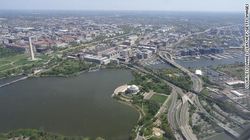
Kamau takes a look at Washington, D.C. through the eyes of residents who show him the vibrant culture that is distinct from the politics that surround it.
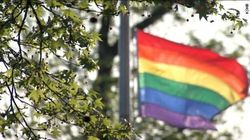
Kamau visits Salt Lake City to explore the growing LGBTQ community living in the epicenter of the Mormon faith.

Kamau visits Milwaukee, the most segregated city in America, to better understand why living as a black person in America can be so challenging.

Kamau visits Philadelphia and Chester, Pa., to learn about the toxic man-made disasters that have polluted these communities for generations.
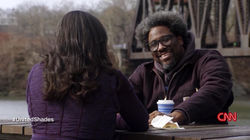
W. Kamau Bell heads to Pittsburgh to take a deeper look into the damaging systemic applications of white supremacy.

W. Kamau Bell heads to Oklahoma to explore how politics and economic disparity are impacting families and independent farmers.
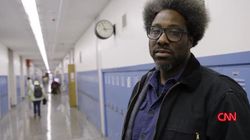
W. Kamau Bell explores inequities in the public education system through two very different school districts near Cleveland, Ohio.
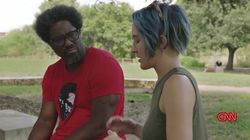
Across the United States, the fastest-growing category of new jobs is gig work, spurred on by tech companies and their never-ending stream of apps; low and uncertain incomes have replaced benefits.

W. Kamau Bell heads to New Orleans to explore the topic of reparations, acknowledging the scale and scope of slavery.
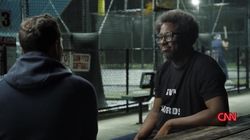
W. Kamau Bell heads to South Florida, home of the largest number of Venezuelans in the United States, to understand the crisis that led them to seek asylum.

W. Kamau Bell visits New York City to talk to recent Iranian immigrants and those who came here decades ago to learn about their American experience.
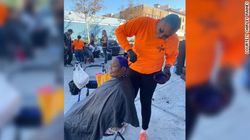
W. Kamau Bell spends time on the notorious Skid Row in Los Angeles and explores its racial, socio-economic, and statistical dynamics.
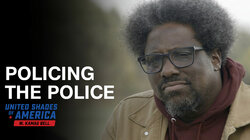
Exploring the perception of the warrior cop in America and two mindsets of the police forces across the country: warrior versus guardian.

Kamau digs deeply into the discrimination and racism that lingers in programs like STEM; he looks at efforts to build a more inclusive workforce for the globally competitive future in technology and space.

Kamau returns to Portland to explore the emerging dynamics of the current protests, talking with the founders of BLM as well as athletes, entertainers and regular folks who have become active in the social and economic justice movement.

Kamau explores American disparity through the lens of generational wealth, digging into the forces that are actively working to keep Black families from building prosperity and the possible solutions that can fix it.
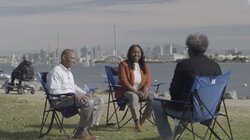
Kamau examines the military and how it is beset by the same destructive forces that keep the U.S. divided as a nation.

Kamau explores the shifting ethnic makeup of the U.S. in a celebratory exploration of an increasingly robust mixed-race population and the ways in which they are changing and challenging the culture.

Kamau travels to Dallas, an epicenter of not only shocking statistical deadly violence against the trans community, but also of activism and resilience.
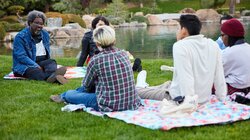
Kamau visits Arizona, on the front lines of a culture war, where the term "woke" has become a fight for control of the nation's future; Kamau talks with parents and educators to hear both sides of CRT and how it is being used as a weapon.

When we picture Appalachians, we generally picture the white working class of America. But a significant and largely unknown population of Black Americans have called it home since the time of the conquistadors, and they have contributed to American culture in ways that are often overlooked.

While sports can be exhilarating and bring us together, they also come with a lot of intensity and pressure that can compromise athletes' mental health. W. Kamau Bell heads to the legendary sports town of Boston, Massachusetts, to find out how athletes are speaking up and leading change.
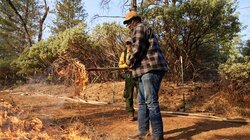
Years of prolonged drought and extreme heatwaves in California have seen wildfires grow in frequency, intensity, and size. It is a complex crisis fueled by mismanagement of the land, corporate greed, and climate change. There's no quick or easy fix to any of this, so in the meantime, how do we learn to coexist with wildfire?

W. Kamau Bell takes us on a personal journey as he discusses representation with some of his Asian American friends in the film and television industry, examining the commonality between his own experience and theirs. In the wake of Black Lives Matter Protests and anti-Asian hate, Bell discusses the need for Asian Americans to have a greater voice in bridging divides and helping shape a more equitable future for Black and Asian communities.
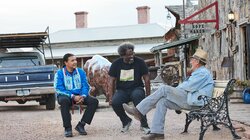
W. Kamau Bell travels to the Black Hills of South Dakota – a place known for centuries to the Indigenous peoples of the area as "the heart of everything that is." Bell dives into the leading edge of one of the most profound campaigns of Native self-determination to date with the LANDBACK campaign. Native leaders are demanding that the United States honor its treaties and return all public lands, starting with the Mount Rushmore monument, to the management and stewardship of Indigenous peoples.
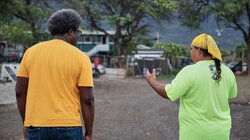
The word aloha has come to define Hawaiian hospitality: a warm, open-armed welcome. But on his second trip to Hawaii, W. Kamau Bell learns how that word has been commodified and corrupted to benefit transplants and how an exploitative tourism industry has left local Hawaiians protesting to get their jobs back, competing with tourists for space in the water and struggling for housing. Bell will explore how Hawaii can sustain its tourism economy while supporting local Hawaiians.
Complete episode guide for United Shades of America with detailed information about every season and episode including air dates, summaries, ratings, and streaming availability in Italy.
This episode guide is organized by seasons, making it easy to track your viewing progress or find specific episodes. Use the episode information to plan your binge-watching sessions or catch up on missed episodes.