
Horizon tells amazing science stories, unravels mysteries and reveals worlds you've never seen before.
Sheila Loughran has cystic fibrosis. This leaves her brother and sister, Damian and Josephine, with a terrible choice. Do they watch her die, or do they try to save her by donating part of their own lungs, a dangerous procedure that, at best, will leave them maimed? The harrowing decisions facing the siblings highlight the debate over the ethics of living donor transplants.
Naturalist Sir David Attenborough investigates whether the world is heading for a population crisis. In his lengthy career, Sir David has watched the human population more than double from 2.5 billion in 1950 to nearly seven billion. He reflects on the profound effects of this rapid growth, both on humans and the environment. While much of the projected growth in human population is likely to come from the developing world, it is the lifestyle enjoyed by many in the West that has the most impact on the planet. Some experts claim that in the UK consumers use as much as two and a half times their fair share of Earth's resources. Sir David examines whether it is the duty of individuals to commit not only to smaller families, but to change the way they live for the sake of humanity and planet Earth.
Marcus Du Sautoy wants to find out how close we are to creating machines that can think like us: robots or computers that have artificial intelligence. His journey takes him to a strange and bizarre world where AI is now taking shape. Marcus meets two robots who are developing their own private language, and attempts to communicate to them. He discovers how a supercomputer beat humans at one of the toughest quiz shows on the planet, Jeopardy. And finds out if machines can have creativity and intuition like us. Marcus is worried that if machines can think like us, then he will be out of business. But his conclusion is that AI machines may surprise us with their own distinct way of thinking.
Liz Bonnin presents a Horizon special about a rare and beautiful event in our solar system, one that we should all be able to see for ourselves - the transit of Venus across the face of the sun. It will start just before midnight of the 5th of June, and won't happen again for more than a century. Liz is joined by Lucie Green and Helen Czerski to show why the transit is such a remarkable event - transforming our understanding of our own solar system as well as helping scientists hunt for alien life on distant planets, hundreds of light years away.
Horizon goes behind the scenes at Nasa as they count down to the landing of a 2.5 billion-dollar rover on the surface of Mars. The nuclear-powered vehicle - the size of a car - will be winched down onto the surface of the red planet from a rocket-powered crane. That's if things go according to plan - Mars has become known as the Bermuda Triangle of space because so many missions there have ended in failure. The Curiosity mission is the most audacious - and expensive - attempt to answer the question of whether there is life on Mars.
Over the last few years, our weather in Britain has become more extreme. Last winter was the wettest ever recorded, as deadly storms battered the country for weeks on end. But previous winters have seen bitter lows of -22, as Britain was plunged into a deep freeze. What everyone wants to know now is: why is our weather getting more extreme, can we expect to see more of it in the future, and has it got anything to do with climate change? In this episode of Horizon, physicist Dr Helen Czerski and meteorologist John Hammond make sense of Britain's recent extreme weather and discover that there is one thing that connects all our recent extreme winters - the jet stream, an invisible river of air that powers along 10 km above us. What's worrying is that recently it has been behaving rather strangely. Scientists are now trying to understand what is behind these changes in the jet stream. Helen and John find out if extreme winters are something we may all have to get used to in the future.
This episode tells the story of how one Russian internet millionaire is turing to cutting-edge science to try to unlock the secret of living forever.
The story of an extraordinary scientific adventure - the attempt to control gravity. For centuries, the precise workings of gravity have confounded the greatest scientific minds, and the idea of controlling gravity has been seen as little more than a fanciful dream. Yet in the mid 1990s, UK defence manufacturer BAE Systems began a groundbreaking project code-named Greenglow, which set about turning science fiction into reality. On the other side of the Atlantic, Nasa was simultaneously running its own Breakthrough Propulsion Physics Project. It was concerned with potential space applications of new physics, including concepts like 'faster-than-light travel' and 'warp drives'. Horizon explores science's long-standing obsession with the idea of gravity control. It looks at recent breakthroughs in the search for loopholes in conventional physics and examines how the groundwork carried out by Project Greenglow has helped change our understanding of the universe.
The effects of dark energy were discovered in 1998 but physicists still don't know what it is. Worse, its very existence calls into question Albert Einstein's general theory of relativity - the cornerstone of modern physics. The hunt for the identity of dark energy is on. Experiments on earth and in space generate data that might provide a clue, but there are also hopes that another Einstein might emerge - someone who can write a new theory explaining the mystery of the dark energy.
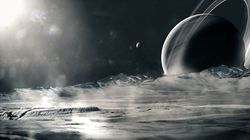
The oceans define the earth. They are crucial to life and we used to think that they were unique to our blue planet. But we were wrong.It has recently been discovered that there are oceans all over our solarsystem and they are very similar to our own. And now scientists are going on an epic journey in search of new life in places that never seemed possible. Nasa is even planning to dive to the depths of a strange, distant ocean in a remarkable submarine.Horizon discovers that the hunt for oceans in space is marking the dawn of a new era in the search for alien life.
The story of how our solar system will be transformed by the aging sun before coming to a spectacular end in about eight billion years. Astronomers can peer into the far future to predict how it will happen by analysing distant galaxies, stars and even planets in their final moments. In this film, Horizon brings these predictions to life in a peaceful midwestern town that has a giant scale model of the solar system spread out all over the city. As it ages, the sun will bloat into a red giant star, swallowing planets... as well as half the town. The fate of the Earth itself hangs in the balance. How will the solar system end?
Liz Bonnin presents a controversial and provocative episode of Horizon, exploring how and why zoos keep animals, and whether they need to change to keep up with modern science, or ultimately be consigned to history. Should zoos cull their animals to manage populations? Liz travels to Copenhagen Zoo to witness their culling process first hand. They think it is a natural part of zoo keeping that is often swept under the carpet. Should some animals never be kept in captivity? In a world exclusive, Liz visits SeaWorld in Florida and asks if captivity drove one of their orcas to kill his trainer. But could zoos be the answer to conserving endangered species? Liz meets one of the last surviving northern white rhinos and discovers the future of this species now lies in a multi-million dollar programme to engineer them for stem cells. Veteran conservation scientist Dr Sarah Bexel tells Liz the science of captive breeding is giving humanity false hope.
Mathematician Dr Hannah Fry uses Dr Xand Van Tulleken as her guinea pig to test whether the algorithms that dating sites use to match people actually work. While Hannah builds a dating site, Xand meets the scientists investigating online dating - and learns what pictures to use and what to write in his profile. He tries out a 'bot' that has automated a swiping app and has an MRI scan to find out whether his brain is equipped for love. 50 members of the public take part in some mini experiments at a date night - and Xand goes on various dates to test whether the algorithm is better than him choosing randomly.
BBC weatherman Peter Gibbs makes an emotional return to Antarctica, years after he lived and worked at the British Antarctic Survey's Halley Research Station. During his time, the station was key to the discovery of the ozone hole, and upon his return, Peter is delighted to see the cutting-edge science being done at Halley today.
Horizon investigates a new era of Alzheimer's research, which is bringing hope to millions across the world. New scanning and gene technology is allowing scientists to identify the disease at its earliest stages, often 15 years before symptoms appear. A series of new drugs trials in Colombia, the USA and Europe are showing startling success in reducing beta amyloid, the protein which is a hallmark of the disease. It is becoming clear that changes in lifestyle can prevent the development of the disease. A new system inside the brain has been discovered which clears amyloid when we are in deep sleep, but allows it to accumulate if we don't sleep well. The programme reveals that for sufferers in the early stages of the disease, brain connections can be strengthened and even replaced by absorbing enough of the right nutrients. In an ageing world, where the biggest risk of developing Alzheimer's is old age, these scientific breakthroughs are bringing hope where once there was despair.
Michael Mosley investigates the dramatic rise in e-cigarettes. They are everywhere these days, but what does the latest scientific research on them reveal? Michael reveals what e-cigarettes are really doing to your health. Are they really better for you than cigarettes? What is actually in them? Is passive vapour harmful? And can they really stop you from smoking? Michael meets some of the scientists around the world studying them, asks a group of volunteers to try to give up smoking regular cigarettes using them, and even takes up 'vaping' himself, smoking an e-cigarette every day for a month to see the effects on his own health - no easy task for such a committed non-smoker.
Dr Xand van Tulleken investigates the world of performance-enhancing drugs - from the athletes seeking the rewards of fame, glory and lucrative sponsorship deals to the hundreds of thousands of people in the UK now regularly taking anabolic steroids to look good and buff up. What are these drugs? What do they do to the body? And is it worth it? Xand's investigation reveals the extraordinary gamble dopers take with their health. Long-term effects include kidney failure, cognitive impairment and testicular shrinkage and Xand witnesses how users are self-experimenting with drugs that have not yet been approved for human use. Horizon uncovers the new frontier of doping, from new molecules to gene therapy - where the genes that control muscle growth are altered. These new methods could be completely undetectable by the doping authorities. Finally, and with the help of his twin brother Chris, Xand discovers the legal ways some athletes try to gain the edge.
With exclusive behind-the-scenes access, Horizon follows the highs and lows of an extraordinary story in particle physics. In June 2015, teams at CERN started running the large hadron collider at the highest energy ever. Rumours quickly emerged that they were on the brink of a huge discovery. A mysterious bump in some data suggested a first glimpse of a brand new particle that could change our understanding of how the universe works. A new particle could hint at extra dimensions and help us understand the very beginning of the universe - but first the team has to find it. Horizon follows the scientists as they hunt for the elusive signals that would prove if there is a new particle or if it is just noise from their machine.
The acerbically witty and severely facially disfigured broadcaster Adam Pearson presents a personal film about genetics. He and his twin brother Neil are genetically identical and both share the same genetic disease, Neurofibromatosis 1 (Nf1) - yet they are completely different. Adam's face is covered with growths, whereas Neil looks completely normal. Neil has short term memory loss, whereas Adam is razor sharp.How can the same genetic disease affect identical twins so differently?Adam is on the cusp of a successful film and television career, but the disease has left tumours on his face that are growing out of control and he could lose his sight. For years, everyone thought Adam's brother Neil had escaped symptoms, but today his life is governed by epilepsy and a mysterious memory loss that suddenly came on during his teens.Determined to save their future, Adam tries to find out why the disease affects the twins so differently and see if there is anything he can do to stop it from tearing their lives apart.
Comedian Jimmy Carr takes over Horizon for this one-off special programme, produced as part of BBC2's sitcom season. Jimmy turns venerable documentary strand Horizon into a chat show, with eminent laughter scientists as guests and a studio audience to use as guinea pigs. Jimmy and his guests try to get to the bottom of what laughter is, why we enjoy it so much and what, if anything, it has to do with comedy. Between them, and with the help of contributions from other scientists on film, Jimmy and guests discover that laughter is much older than our species, and may well have contributed to making us human. With professors Sophie Scott, Robin Dunbar and Peter McGraw.
Alice Roberts explores the latest discoveries in the study of human origins, revealing the transformation that has been brought about in this field by genetics. Traditional paleo-anthropology, based on fossils, is being transformed by advanced genome sequencing techniques. We now know that there were at least four other distinct species of human on the planet at the same time as us - some of them identified from astonishingly well-preserved DNA extracted from 50,000-year-old bones, others hinted at by archaic sections of DNA hidden in our modern genome. What's more, we now know that our ancestors met and interacted with these other humans, in ways that still have ramifications today. Alice uses these revelations to update our picture of the human family tree.
We love talking about the weather - is it too hot or too cold, too wet or too windy? It's a national obsession. Now scientists have started looking to the heavens and wondering what the weather might be like on other planets. Today, we are witnessing the birth of extra-terrestrial meteorology, as technology is allowing astronomers to study other planets like never before. They began with our solar system, sending spacecraft to explore its furthest reaches, and now the latest telescopes are enabling astronomers to study planets beyond our solar system.Our exploration of the universe is revealing alien worlds with weather stranger than anyone could ever have imagined - we've discovered gigantic storm systems that can encircle entire planets, supersonic winds, extreme temperatures and bizarre forms of rain. On some planets, the temperatures are so hot that the clouds and rain are believed to be made of liquid lava droplets, and on other planets it is thought to rain precious stones like diamonds and rubies.We thought we had extreme weather on Earth, but it turns out that it is nothing compared to what's out there. The search for the weirdest weather in the universe is only just beginning.
Dr Giles Yeo investigates the latest diet craze and social media sensation - clean eating. In a television first, Giles cooks with Ella Mills, the Instagram entrepreneur behind Deliciously Ella, one of the most popular brands associated with clean eating, and examines how far her plant-based cooking is based on science. Giles sifts through the claims of the Hemsley sisters, who advocate not just gluten-free but grain-free cooking, and Natasha Corrett, who popularises alkaline eating through her Honestly Healthy brand. In America, Giles reveals the key alternative health figures whose food philosophies are influencing the new gurus of clean. He discovers that when it comes to their promises about food and our health, all is not always what it appears to be. Inside a Californian ranch where cancer patients have been treated with alkaline food, Giles sees for himself what can happen when pseudoscience is taken to a shocking extreme.
The Horizon team have gathered together a team of scientists and doctors to investigate the incredible, natural material that is growing out of our heads - our hair. With access to the research laboratories of some of the world's leading hair care companies, including L'Oreal and ghd, the team explore the latest cutting-edge research and technology designed to push the boundaries of hair and hair care.
Comedian and impressionist Rory Bremner is on a personal mission to uncover the science of ADHD (Attention Deficit Hyperactivity Disorder), a condition which he has suspected he has. In this film, Rory learns about the science of ADHD, goes for a diagnosis, and tries the drug methylphenidate (also known as Ritalin) for the first time - just before walking on stage.
Following three people living with voices, hallucinations and paranoia to explore what causes them, examining the impact of social, biological and environmental influences.
For decades some have suspected that there might be others out there, intelligent beings capable of communicating with us, even visiting our world. It might sound like science fiction, but today scientists from across the globe are scouring the universe for signals from extraterrestrials.In 2006, husband and wife team Duncan Lorimer and Maura McLaughlin discovered a enigmatic signal from space, known as a fast radio burst. It was a pulse of radiation so bright, it didn't appear to be caused by any known object in the universe. Explanations ranged from colliding neutron stars to communication signals from an alien civilisation far more advanced from our own.Scientists have been searching the cosmos for strange signals like the Lorimer Burst for more than 50 years. The film ends with scientists' latest search for extraterrestial intelligence. Horizon obtained exclusive access to film researchers at the Green Bank Telescope searching for radio signals from Tabby's Star, a star so mysterious that some scientists believe it might be surrounded by a Dyson Sphere, a vast energy collector built by advanced aliens.
Volcanoes have long helped shape the Earth. But what is less well known is that there are volcanoes on other planets and moons that are even more extraordinary than those on our own home planet. Horizon follows an international team of volcanologists in Iceland as they draw fascinating parallels between the volcanoes on Earth and those elsewhere in the solar system. Through the team's research, we discover that the largest volcano in the solar system - Olympus Mons on Mars - has been formed in a similar way to those of Iceland, how a small moon of Jupiter - Io - has the most violent eruptions anywhere, and that a moon of Saturn called Enceladus erupts icy geysers from a hidden ocean. Computer graphics combined with original NASA material reveal the spectacular sights of these amazing volcanoes.Along the way, we learn that volcanoes are not just a destructive force, but have been essential to the formation of atmospheres and even life. And through these volcanoes of the solar system, scientists have discovered far more about our own planet, Earth - what it was like when Earth first formed, and even what will happen to our planet in the future.
Britain's state-of-the-art Antarctic research base Halley VI is in trouble. Built on the Brunt Ice Shelf, it sits atop a massive slab of ice thatextends far beyond the Antarctic shoreline. But the ice is breaking apart and just 6km from the station is a ginormous crevasse, which threatens to separate Halley from the rest of the continent, setting the £28 million base adrift on a massive iceberg.So Halley needs to move. But this is probably the toughest moving job on Earth, and the team of 90 who have been tasked with the mission aren't just architectural or engineering experts. They are plumbers, mechanics and farmers from across the UK and beyond - ordinary men and women on an extraordinary adventure. Their practical skills will be what makes or breaks this move. The rescue mission has one thing in its favour: Halleywas built on giant skis that mean it can be moved - in theory. But no one has actually done it before. Embedded with the team, BBC filmmaker Natalie Hewit spent three months living on the ice, following these everyday heroes as they battle in the most extreme environment on Earth to move this vital polar research station.
A few weeks ago, the National Health Service was hit by a widespread and devastating cyber attack - Horizon tells the inside story of one of the most challenging days in the history of the NHS.On the morning of 12 May the attack started. Appointment systems, pathology labs, x-rays and even CT Scanners were infected - putting not just data but patients lives at risk, and on every screen a simple - some may even say polite - message appeared. 'Ooops, your files have been encrypted!'But what followed was far from civilised. It was very clear that all the data on an infected machine was now scrambled and only the hackers could unscramble it. For a price - and with an extra twist - after a few days the ransom money doubled, and if nothing was paid within a week, the hackers threatened to destroy all the data - forever.
This episode of Horizon looks at the issues that will change the way we live our lives in the future. Rather than relying on the minds of science fiction writers, mathematician Hannah Fry delves into the data we have today to provide an evidence-based vision of tomorrow. With the help of the BBC's science experts - and a few surprise guests - Hannah investigates the questions the British public want answered about the future.Hannah tries to discover whether we could ever live forever or if there will ever be a cure for cancer. She finds out how research into the human brain may one day help with mental health, and if it is possible to ever ditch fossil fuels. Hannah and her guests also discover the future of transport - and when, if ever, we really will see flying cars. She discovers whether a robot will take your job or if, as some believe, we will all one day actually become cyborgs. The programme predicts what the weather will be like and discovers if we are on the verge of another mass extinction. Hannah's tenth prediction is something she - and Horizon - are confident will definitely happen, and that is to expect the unexpected!
The car has shrunk the world, increased personal freedom and in so many ways expanded our horizons, but there is a flipside. Fumes from car exhausts have helped to destroy our environment, poisoned the air we breathe and killed us in far more straightforward ways. But all that is going to change.This episode of Horizon enters a world where cars can drive themselves, a world where we are simply passengers, ferried about by wholesome green compassionate technology which will never ever go wrong. And it is almost here. Horizon explores the artificial intelligence required to replace human drivers for cars themselves, peers into the future driverless world and discovers that, despite the glossy driverless PR (and assuming that they really can be made to work reliably), the reality is that it might not be all good news. From the ethics of driverless car crashes to the impact on jobs, it might be that cars are about to rise up against us in ways that none of us are expecting.
Over the last two years, the BBC's science strand Horizon has been behind the scenes at London's Natural History Museum, following thedramatic replacement of the iconic Dippy the Dinosaur skeleton cast with the real skeleton of a blue whale - the world's biggest animal.Narrated by Sir David Attenborough, this special film follows the teams involved in what has to be one of the world's most unique engineering challenges.Replacing Dippy is brave and bold - it is the first thing visitors see when they enter the grand Hintze Hall, but the Natural History Museum is changing, and the installation of the colossal blue whale skeleton is the start of a new chapter. The largest animal ever to have lived, blue whales were driven to the brink of extinction by hunting and were the first species humans decided to save, telling an inspiring story of hope for the natural world.
Presented by psychologist Professor Uta Frith, this is an in-depth exploration of the psychopathic mind including one of the most notorious of all, Moors murderer Ian Brady. Through an ongoing correspondence between the Horizon team and Brady, the film features some of the very last letters he wrote. The film also features a series of candid interviews with prison inmates who not only describe their crimes but why they think they committed them.Horizon explores not only how each individual's crimes were shaped by their own life experiences, but also gives an insight in to how these people think and behave. Working with the world's experts in the field, the film sheds light on the biological, psychological and environmental influences that shape a psychopath. And it looks to the future, with groundbreaking research that suggests a life time of incarceration is not the only option to manage violent and dangerous psychopaths.
With the dream of sending humans to Mars closer than ever before, Horizon has gathered the world's leading experts on Mars and asked them where would they go, if they got the chance - and what would they need to survive? Using incredible real images and data, Horizon brings these Martian landmarks to life - from vast plains to towering volcanoes, from deep valleys to hidden underground caverns. This film also shows where to land, where to live and even where to hunt for traces of extra-terrestrial life. This is the ultimate traveller's guide to Mars.
Film exploring what it means to be transgender and what happens when a person transitions psychologically, physically and biologically. How does a person know their gender? Do they see themselves as male or female, or somewhere in between? More and more people around the world do not identify with the gender they were assigned to at birth. Increasingly, people are expressing their gender identity outside of the 'norms', and the lines of gender are becoming more blurred than ever. We follow a number of transgender people going through their own transition. From a socially transitioning transwoman to two young transmen embarking on hormones, to a transwoman going through gender confirmation surgery - we get a snapshot into what transitioning and being transgender is really like from those living it. We also hear from experts in the field of gender and find out how modern medicine is helping people to transition their gender. And we explore where gender identity actually comes from.
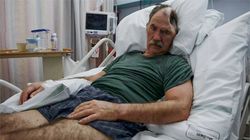
Horizon follows the story of Richard Gray and his remarkable recovery from a life-changing catastrophic stroke. The film shows the rarely seen journey back to recovery. Recorded by his documentary film-maker wife Fiona over four years, this film shows the hard work of recovery.
What is it like to be young and find out you have got cancer? What you will find out in this film may surprise you.This film, narrated by actor and comedian Jack Whitehall, tells 11 inspirational stories, revealing how a range of young people have dealt with their cancer diagnosis and the treatment process. We hear, primarily in their own words, about their fears, their hopes and their experiences - affirming the view that 'the best therapist for a teenager with cancer... is another teenager with cancer.'
Time travel is not forbidden by the laws of nature, but to build a time machine, we would need to understand more about those laws and how to subvert them than we do now. And every day, science does learn more. In this film Horizon meets the scientists working on the cutting edge of discovery - men and women who may discover how to build wormholes, manipulate entangled photons or build fully functioning time crystals. In short, these scientists may enable an engineer of the future to do what we have so far been only able to imagine - to build a machine that allows us travel back and forward in time at the touch of a button. It could be you! Science fiction? Watch this space.
One in every 1,000 pregnancies in Britain has a spine or brain defect like spina bifida. Thirty years ago, actress Ruth Madeley was one of them. Despite having spina bifida herself, it is a condition she doesn't fully understand. In this programme, Ruth sets out to discover why she has it, whether it could have been prevented and what it means for her future.Ruth meets the lord campaigning for a change in the law that he says could prevent thousands of birth defects. And she discovers that a pioneering surgery could offer a different future for babies diagnosed with spina bifida, by operating on them before they are even born. She discovers how this surgery was invented, meets the families whose lives it has changed and follows the team of British surgeons preparing to perform this extraordinary foetal surgery in the UK for the very first time. But Ruth also examines attitudes in Britain today and asks whether we should change the way we see disability.
Scientists start to peel back the layers of Jupiter to reveal the wonders within, using information gained from Nasa's Juno mission.
Suicide is the biggest killer of men under 50 in the UK - causing more deaths in this group than car accidents, and even more than cancer. This means that the most likely thing to kill Dr Xand Van Tulleken is himself. And he wants to know why. In this sensitive film, Xand finds out what we know about why people develop suicidal thoughts, and whether there is anything that we can do about it.
Deception is an integral part of human nature and it is estimated we all lie up to nine times a day. But what if we created a world in which we couldn't lie? In a radical experiment, pioneering scientists from across Europe have come together to make this happen.Brand new technology is allowing them to rig three British people to make it impossible for them to lie undetected. Then they will be challenged to live for a whole week without telling a single lie. It is a bold social experiment to discover the role of deception in our lives - to investigate the impact lying has on our mental state and the consequences of it for our relationships, and to ask whether the world would be a better or worse place if we couldn't lie.
Could the power of fake pills be used to treat some of our most common medical complaints? To find out, Dr Michael Mosley embarks on Britain's largest ever trial to investigate the placebo effect. He is heading to Blackpool to gather 117 people suffering from backache - one of the leading types of chronic pain - before trying to treat them with nothing but fake pills and the power of the mind.
We all have a biological clock ticking away inside us that governs our daily rhythms. This affects our health as much as our diet and whether we exercise. So what can we do to manage this internal clock better?To find out, evolutionary biologist Ella Al-Shamahi locks former commando Aldo Kane in an abandoned nuclear bunker with no way of telling the time - for ten days. Monitored around the clock by a team of scientists, he carries out a barrage of tests to uncover exactly what makes our body clock tick.
In March 2018 an international team of scientists gathered in a remote valley in the Canadian Rockies to conduct a unique experiment - to attempt to see into the heart of a massive avalanche to see if we can find ways to save lives in the future. Avalanches kill hundreds of people every year. Even in the UK 25 people have been killed by these forces of nature since the year 2000. But we know surprisingly little about them - why they happen or how they are able to produce destructive forces so powerful that they can flatten entire villages. Equally disturbing is the fact that climate change means that the pattern of avalanches is changing. They are occurring in places where they have never happened before. Finding out where might be in danger in the future is of vital importance. Answering all these questions could help save lives. The experiment attempts to provide those answers.

Nearly half of us take a vitamin or mineral supplement every day, but what are these pills sold on every high street actually doing? Digging deeper than the eye-catching words on the packaging, Dr Giles Yeo investigates who really needs a supplement by putting our diets to the test.
Dr Hannah Fry uncovers the inside story of a healthcare revolution, with behind-the-scenes access to Babylon Health, who want to prove that their AI is a match for human GPs.
In recent years a groundbreaking new study has been released into the effects of the contraceptive pill. Research from Denmark claimed women on the pill and other forms of hormonal contraception were 70% more likely to be diagnosed with depression than those who were not. And another study has found hormonal contraception was linked to a seemingly dramatic risk of breast cancer.Negative headlines are nothing new for the contraceptive pill - first introduced in 1961, it has had a chequered history with early versions linked to cancer risk and life-threatening blood clots. Yet hormonal contraception remains Britain's most popular form of birth control, and today over three million women take regular doses of synthetic hormones. So should they be worried about its safety?GP Dr Zoe Williams gets behind the headlines in this Horizon investigation. A specially commissioned, nationwide survey reveals the areas of most concern to British women - from mental health to the risk of cancer and drop in libido. With the help of world leading scientists, Zoe finds out if these concerns are justified and by delving deep into the science around the pills side effects Horizon uncovers some striking revelations - from protecting women against cancer to increasing their risk of suicide.
Dr Kevin Fong makes a personal journey through the moral questions about death that face not just the medical profession, but each and every one of us.
Drones are transforming our world. We use them to deliver our medicines, clean our skyscrapers and even fight fires. But there is a dark side to this airborne revolution, from a shocking rise in drone-plane near misses above our heads to last year's sustained drone disruption at Gatwick – Britain's second largest airport – that ruined the Christmas plans of 140,000 people and cost millions.In this documentary, high-risk specialist and former Royal Marine Aldo Kane sets out to investigate the scale of the threat drones pose to our airports and skies – from rogue hobbyists to determined terrorist attacks. He explores what technologies are out there that governments and the aviation industry can turn to, to keep our skies safe.
For every pound we spend on food shopping, 77p goes to the supermarkets, giving them a huge influence over what we eat. But can we trust the supermarkets to tell us the truth about what we are buying and how it was produced? Or do their profits come first?In an experiment to discover the hidden truths about our everyday foods, Horizon has built the first ever truly ‘honest supermarket'. Drawing on the latest scientific research and leading experts from across the UK, the team have built a supermarket where the products are labelled with the real story of how they are produced and their effect on us and the environment. We invite the British public to come in and discover the truth about their favourite foods. And in our on-site lab, new scientific discoveries reveal the food facts the supermarkets aren't telling you.
Following the teams inside Facebook, revealing a hidden technological playground. The film tackles difficult questions, like how our data is used, and also shows how Facebook works.
Proton beam therapy is the one of the most technologically advanced though expensive cancer treatments in the world - but it has the potential to save the lives of children with otherwise incurable cancers.Over two years, Horizon follows the engineers, scientists and medics as they race to build two new centres, one at the Christie Hospital in Manchester and one at University College Hospital in London, as well as following as the first children awaiting the lifesaving treatment. This is one of the most complex challenges the NHS has ever attempted.
Horizon investigates the very latest medical and scientific research into the effects of cannabis on the brain and the body, with the medicinal form of the drug now legal. A&E doctor Javid Abdelmoneim wants to find out whether it will help or harm patients. He meets the young epilepsy patient responsible for changing the law around medicinal cannabis in the UK, and sees the remarkable effect it has on his condition. He visits a medicinal cannabis farm in Denmark to learn how a company known for growing the recreational drug are now producing medicinal cannabis to be exported all over Europe. He also travels to Israel, hoping to find out why they have been using cannabis as a medicine for more than 20 years, and meets scientists studying the safety and effectiveness of cannabis in treating pain.
Dr Michael Mosley immerses himself on the frontline of our prescription painkiller habit. In America, it is an epidemic. Now, new evidence raises concern about the UK's use of prescription opioids.
Naturalist Chris Packham investigates the impact a growing human population is having on the planet, asking whether the earth can sustain predictions of ten billion people by 2050.
The untold story of Britain's worst fetal poisoning scandal since thalidomide, when a group of ordinary mothers took on the establishment and won. Set in a post-industrial Northamptonshire town, the Corby Litigation Case was a landmark case with worldwide legal and medical ramifications - the first time ever that a court has recognised a link between airborne toxins and foetal development damage.
Investigating the scientific facts and figures behind the biggest public health crisis in living memory as a new coronavirus takes an unprepared world by storm.
Maitre d' and Extraordinary Places to Eat host Fred Sirieix and GP Zoe Williams open a restaurant with a difference, welcoming 20 unsuspecting diners for a slap-up meal. It all sounds normal enough, but this restaurant has something unexpected back of house - a functioning gym, where a group of fitness fanatics are poised on exercise bikes, treadmills and rowing machines, ready to burn off every single calorie ordered and consumed by the diners. This groundbreaking stunt for science strand Horizon is based on the latest scientific research, which suggests that when we are shown the astonishing amount of exercise required to remove excess calories from our bodies, we choose to eat up to 20% less.Fred and Zoe also delve into the science of calories, including why we need them and why we are collectively eating more than we are burning, a situation which has left nearly two thirds of the population overweight or obese. They examine new science, learning that our genes influence our weight, not by changing how we metabolise food, but by determining how hungry we feel. They also delve into our microbiome to discover how a healthy gut could help us burn fat.
To celebrate the 30th anniversary of its launch, this film tells the remarkable story of how Hubble revealed the awe and wonder of our universe and how a team of daring astronauts risked their lives to keep it working.
Mathematician Hannah Fry and doctor and broadcaster Michael Mosley join an Imperial College, London, experiment to assess the brainpower of the nation, putting members of the public to the test in a battle of wits as they pit young and old, males and females, and tech lovers and readers against one other. The results reveal new science about how people's intelligence changes through their lives, while Hannah and Michael examine groundbreaking new science on how lifestyle and love of technology is changing the human brain.
Dr Chris van Tulleken, Dr Hannah Fry and Michael Mosley examine the latest research and explore some of the big questions about Covid-19 and the pandemic it has created. Michael visits the UK government's high-security laboratory Porton Down, where vaccines are being tested. He also uncovers what the experience of the 2002 SARs epidemic reveals about this one. Both were caused by coronaviruses, but certain key changes to today's virus have allowed it to infect the world, where SARs was contained.
Tony Slattery was one of the most gifted TV comedians of the late 1980s and early 1990s, only to disappear from screens in 1996 amid rumours of a massive breakdown. As he approaches 60, he has been touring the country with a show that explores his past and his mental health. Although depression was diagnosed, he and his partner Mark Hutchinson are convinced he may have bipolar disorder, so Tony wants to have his mental health reassessed. But it will mean opening up about his addictions and a painful event in his childhood.
The incredible story of how Pluto has been propelled from an unremarkable ball of ice on the edge of the solar system to a world of unimaginable complexity - where some form of alien life might exist.
Gregg Wallace and mathematician Hannah Fry invite five special guests to a unique dinner party where they are scored on the environmental impact of every dish they choose.
Dr Chris Van Tulleken is joined by his brother Xand and Dr Guddi Singh to take us through the latest developments and answer current concerns.
With unique access to five vaccine teams around the globe, this is the extraordinary inside story of the unprecedented quest to develop and make vaccines to fight Covid-19.
A third of the population regularly struggle with our sleep, which rose to one in two during the pandemic, the highest it's ever been. However, as more and more people seek help, an explosion in sleep science is enabling the study of sleep in ways not possible before. What's more, recent breakthroughs are uncovering what's happening in our brains and bodies while we're asleep, getting us closer than ever to understanding the importance of sleep for our health.Michael Mosley has struggled with his sleep for years and wants to know if the latest insights can help him and the millions like him. He discovers why cutting our sleep short can be linked to a host of illnesses, including serious diseases like Alzheimer's. Putting his own sleeping brain and body to the test, Michael signs up for two revealing experiments: wearing a new device that maps his sleep and allows scientists to see how it measures up to an ideal night, and taking part in a sleep deprivation experiment, where he is confronted by the fact that just one sleepless night impacts his cognitive performance.Revealing the very latest science breakthroughs and packed with personal anecdotes, this programme is a useful guide to anyone looking for tips and insights on how to get the benefits from learning how to sleep well.
Hannah Fry, a professor of maths, is used to investigating the world around her through numbers. When she's diagnosed with cervical cancer at the age of 36, she starts to interrogate the way we diagnose and treat cancer by digging into the statistics to ask whether we are making the right choices in how we treat this disease. Are we sometimes too quick to screen and treat cancer? Do doctors always speak to us honestly about the subject? It may seem like a dangerous question to ask, but are we at risk of overmedicalising cancer?At the same time, Hannah records her own cancer journey in raw and emotional personal footage, where the realities of life after a cancer diagnosis are laid bare.

The inside story of the James Webb Space Telescope, following the Nasa team building the £8 billion device and the scientists taking its first image of distant stars and galaxies.
Henry Marsh was one of Britain's leading neurosurgeons, operating on thousands of patients over a 40-year career, but after retiring he was diagnosed with advanced prostate cancer. As he awaits his own medical results, Henry tries to discover the lessons that can be learnt from a lifetime dedicated to neurosurgery, meeting the families of the patients who died in his care, as well as exploring the impact his work had on those closest to him, He reveals the huge emotional and personal challenges of a job where every day came with life-and-death decisions.
Complete episode guide for Horizon with detailed information about every season and episode including air dates, summaries, ratings, and streaming availability in Italy.
This episode guide is organized by seasons, making it easy to track your viewing progress or find specific episodes. Use the episode information to plan your binge-watching sessions or catch up on missed episodes.